

Aesthetic Custom Products: Building a Business Around Visually Appealing Personalized Gifts

Aesthetic Custom Products: Building a Business Around Visually Appealing Personalized Gifts

Jan 3, 2026 by Iris POD e-Commerce 101

Why Aesthetic Custom Products Are So Powerful Right Now

In the last decade mentoring founders in print-on-demand and dropshipping, I have watched one pattern repeat itself: the stores that win in personalized products are not just personal, they are beautiful. A name on a mug is easy. A mug that fits a person’s taste, their home, and their social feed is what actually gets gifted, photographed, and reordered.

Across the market, serious players are leaning into this. Large marketplaces such as Amazon Custom aggregate hundreds of thousands of personalized items, indicating how broad demand already is. Gift-focused retailers like Uncommon Goods and Mark and Graham highlight design-forward, customized pieces, while photo-heavy platforms such as Shutterfly frame personalization as a way to turn memories into decor. Editorial sites like CNN Underscored and Wirecutter from The New York Times now produce full guides dedicated to personalized gifts, not generic ones.

At the same time, industry analysis summarized by PrintXpand points to significant growth in categories where aesthetics and personalization overlap. US fashion ecommerce is projected to surpass $219 billion, the global apparel market is expected to reach about $1.2 trillion by 2030, and the personalized gifts segment is forecast to grow from roughly $30.3 billion in 2022 to $47.6 billion by 2030 and further to about $54.15 billion by 2033. When demand and editorial attention both converge on a niche, it is a signal founders should take seriously.

This is the context in which aesthetic custom products live: visually compelling items that are also made just for someone. If you design, position, and fulfill them correctly, they can be one of the most defensible and profitable segments in on-demand printing and dropshipping.
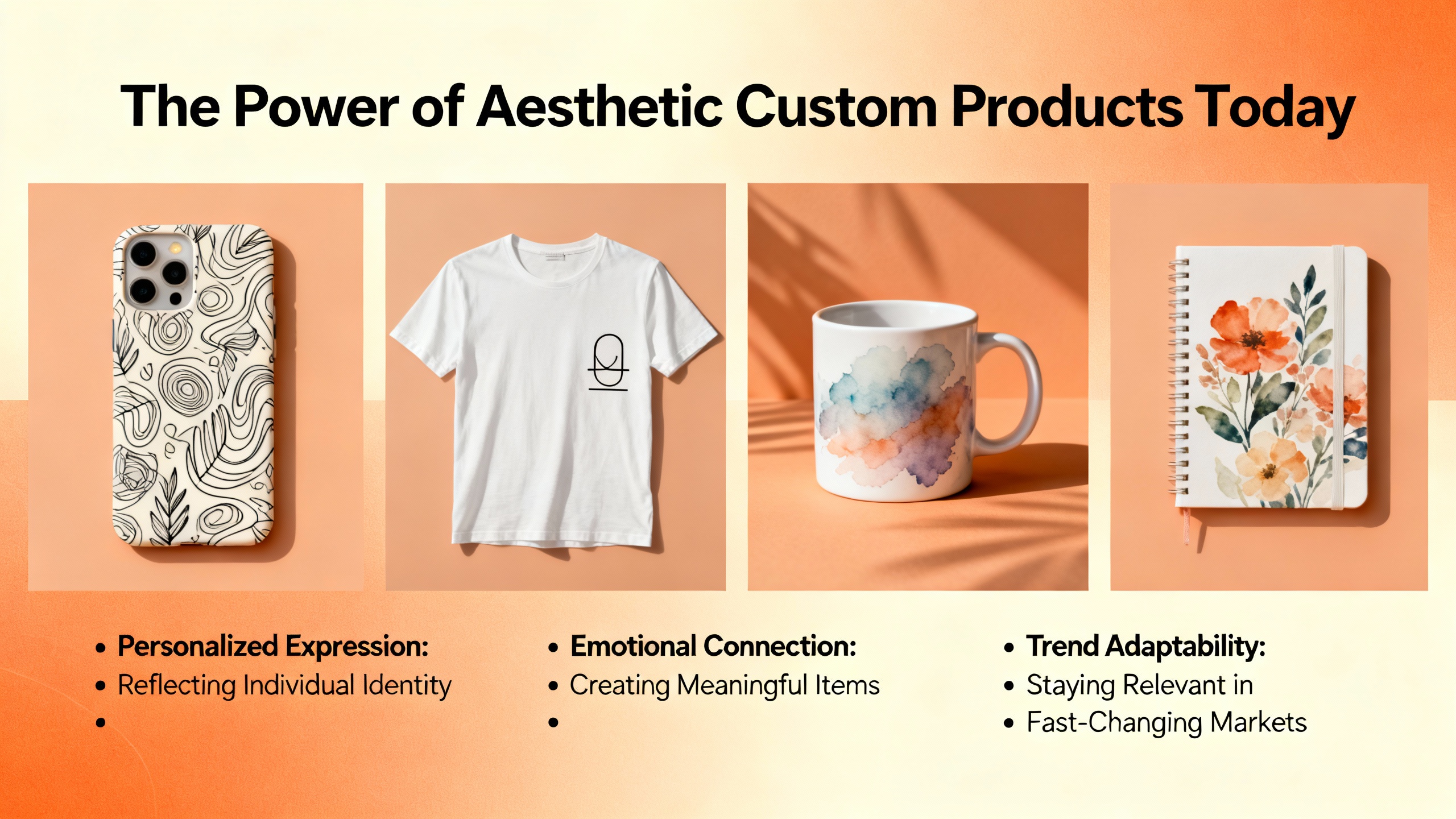
Personalized gift business strategy

What Exactly Are Aesthetic Custom Products?

For a working definition in an ecommerce context, aesthetic custom products are physical items that combine two layers of value.

First, they are personalized. They carry a name, date, photo, location, monogram, or story relevant to a specific person or occasion. Shutterfly, for example, defines personalized gifts and decor as items customized with photos, names, or important dates to turn everyday items into keepsakes. CNN Underscored and Wirecutter highlight personalization on shoes, jewelry, homeware, and keepsakes using names, initials, or specific dates.

Second, they are visually intentional. They look like something you would want in your home or wardrobe even without the personalization. Mark and Graham emphasizes marble-and-wood serveware, coordinated monogrammed textiles, and sculptural decor. Decorilla’s interior design guidance frames a good home decor gift as something that enhances both aesthetics and function, whether a throw blanket, vase, or art object. Canva’s coverage of custom tote bags focuses on design ideas that match a recipient’s tastes and style, not just adding text to a blank canvas.

When you combine these two layers—meaningful personalization and strong aesthetics—you move away from novelty gifts and into products that people use daily, display in their homes, or wear proudly.

Why Visual Appeal Matters So Much in Personalized Gifts

Personalization alone makes something emotionally relevant. Aesthetics make it desirable, giftable, and shareable.

Shutterfly positions personalized home decor as “sharing life’s joy” by turning memories into visual elements throughout the home. That phrasing is important. The photo or name is the memory, but the canvas, blanket, or framed print is the visual vehicle. If the piece clashes with the recipient’s decor, it will quietly migrate to a closet rather than the living room wall.

CNN Underscored’s guide to personalized gifts leans heavily on fashion accessories, jewelry, and home items where design is front and center. One of Wirecutter’s flagship picks is a customized pair of Converse sneakers. The shoe is already a design icon; personalization comes via colors, prints, and subtle embroidery. Their editorial recommendation is to keep the personalization tasteful—such as initials on the heel stripe—so the shoe remains wearable and stylish.

From an entrepreneurial perspective, that balance matters. A beautifully designed personalized blanket will live on a couch for years, pass through every house move, and be seen by guests. A poorly designed novelty blanket might earn a brief laugh and then disappear. The first scenario supports repeat sales, referrals, and user-generated content; the second does not.
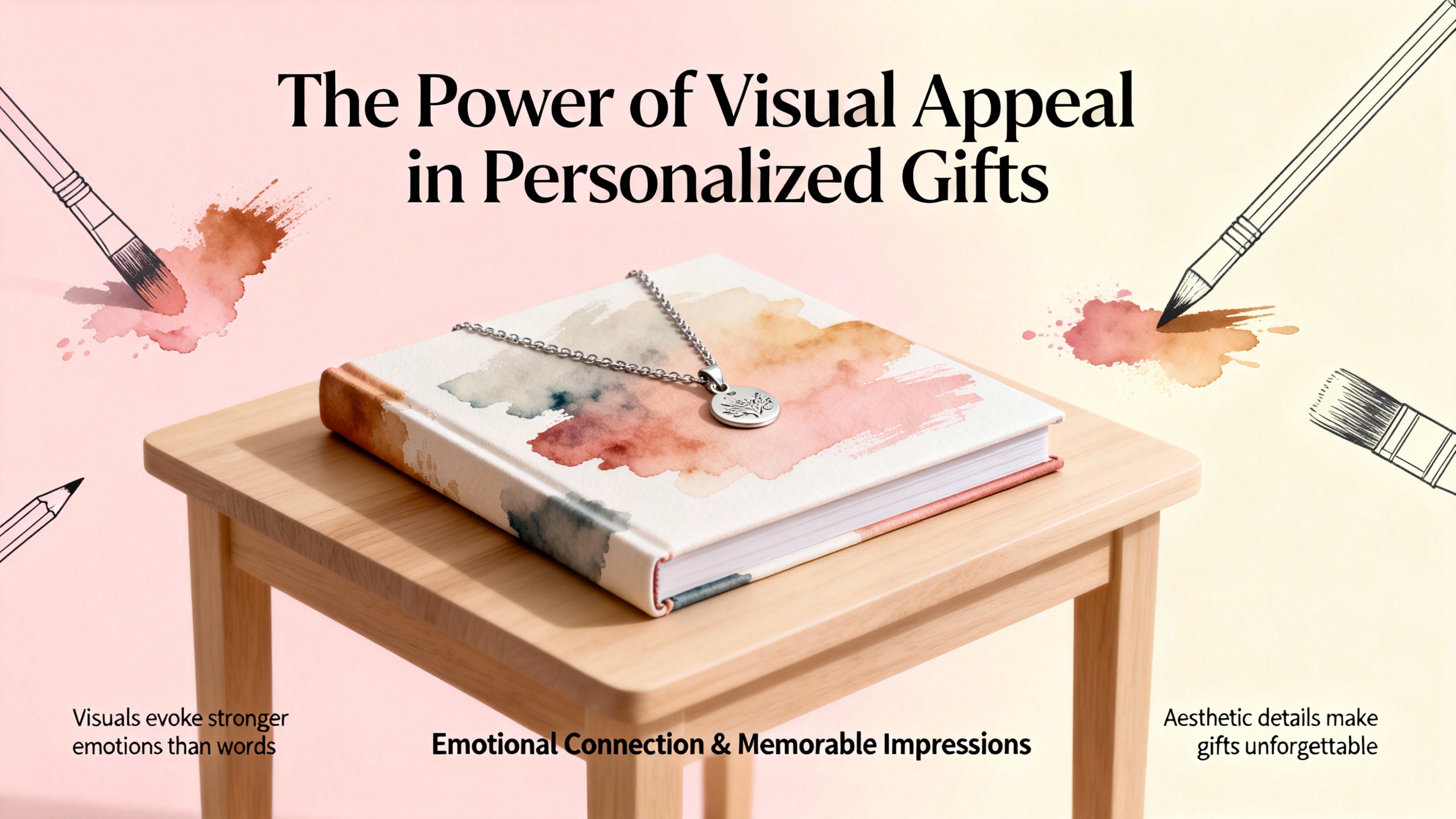
High quality custom home decor items

Market Signals You Should Pay Attention To

When you evaluate a niche, you want demand, willingness to pay, and room to differentiate.

The personalized gifts segment itself, according to data cited by PrintXpand, is growing at a healthy compound rate, moving from about $30.3 billion in 2022 toward roughly $47.6 billion by 2030 and beyond. The broader apparel and fashion accessories markets are massive—global apparel around $1.2 trillion by 2030, and e-commerce fashion accessories expected to reach about $692.8 billion—making personalization a way to carve out a distinct corner in a crowded space.

On the supply side, Amazon Custom’s category snapshot showed more than 300,000 customizable items at one point, and Uncommon Goods curates hundreds of personalized gift and decor ideas. Zazzle, Personal Creations, Shutterfly, and similar players all center their positioning on personalized gifts. This is not a fringe bet; it is a proven category where execution quality is now the main differentiator.

The message is clear: there is demand, there is competition, and there is still room for brands that treat aesthetics as a core competency rather than an afterthought.

Core Product Categories Where Aesthetic Customization Wins

Within print-on-demand and dropshipping, several product families consistently reward attention to aesthetics.

Apparel and Fashion Accessories

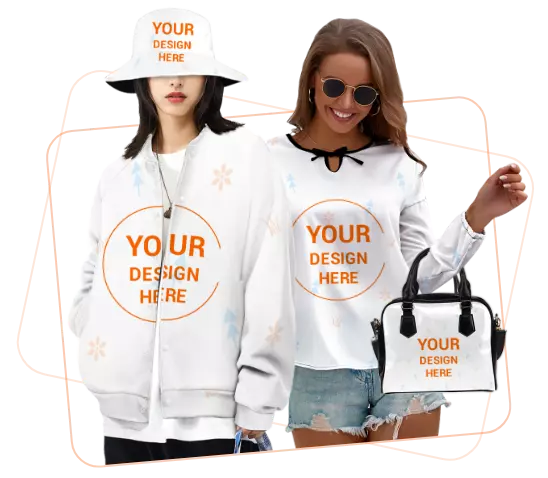
Apparel is an evergreen category, but it is also noisy. PrintXpand’s research notes that fashion ecommerce is enormous and growing, which is why they emphasize narrowing to specific niches. Personalized apparel and accessories—hoodies, jackets, organic tees, plus-size collections, and women- or kids-only lines—become viable when you pair a clear audience with strong visual identity.

Pet-themed socks and gloves, for instance, are highlighted as a niche that works when designs feature attractive patterns and colors rather than just pasted pet photos. Wirecutter’s customizable Converse sneakers and CNN Underscored’s coverage of custom shoes, jewelry, and accessories reinforce the idea that a familiar silhouette plus personalized color and monogramming can be a winning formula.

Accessories like tote bags are another standout. Canva points out that custom tote bags are now one of the most popular types of customized merchandise for events and personal gifts. They argue that totes can be more exciting than socks because they show off design and get used frequently. Their suggestions—using personal photos, original artwork, song lyrics, or inside jokes—are all about aesthetic storytelling, not just text placement.

Home Decor and Lifestyle Goods

Home decor is where aesthetics cannot be optional. Decorilla defines home decor gifts as objects that enhance both the aesthetics and function of living spaces. Their guidance is to look at the recipient’s space, identify what is missing, and choose pieces—throws, vases, artful accents—that match their style.

Mark and Graham’s catalog of monogrammed home goods makes a similar point. They offer marble-and-wood cheese boards engraved with family names, acrylic and melamine outdoor dinnerware with monograms, embroidered throws, customizable pillows, and monogrammed towels and robes. The monogram is the personal layer, but the base items win on materials, form, and color.

Shutterfly sits at the intersection of decor and memory. They turn personal photos into canvas prints, metal prints, photo tiles, custom pillows, fleece blankets, and tabletop decor. The promise is that these items fit a range of aesthetics from rustic to boho chic, so the personalized piece actually matches the home.

If you are building a print-on-demand home decor line, study these players closely. Their success comes from framing personalization as a natural extension of interior style rather than a novelty add-on.

Tech and Gaming Accessories

PrintXpand highlights custom tech accessories as a long-term, high-demand category: phone cases, laptop skins and bags, smartwatch straps, and similar items that people touch daily. The recommendation is to focus on specific device models and give customers the ability to add names, logos, or photos via an online personalization tool.

Kickflip’s custom gifts guide references bespoke iPhone and iPad cases from DodoCase as a catch-all option when you are unsure what to give, again emphasizing design choice plus monogramming. On the gaming side, Cinch Gaming’s customized controllers for PlayStation and Xbox illustrate how visual customization for gamers (colors, patterns, themes) combined with performance tweaks becomes a compelling gift.

These categories are particularly friendly to dropshipping and print-on-demand models because the core blanks are standardized and the design layer is digital.

3D-Printed and Maker-Driven Gifts

Aesthetic custom products are not limited to printing on flat surfaces. Swiftshape describes a home-friendly, three-in-one desktop machine with laser, CNC, and 3D printing functions, with a working area around 30 in by 16 in. Their examples include laser-engraved tumblers and glassware, carved wooden cutting boards and keepsake boxes, and 3D-printed desk accessories, jewelry, and miniatures. The common thread is that all of these are designed objects with a personalized twist.

Womp’s coverage of custom 3D-printed gifts frames them as cost-effective, unique items across home decor, functional everyday tools, hobby-based accessories, and event-specific pieces like custom ornaments and awards. They emphasize design constraints such as minimum wall thickness around 0.05 in, printer size limits, and structural strength, all of which directly affect how refined and durable the final product looks.

If you are more of a maker than a marketer, adding 3D printing or desktop fabrication to your stack allows you to produce highly distinctive, visually complex gifts that standard print partners cannot easily replicate.

Corporate, Promotional, and Subscription Boxes

The promotional products industry is estimated at about $26.5 billion in PrintXpand’s research, growing around 4 percent annually. This segment includes branded drinkware, reusable bottles, hats, apparel, and stationery, often ordered in bulk by companies, nonprofits, hospitals, and influencers.

Here, aesthetics and personalization show up in two layers. First, the design of the items themselves must look premium enough to reflect the brand’s image. Second, curated swag boxes or subscription-style offerings add a layer of visual storytelling in packaging and assortment. PrintXpand points to companies bundling apparel, tech accessories, drinkware, and other goodies into coordinated boxes where personalization significantly increases perceived value.

For an entrepreneur, this means that if you can create visually coherent, on-brand assortments, you can move beyond single-item gifts into higher-ticket corporate and recurring orders.

Design Principles for Visually Appealing Personalized Products

Treat design as a system, not a last-minute step. Several principles from the research corpus show up repeatedly among successful players.

Start with a Desirable Base Product

Wirecutter’s customizable Converse shoes, CNN Underscored’s selection of knives, aprons, totes, and jewelry, and Mark and Graham’s serveware all follow the same pattern: pick recognizable, useful items that people already like, then personalize them.

As a store owner, this means testing your base products on their own merits. A tote should have the right weight and handle length. A blanket should be soft, not scratchy. A phone case should actually protect the phone. Then the design and personalization layers amplify an already-good object.

Balance Personalization and Visual Restraint

Wirecutter explicitly warns against overwhelming a product with personalization, recommending short initials on a low heel stripe instead of loud text on the side of a shoe. CNN Underscored features nameplate necklaces and monogrammed accessories but pairs them with classic designs.

In practice, this means you should:

Focus copy on short names, initials, or dates instead of long phrases when space is limited.

Use typography that matches the product’s aesthetic rather than default fonts that clash.

Reserve high-detail imagery for areas where it will actually be visible and appreciated, rather than covering every surface.

Shutterfly’s photo gifts and Canva’s tote bag ideas also show that integrating personal photos, quotes, and inside jokes works best when they are framed by a coherent layout rather than scattered arbitrarily.

Create Aesthetic Systems, Not One-Off Designs

The brands in your research notes rarely sell single isolated designs; they sell families. Mark and Graham coordinates monogrammed throws, pillows, and serveware. Shutterfly offers gallery walls of canvases and photo tiles that work together. Uncommon Goods curates design-forward collections that share a certain sensibility.

To emulate this, define a small design system for each niche. Decide on two or three color palettes, a core type hierarchy, and a few layout templates per product type. Then let personalization live inside these systems, not outside of them. This approach keeps your catalog visually coherent and reduces design overhead.

Use Visualization Tools and Configurators

A common thread across Amazon Custom, Zazzle, Shutterfly, and platforms like Kickflip and PrintXpand is real-time or near-real-time visualization. Customers can see a preview of their monogrammed board, photo blanket, or sneaker before buying.

Kickflip, for example, positions itself as a platform for building professional product configurators without writing code, particularly for merchants on Shopify. PrintXpand advocates using a web-based product designer tool with template libraries and even AI image and text generation. These tools help non-designers create aesthetically acceptable layouts while enforcing your design rules.

As a mentor, my advice is straightforward: do not make customers imagine how their personalization will look. Show them.
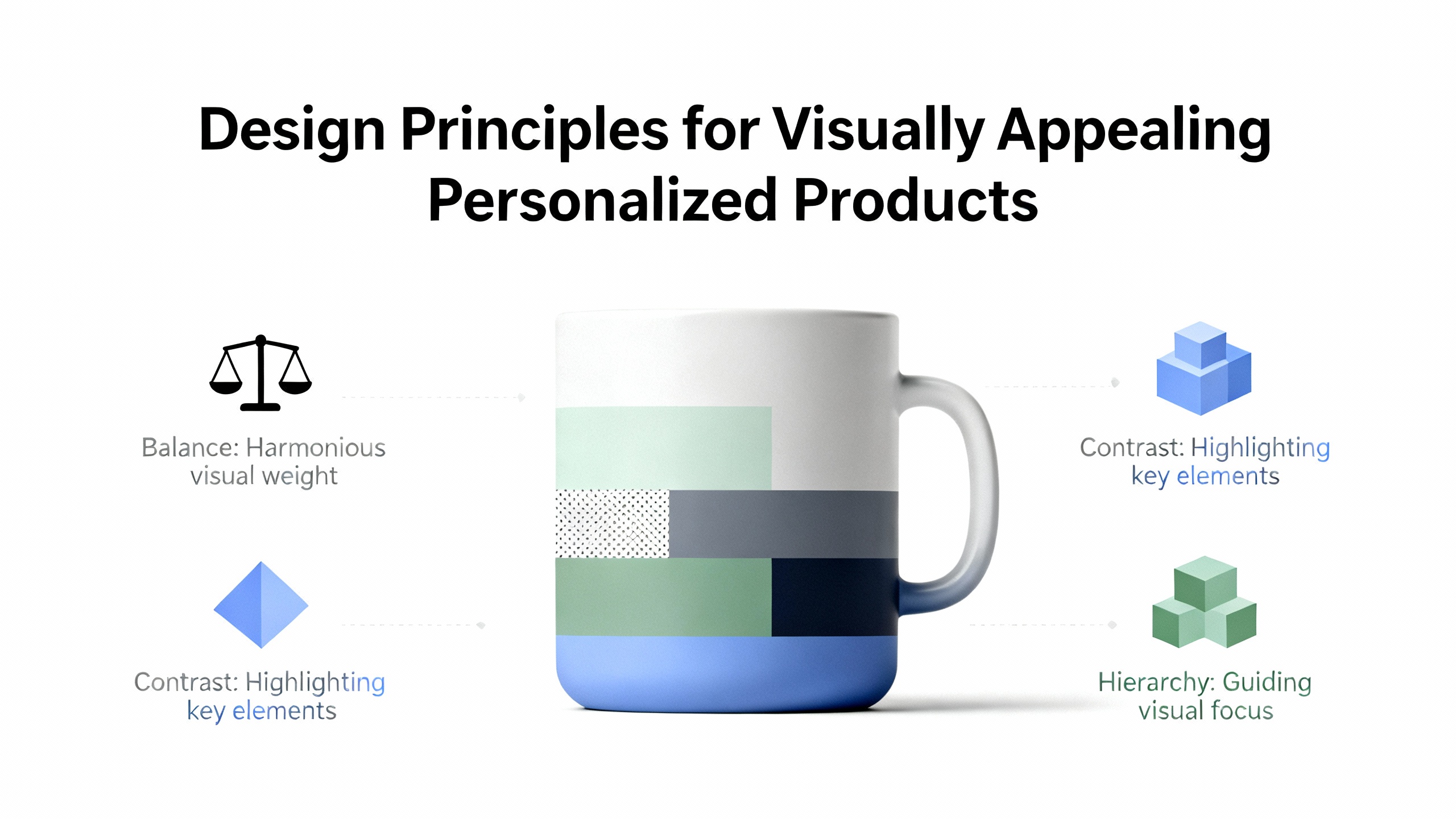
Profitable aesthetic personalized gifts

Production Models: On-Demand Printing, Dropshipping, and Maker Workflows

Behind every aesthetic custom product business is a production model. Each comes with clear advantages and trade-offs.

Model

Advantages

Challenges

Best Fit For

Print-on-demand / web-to-print

No inventory, wide SKU range, easy iteration on designs

Limited control over materials and packaging, lead times to manage

New brands testing niches, photo gifts, apparel, home decor

Dropshipping personalized items

Faster access to many product types via third-party suppliers

Less control over supply chain, harder to differentiate purely on catalog

Curators, gift shops, marketplaces plugging into Amazon-like catalogs

Maker / desktop fabrication

High uniqueness, deep control over materials and finish

Capital and skill intensive, throughput constraints

Hybrid brands, premium artisans, local or high-ticket products

Shutterfly and CanvasChamp are examples of web-to-print operations focused on photo decor. They emphasize convenient online design tools and doorstep delivery, with CanvasChamp highlighting fast shipping and prompt replacement of damaged items. PrintXpand’s guidance around web-to-print storefronts and integrated product customization tools is aimed at entrepreneurs who want a similar infrastructure without building everything from scratch.

Amazon Custom, Zazzle, and Personal Creations illustrate the dropshipping-style marketplace approach, where many independent sellers plug into a large platform. The benefit is immediate access to customers who are already searching for personalized products; the downside is intense competition and limited control over the overall experience.

Swiftshape’s LX30 and Womp’s 3D-printing workflows show what a maker-driven model looks like. You bring part or all of production in-house using compact but capable machines and manage every detail from material selection to finishing. The trade-off is capital and operational complexity, but the reward is a level of uniqueness that is difficult for pure dropshippers to match.

Quality, Fulfillment, and Customer Experience

Aesthetic custom products have an extra layer of risk: they are often made-to-order and personalized, which can complicate returns and quality expectations. Handling these well is a major competitive edge.

Managing Lead Times and Expectations

CNN Underscored repeatedly reminds readers to start holiday shopping early because custom production and shipping can take longer than standard retail. As a merchant, you should mirror that transparency. Clearly state production times, especially during peak seasons, and highlight cut-off dates for major holidays like Christmas.

CanvasChamp’s messaging focuses on shipping custom home decor promptly and offering priority shipping for customers who need faster delivery. They commit to replacing broken items quickly to keep the experience hassle-free. This is the level of operational clarity that reassures buyers when they are ordering a personalized, non-returnable gift.

Ensuring Durability and Finish

Womp’s guidance on 3D printing stresses design constraints such as minimum wall thickness around 0.05 in, avoiding fragile overhangs, and selecting materials and finishes that match use cases. They also recommend hollowing large decorative objects to cut material use and cost, and sealing appropriate items to resist fading and abrasion.

The same principles apply across other media. Shutterfly emphasizes high-quality materials so photo gifts remain vibrant for years. Mark and Graham focuses on sturdy materials like marble, wood, porcelain, and plush textiles in their personalized decor. PrintXpand notes that engraved items in metal, wood, or acrylic can last for decades with proper care.

Your job is to choose production partners, materials, and print methods that match your brand promise. If you market heirloom-style cutting boards, for example, laser engraving on quality hardwood and proper finishing are non-negotiable.

Returns, Replacements, and Guarantees

Personalization makes traditional returns tricky, but several retailers in your notes show how to handle this thoughtfully. Uncommon Goods offers a “forever returns” policy, allowing customers to return items anytime if they are not loved. Mark and Graham and CanvasChamp emphasize careful packing and responsive replacement when items arrive damaged.

For a smaller brand, you might not mirror a lifetime return policy, but you can offer strong guarantees around print quality, manufacturing defects, and shipping damage. Clear policies and responsive support are especially important when customers are trusting you with milestone gifts—weddings, anniversaries, memorials, or first homes.

Positioning, Pricing, and Marketing for Aesthetic Custom Products

Once your product and operations are in place, the next step is to position and price your line so that aesthetics and personalization are both visible and valued.

Tell a Clear Story

Uncommon Goods differentiates by emphasizing that products come from independent makers and adhere to an animal-friendly materials policy that excludes leather, feathers, and fur. Decorilla sell not only decor objects but also design services, framing their e-design gift card as a premium way to refresh an entire room. CNN Underscored and Wirecutter tell stories about memory, heritage, fashion identity, and playful self-expression.

You should similarly anchor your brand. Maybe you are the store for pet lovers, the shop for minimalist homebodies, or the go-to for eco-conscious office gifts. Whatever your angle, make sure your product photography, copy, and collections all reinforce that story visually and verbally.

Price for Value, Not Commodity

PrintXpand’s analysis that buyers are willing to pay a premium for customized items is reflected in many of the examples in your research notes. Luxury jewelry from Aflé Bijoux, handcrafted home goods, engraved chef’s knives, and premium monogrammed throw blankets all command higher prices because they combine quality materials, strong design, and personalization.

Your pricing should reflect the full bundle: the base product, the design system, the personalization experience, and the emotional value of receiving a truly fitting gift. Underpricing sends the wrong signal and leaves you with too little margin to invest in photography, customer service, or packaging—all core components of aesthetic value.

Market Like an Editor, Not Just a Catalog

Take cues from CNN Underscored and Wirecutter. They do not dump hundreds of options into a feed; they create themed, well-structured gift guides: gifts for cooks, travelers, kids, pet owners, and design lovers. Decorilla curates home decor gift ideas specifically for design enthusiasts. Uncommon Goods and Zazzle organize large assortments into discoverable, inspiring collections.

As a merchant, you can emulate this editorial approach on your own storefront and content channels. Build curated landing pages and campaigns such as “monochrome photo gifts for modern homes,” “pet-inspired custom accessories,” or “personalized tech essentials for remote workers.” Use storytelling, not just product grids, to help shoppers visualize the gift in the recipient’s life.

Common Mistakes to Avoid

Several pitfalls show up repeatedly across the research.

One major mistake is overcomplicating early projects. Womp warns against designing 3D-printed items without respecting constraints like wall thickness, orientation, and material suitability. PrintXpand cautions entrepreneurs not to choose materials or finishes unsuited to the item’s use and to avoid ignoring assembly and structural constraints. For a print-on-demand merchant, the equivalent error is cramming too much text or imagery onto a product, using low-resolution photos, or mixing clashing colors and fonts without a clear design system.

Another frequent issue is underestimating timelines. CNN Underscored reminds buyers that custom production and shipping can take longer than expected, and PrintXpand points out that design, printing, and shipping all add up. If you carry made-to-order items, especially for holidays, you must plan your production capacity and clearly communicate cutoffs.

A third trap is cultural or contextual insensitivity in personalization. PrintXpand mentions errors in personalized text and imagery as a common mistake. You need both technical safeguards (such as filters for prohibited content) and human awareness so your designs do not unintentionally misrepresent symbols, languages, or identities.

Finally, there is the temptation to scale SKU count faster than your aesthetic quality. Amazon Custom and similar marketplaces can host hundreds of thousands of personalized products because they aggregate many sellers. A single brand does not need that breadth. You are better served by a focused line of exceptionally well-designed items than a sprawling catalog of mediocre ones.

Pros and Cons of Focusing on Aesthetic Custom Products

To decide whether to lean into this space, it helps to summarize the trade-offs.

Aspect

Advantages

Challenges

Customer appeal

High emotional impact, strong giftability, low regifting rates based on editorial coverage

Design and production errors are more visible and disappointing

Differentiation

Combines brand aesthetic with personalization, making it harder to copy

Requires real design investment and consistent visual standards

Economics

Supports premium pricing and higher perceived value

Higher expectations for materials, print quality, and service can raise costs

Operations

On-demand models reduce inventory risk

Personalization complicates returns, timelines, and customer service

Marketing

Naturally generates stories, user photos, and social content

Requires editorial-style merchandising and seasonal planning rather than pure catalog uploads

If you are willing to treat aesthetics as a strategic asset and build the right infrastructure around it, this category rewards the effort.

Brief FAQ

Is the personalized gift market too saturated to enter now?

The presence of large players and marketplaces can be intimidating, but the data summarized by PrintXpand indicates that personalized gifts are still growing significantly over the coming years. What looks saturated at the macro level often contains under-served niches at the micro level: specific lifestyles, decor styles, pet breeds, sports, regions, or professions. If you narrow your focus and differentiate through design and experience, there is still room to build a strong brand.

What if I am not a designer?

Many successful merchants are not designers by training. Platforms like PrintXpand and Kickflip emphasize visual product designers, templates, and even AI-assisted tools to help create attractive layouts without starting from a blank canvas. You can also hire freelance designers, as PrintXpand suggests, or license artwork from independent creators and focus your energy on curation, copywriting, and customer experience.

Which product category should I start with?

Look at the intersection of three things: what your target audience already buys (for example, apparel, home decor, tech accessories), where the market is large and growing (as with apparel, accessories, and gifts in the research notes), and where you can realistically deliver quality. For most first-time founders, a focused line of apparel or home decor—such as tote bags, throw pillows, or wall art—paired with solid print-on-demand partners is a sensible entry point.

Closing

If you are serious about building a durable ecommerce business in on-demand printing or dropshipping, treat aesthetic custom products as more than a trend. Done well, they become long-lived objects in your customers’ homes and lives. Focus on a clear niche, invest in design systems and visualization tools, and hold your production quality to the same standard as the brands you admire in the research above. That combination of beauty and personalization is where real, compounding value sits for both your customers and your business.

References

  1. https://www.canvaschamp.com/home-decor?srsltid=AfmBOoobnKl1YMz5QI9qwlyIfPmdUVn2rdsSg724epYfSEknl22Bik1C
  2. https://www.personalcreations.com/?srsltid=AfmBOop57BAaDuqn-94Rx_huHxXFHg08g-WziyQ_o4F0hto5cRNs2mie
  3. https://www.personalizationmall.com/Personalized-Home-Decor-s15.store?srsltid=AfmBOorU3cRr0axv07jQ8073AHPLfssl11ISIe9i3jcuddSQDUQy0ACo
  4. https://www.thingsremembered.com/
  5. https://www.amazon.com/Amazon-Custom/b?ie=UTF8&node=11032013011
  6. https://gokickflip.com/blog/custom-gifts-ideas
  7. https://www.groovyguygifts.com/collections/personalized-home-decor?srsltid=AfmBOorAQswcruh-74NwgMZ8jR2iRP_BHp1ETVc1giDBz-IqaFWwbexW
  8. https://www.papernstitchblog.com/diy-gift-ideas-holiday/
  9. https://www.shutterfly.com/home-decor/
  10. https://swiftshape.com/the-best-custom-gifts-to-make-for-friends-and-family/

Like the article

0
Aesthetic Custom Products: Building a Business Around Visually Appealing Personalized Gifts

Aesthetic Custom Products: Building a Business Around Visually Appealing Personalized Gifts

Why Aesthetic Custom Products Are So Powerful Right Now

In the last decade mentoring founders in print-on-demand and dropshipping, I have watched one pattern repeat itself: the stores that win in personalized products are not just personal, they are beautiful. A name on a mug is easy. A mug that fits a person’s taste, their home, and their social feed is what actually gets gifted, photographed, and reordered.

Across the market, serious players are leaning into this. Large marketplaces such as Amazon Custom aggregate hundreds of thousands of personalized items, indicating how broad demand already is. Gift-focused retailers like Uncommon Goods and Mark and Graham highlight design-forward, customized pieces, while photo-heavy platforms such as Shutterfly frame personalization as a way to turn memories into decor. Editorial sites like CNN Underscored and Wirecutter from The New York Times now produce full guides dedicated to personalized gifts, not generic ones.

At the same time, industry analysis summarized by PrintXpand points to significant growth in categories where aesthetics and personalization overlap. US fashion ecommerce is projected to surpass $219 billion, the global apparel market is expected to reach about $1.2 trillion by 2030, and the personalized gifts segment is forecast to grow from roughly $30.3 billion in 2022 to $47.6 billion by 2030 and further to about $54.15 billion by 2033. When demand and editorial attention both converge on a niche, it is a signal founders should take seriously.

This is the context in which aesthetic custom products live: visually compelling items that are also made just for someone. If you design, position, and fulfill them correctly, they can be one of the most defensible and profitable segments in on-demand printing and dropshipping.

Personalized gift business strategy

What Exactly Are Aesthetic Custom Products?

For a working definition in an ecommerce context, aesthetic custom products are physical items that combine two layers of value.

First, they are personalized. They carry a name, date, photo, location, monogram, or story relevant to a specific person or occasion. Shutterfly, for example, defines personalized gifts and decor as items customized with photos, names, or important dates to turn everyday items into keepsakes. CNN Underscored and Wirecutter highlight personalization on shoes, jewelry, homeware, and keepsakes using names, initials, or specific dates.

Second, they are visually intentional. They look like something you would want in your home or wardrobe even without the personalization. Mark and Graham emphasizes marble-and-wood serveware, coordinated monogrammed textiles, and sculptural decor. Decorilla’s interior design guidance frames a good home decor gift as something that enhances both aesthetics and function, whether a throw blanket, vase, or art object. Canva’s coverage of custom tote bags focuses on design ideas that match a recipient’s tastes and style, not just adding text to a blank canvas.

When you combine these two layers—meaningful personalization and strong aesthetics—you move away from novelty gifts and into products that people use daily, display in their homes, or wear proudly.

Why Visual Appeal Matters So Much in Personalized Gifts

Personalization alone makes something emotionally relevant. Aesthetics make it desirable, giftable, and shareable.

Shutterfly positions personalized home decor as “sharing life’s joy” by turning memories into visual elements throughout the home. That phrasing is important. The photo or name is the memory, but the canvas, blanket, or framed print is the visual vehicle. If the piece clashes with the recipient’s decor, it will quietly migrate to a closet rather than the living room wall.

CNN Underscored’s guide to personalized gifts leans heavily on fashion accessories, jewelry, and home items where design is front and center. One of Wirecutter’s flagship picks is a customized pair of Converse sneakers. The shoe is already a design icon; personalization comes via colors, prints, and subtle embroidery. Their editorial recommendation is to keep the personalization tasteful—such as initials on the heel stripe—so the shoe remains wearable and stylish.

From an entrepreneurial perspective, that balance matters. A beautifully designed personalized blanket will live on a couch for years, pass through every house move, and be seen by guests. A poorly designed novelty blanket might earn a brief laugh and then disappear. The first scenario supports repeat sales, referrals, and user-generated content; the second does not.

High quality custom home decor items

Market Signals You Should Pay Attention To

When you evaluate a niche, you want demand, willingness to pay, and room to differentiate.

The personalized gifts segment itself, according to data cited by PrintXpand, is growing at a healthy compound rate, moving from about $30.3 billion in 2022 toward roughly $47.6 billion by 2030 and beyond. The broader apparel and fashion accessories markets are massive—global apparel around $1.2 trillion by 2030, and e-commerce fashion accessories expected to reach about $692.8 billion—making personalization a way to carve out a distinct corner in a crowded space.

On the supply side, Amazon Custom’s category snapshot showed more than 300,000 customizable items at one point, and Uncommon Goods curates hundreds of personalized gift and decor ideas. Zazzle, Personal Creations, Shutterfly, and similar players all center their positioning on personalized gifts. This is not a fringe bet; it is a proven category where execution quality is now the main differentiator.

The message is clear: there is demand, there is competition, and there is still room for brands that treat aesthetics as a core competency rather than an afterthought.

Core Product Categories Where Aesthetic Customization Wins

Within print-on-demand and dropshipping, several product families consistently reward attention to aesthetics.

Apparel and Fashion Accessories

Apparel is an evergreen category, but it is also noisy. PrintXpand’s research notes that fashion ecommerce is enormous and growing, which is why they emphasize narrowing to specific niches. Personalized apparel and accessories—hoodies, jackets, organic tees, plus-size collections, and women- or kids-only lines—become viable when you pair a clear audience with strong visual identity.

Pet-themed socks and gloves, for instance, are highlighted as a niche that works when designs feature attractive patterns and colors rather than just pasted pet photos. Wirecutter’s customizable Converse sneakers and CNN Underscored’s coverage of custom shoes, jewelry, and accessories reinforce the idea that a familiar silhouette plus personalized color and monogramming can be a winning formula.

Accessories like tote bags are another standout. Canva points out that custom tote bags are now one of the most popular types of customized merchandise for events and personal gifts. They argue that totes can be more exciting than socks because they show off design and get used frequently. Their suggestions—using personal photos, original artwork, song lyrics, or inside jokes—are all about aesthetic storytelling, not just text placement.

Home Decor and Lifestyle Goods

Home decor is where aesthetics cannot be optional. Decorilla defines home decor gifts as objects that enhance both the aesthetics and function of living spaces. Their guidance is to look at the recipient’s space, identify what is missing, and choose pieces—throws, vases, artful accents—that match their style.

Mark and Graham’s catalog of monogrammed home goods makes a similar point. They offer marble-and-wood cheese boards engraved with family names, acrylic and melamine outdoor dinnerware with monograms, embroidered throws, customizable pillows, and monogrammed towels and robes. The monogram is the personal layer, but the base items win on materials, form, and color.

Shutterfly sits at the intersection of decor and memory. They turn personal photos into canvas prints, metal prints, photo tiles, custom pillows, fleece blankets, and tabletop decor. The promise is that these items fit a range of aesthetics from rustic to boho chic, so the personalized piece actually matches the home.

If you are building a print-on-demand home decor line, study these players closely. Their success comes from framing personalization as a natural extension of interior style rather than a novelty add-on.

Tech and Gaming Accessories

PrintXpand highlights custom tech accessories as a long-term, high-demand category: phone cases, laptop skins and bags, smartwatch straps, and similar items that people touch daily. The recommendation is to focus on specific device models and give customers the ability to add names, logos, or photos via an online personalization tool.

Kickflip’s custom gifts guide references bespoke iPhone and iPad cases from DodoCase as a catch-all option when you are unsure what to give, again emphasizing design choice plus monogramming. On the gaming side, Cinch Gaming’s customized controllers for PlayStation and Xbox illustrate how visual customization for gamers (colors, patterns, themes) combined with performance tweaks becomes a compelling gift.

These categories are particularly friendly to dropshipping and print-on-demand models because the core blanks are standardized and the design layer is digital.

3D-Printed and Maker-Driven Gifts

Aesthetic custom products are not limited to printing on flat surfaces. Swiftshape describes a home-friendly, three-in-one desktop machine with laser, CNC, and 3D printing functions, with a working area around 30 in by 16 in. Their examples include laser-engraved tumblers and glassware, carved wooden cutting boards and keepsake boxes, and 3D-printed desk accessories, jewelry, and miniatures. The common thread is that all of these are designed objects with a personalized twist.

Womp’s coverage of custom 3D-printed gifts frames them as cost-effective, unique items across home decor, functional everyday tools, hobby-based accessories, and event-specific pieces like custom ornaments and awards. They emphasize design constraints such as minimum wall thickness around 0.05 in, printer size limits, and structural strength, all of which directly affect how refined and durable the final product looks.

If you are more of a maker than a marketer, adding 3D printing or desktop fabrication to your stack allows you to produce highly distinctive, visually complex gifts that standard print partners cannot easily replicate.

Corporate, Promotional, and Subscription Boxes

The promotional products industry is estimated at about $26.5 billion in PrintXpand’s research, growing around 4 percent annually. This segment includes branded drinkware, reusable bottles, hats, apparel, and stationery, often ordered in bulk by companies, nonprofits, hospitals, and influencers.

Here, aesthetics and personalization show up in two layers. First, the design of the items themselves must look premium enough to reflect the brand’s image. Second, curated swag boxes or subscription-style offerings add a layer of visual storytelling in packaging and assortment. PrintXpand points to companies bundling apparel, tech accessories, drinkware, and other goodies into coordinated boxes where personalization significantly increases perceived value.

For an entrepreneur, this means that if you can create visually coherent, on-brand assortments, you can move beyond single-item gifts into higher-ticket corporate and recurring orders.

Design Principles for Visually Appealing Personalized Products

Treat design as a system, not a last-minute step. Several principles from the research corpus show up repeatedly among successful players.

Start with a Desirable Base Product

Wirecutter’s customizable Converse shoes, CNN Underscored’s selection of knives, aprons, totes, and jewelry, and Mark and Graham’s serveware all follow the same pattern: pick recognizable, useful items that people already like, then personalize them.

As a store owner, this means testing your base products on their own merits. A tote should have the right weight and handle length. A blanket should be soft, not scratchy. A phone case should actually protect the phone. Then the design and personalization layers amplify an already-good object.

Balance Personalization and Visual Restraint

Wirecutter explicitly warns against overwhelming a product with personalization, recommending short initials on a low heel stripe instead of loud text on the side of a shoe. CNN Underscored features nameplate necklaces and monogrammed accessories but pairs them with classic designs.

In practice, this means you should:

Focus copy on short names, initials, or dates instead of long phrases when space is limited.

Use typography that matches the product’s aesthetic rather than default fonts that clash.

Reserve high-detail imagery for areas where it will actually be visible and appreciated, rather than covering every surface.

Shutterfly’s photo gifts and Canva’s tote bag ideas also show that integrating personal photos, quotes, and inside jokes works best when they are framed by a coherent layout rather than scattered arbitrarily.

Create Aesthetic Systems, Not One-Off Designs

The brands in your research notes rarely sell single isolated designs; they sell families. Mark and Graham coordinates monogrammed throws, pillows, and serveware. Shutterfly offers gallery walls of canvases and photo tiles that work together. Uncommon Goods curates design-forward collections that share a certain sensibility.

To emulate this, define a small design system for each niche. Decide on two or three color palettes, a core type hierarchy, and a few layout templates per product type. Then let personalization live inside these systems, not outside of them. This approach keeps your catalog visually coherent and reduces design overhead.

Use Visualization Tools and Configurators

A common thread across Amazon Custom, Zazzle, Shutterfly, and platforms like Kickflip and PrintXpand is real-time or near-real-time visualization. Customers can see a preview of their monogrammed board, photo blanket, or sneaker before buying.

Kickflip, for example, positions itself as a platform for building professional product configurators without writing code, particularly for merchants on Shopify. PrintXpand advocates using a web-based product designer tool with template libraries and even AI image and text generation. These tools help non-designers create aesthetically acceptable layouts while enforcing your design rules.

As a mentor, my advice is straightforward: do not make customers imagine how their personalization will look. Show them.

Profitable aesthetic personalized gifts

Production Models: On-Demand Printing, Dropshipping, and Maker Workflows

Behind every aesthetic custom product business is a production model. Each comes with clear advantages and trade-offs.

Model

Advantages

Challenges

Best Fit For

Print-on-demand / web-to-print

No inventory, wide SKU range, easy iteration on designs

Limited control over materials and packaging, lead times to manage

New brands testing niches, photo gifts, apparel, home decor

Dropshipping personalized items

Faster access to many product types via third-party suppliers

Less control over supply chain, harder to differentiate purely on catalog

Curators, gift shops, marketplaces plugging into Amazon-like catalogs

Maker / desktop fabrication

High uniqueness, deep control over materials and finish

Capital and skill intensive, throughput constraints

Hybrid brands, premium artisans, local or high-ticket products

Shutterfly and CanvasChamp are examples of web-to-print operations focused on photo decor. They emphasize convenient online design tools and doorstep delivery, with CanvasChamp highlighting fast shipping and prompt replacement of damaged items. PrintXpand’s guidance around web-to-print storefronts and integrated product customization tools is aimed at entrepreneurs who want a similar infrastructure without building everything from scratch.

Amazon Custom, Zazzle, and Personal Creations illustrate the dropshipping-style marketplace approach, where many independent sellers plug into a large platform. The benefit is immediate access to customers who are already searching for personalized products; the downside is intense competition and limited control over the overall experience.

Swiftshape’s LX30 and Womp’s 3D-printing workflows show what a maker-driven model looks like. You bring part or all of production in-house using compact but capable machines and manage every detail from material selection to finishing. The trade-off is capital and operational complexity, but the reward is a level of uniqueness that is difficult for pure dropshippers to match.

Quality, Fulfillment, and Customer Experience

Aesthetic custom products have an extra layer of risk: they are often made-to-order and personalized, which can complicate returns and quality expectations. Handling these well is a major competitive edge.

Managing Lead Times and Expectations

CNN Underscored repeatedly reminds readers to start holiday shopping early because custom production and shipping can take longer than standard retail. As a merchant, you should mirror that transparency. Clearly state production times, especially during peak seasons, and highlight cut-off dates for major holidays like Christmas.

CanvasChamp’s messaging focuses on shipping custom home decor promptly and offering priority shipping for customers who need faster delivery. They commit to replacing broken items quickly to keep the experience hassle-free. This is the level of operational clarity that reassures buyers when they are ordering a personalized, non-returnable gift.

Ensuring Durability and Finish

Womp’s guidance on 3D printing stresses design constraints such as minimum wall thickness around 0.05 in, avoiding fragile overhangs, and selecting materials and finishes that match use cases. They also recommend hollowing large decorative objects to cut material use and cost, and sealing appropriate items to resist fading and abrasion.

The same principles apply across other media. Shutterfly emphasizes high-quality materials so photo gifts remain vibrant for years. Mark and Graham focuses on sturdy materials like marble, wood, porcelain, and plush textiles in their personalized decor. PrintXpand notes that engraved items in metal, wood, or acrylic can last for decades with proper care.

Your job is to choose production partners, materials, and print methods that match your brand promise. If you market heirloom-style cutting boards, for example, laser engraving on quality hardwood and proper finishing are non-negotiable.

Returns, Replacements, and Guarantees

Personalization makes traditional returns tricky, but several retailers in your notes show how to handle this thoughtfully. Uncommon Goods offers a “forever returns” policy, allowing customers to return items anytime if they are not loved. Mark and Graham and CanvasChamp emphasize careful packing and responsive replacement when items arrive damaged.

For a smaller brand, you might not mirror a lifetime return policy, but you can offer strong guarantees around print quality, manufacturing defects, and shipping damage. Clear policies and responsive support are especially important when customers are trusting you with milestone gifts—weddings, anniversaries, memorials, or first homes.

Positioning, Pricing, and Marketing for Aesthetic Custom Products

Once your product and operations are in place, the next step is to position and price your line so that aesthetics and personalization are both visible and valued.

Tell a Clear Story

Uncommon Goods differentiates by emphasizing that products come from independent makers and adhere to an animal-friendly materials policy that excludes leather, feathers, and fur. Decorilla sell not only decor objects but also design services, framing their e-design gift card as a premium way to refresh an entire room. CNN Underscored and Wirecutter tell stories about memory, heritage, fashion identity, and playful self-expression.

You should similarly anchor your brand. Maybe you are the store for pet lovers, the shop for minimalist homebodies, or the go-to for eco-conscious office gifts. Whatever your angle, make sure your product photography, copy, and collections all reinforce that story visually and verbally.

Price for Value, Not Commodity

PrintXpand’s analysis that buyers are willing to pay a premium for customized items is reflected in many of the examples in your research notes. Luxury jewelry from Aflé Bijoux, handcrafted home goods, engraved chef’s knives, and premium monogrammed throw blankets all command higher prices because they combine quality materials, strong design, and personalization.

Your pricing should reflect the full bundle: the base product, the design system, the personalization experience, and the emotional value of receiving a truly fitting gift. Underpricing sends the wrong signal and leaves you with too little margin to invest in photography, customer service, or packaging—all core components of aesthetic value.

Market Like an Editor, Not Just a Catalog

Take cues from CNN Underscored and Wirecutter. They do not dump hundreds of options into a feed; they create themed, well-structured gift guides: gifts for cooks, travelers, kids, pet owners, and design lovers. Decorilla curates home decor gift ideas specifically for design enthusiasts. Uncommon Goods and Zazzle organize large assortments into discoverable, inspiring collections.

As a merchant, you can emulate this editorial approach on your own storefront and content channels. Build curated landing pages and campaigns such as “monochrome photo gifts for modern homes,” “pet-inspired custom accessories,” or “personalized tech essentials for remote workers.” Use storytelling, not just product grids, to help shoppers visualize the gift in the recipient’s life.

Common Mistakes to Avoid

Several pitfalls show up repeatedly across the research.

One major mistake is overcomplicating early projects. Womp warns against designing 3D-printed items without respecting constraints like wall thickness, orientation, and material suitability. PrintXpand cautions entrepreneurs not to choose materials or finishes unsuited to the item’s use and to avoid ignoring assembly and structural constraints. For a print-on-demand merchant, the equivalent error is cramming too much text or imagery onto a product, using low-resolution photos, or mixing clashing colors and fonts without a clear design system.

Another frequent issue is underestimating timelines. CNN Underscored reminds buyers that custom production and shipping can take longer than expected, and PrintXpand points out that design, printing, and shipping all add up. If you carry made-to-order items, especially for holidays, you must plan your production capacity and clearly communicate cutoffs.

A third trap is cultural or contextual insensitivity in personalization. PrintXpand mentions errors in personalized text and imagery as a common mistake. You need both technical safeguards (such as filters for prohibited content) and human awareness so your designs do not unintentionally misrepresent symbols, languages, or identities.

Finally, there is the temptation to scale SKU count faster than your aesthetic quality. Amazon Custom and similar marketplaces can host hundreds of thousands of personalized products because they aggregate many sellers. A single brand does not need that breadth. You are better served by a focused line of exceptionally well-designed items than a sprawling catalog of mediocre ones.

Pros and Cons of Focusing on Aesthetic Custom Products

To decide whether to lean into this space, it helps to summarize the trade-offs.

Aspect

Advantages

Challenges

Customer appeal

High emotional impact, strong giftability, low regifting rates based on editorial coverage

Design and production errors are more visible and disappointing

Differentiation

Combines brand aesthetic with personalization, making it harder to copy

Requires real design investment and consistent visual standards

Economics

Supports premium pricing and higher perceived value

Higher expectations for materials, print quality, and service can raise costs

Operations

On-demand models reduce inventory risk

Personalization complicates returns, timelines, and customer service

Marketing

Naturally generates stories, user photos, and social content

Requires editorial-style merchandising and seasonal planning rather than pure catalog uploads

If you are willing to treat aesthetics as a strategic asset and build the right infrastructure around it, this category rewards the effort.

Brief FAQ

Is the personalized gift market too saturated to enter now?

The presence of large players and marketplaces can be intimidating, but the data summarized by PrintXpand indicates that personalized gifts are still growing significantly over the coming years. What looks saturated at the macro level often contains under-served niches at the micro level: specific lifestyles, decor styles, pet breeds, sports, regions, or professions. If you narrow your focus and differentiate through design and experience, there is still room to build a strong brand.

What if I am not a designer?

Many successful merchants are not designers by training. Platforms like PrintXpand and Kickflip emphasize visual product designers, templates, and even AI-assisted tools to help create attractive layouts without starting from a blank canvas. You can also hire freelance designers, as PrintXpand suggests, or license artwork from independent creators and focus your energy on curation, copywriting, and customer experience.

Which product category should I start with?

Look at the intersection of three things: what your target audience already buys (for example, apparel, home decor, tech accessories), where the market is large and growing (as with apparel, accessories, and gifts in the research notes), and where you can realistically deliver quality. For most first-time founders, a focused line of apparel or home decor—such as tote bags, throw pillows, or wall art—paired with solid print-on-demand partners is a sensible entry point.

Closing

If you are serious about building a durable ecommerce business in on-demand printing or dropshipping, treat aesthetic custom products as more than a trend. Done well, they become long-lived objects in your customers’ homes and lives. Focus on a clear niche, invest in design systems and visualization tools, and hold your production quality to the same standard as the brands you admire in the research above. That combination of beauty and personalization is where real, compounding value sits for both your customers and your business.

References

  1. https://www.canvaschamp.com/home-decor?srsltid=AfmBOoobnKl1YMz5QI9qwlyIfPmdUVn2rdsSg724epYfSEknl22Bik1C
  2. https://www.personalcreations.com/?srsltid=AfmBOop57BAaDuqn-94Rx_huHxXFHg08g-WziyQ_o4F0hto5cRNs2mie
  3. https://www.personalizationmall.com/Personalized-Home-Decor-s15.store?srsltid=AfmBOorU3cRr0axv07jQ8073AHPLfssl11ISIe9i3jcuddSQDUQy0ACo
  4. https://www.thingsremembered.com/
  5. https://www.amazon.com/Amazon-Custom/b?ie=UTF8&node=11032013011
  6. https://gokickflip.com/blog/custom-gifts-ideas
  7. https://www.groovyguygifts.com/collections/personalized-home-decor?srsltid=AfmBOorAQswcruh-74NwgMZ8jR2iRP_BHp1ETVc1giDBz-IqaFWwbexW
  8. https://www.papernstitchblog.com/diy-gift-ideas-holiday/
  9. https://www.shutterfly.com/home-decor/
  10. https://swiftshape.com/the-best-custom-gifts-to-make-for-friends-and-family/
Like the article

0