


Why “Toxic Positivity” Ironic Designs Are Booming In Mental Health Culture

Why “Toxic Positivity” Ironic Designs Are Booming In Mental Health Culture

Dec 27, 2025 by Iris POD e-Commerce 101

From “Good Vibes Only” To “Actually, I’m Not OK”

If you run an on‑demand printing or dropshipping brand today, you have probably noticed a very specific style of mental health merch taking over: T‑shirts that twist “good vibes only” into “mixed vibes always,” tote bags that say “please stop telling me to be positive,” and posters that parody self‑help slogans with dark, honest humor.

On the surface, it looks like another meme trend. Underneath, it is a cultural backlash against something clinicians now call “toxic positivity” and a signal that customers want more emotionally honest products. Articles from Everyday Health, Verywell Mind, Psychology Today, and the Anxiety and Depression Association of America all converge on the same idea: when positivity is used to shut down real feelings, it stops being helpful and starts to harm mental health.

For founders in the print‑on‑demand and dropshipping space, this shift is not just aesthetic. It changes how you design, message, and position your brand. You are no longer selling only a graphic on cotton; you are selling a stance on how people are allowed to feel. That is a powerful value proposition, and also a serious responsibility.

In this article, I will unpack why toxic positivity is under fire, why ironic design around it is resonating so strongly, and how to build a business that leverages this trend without exploiting people’s pain.
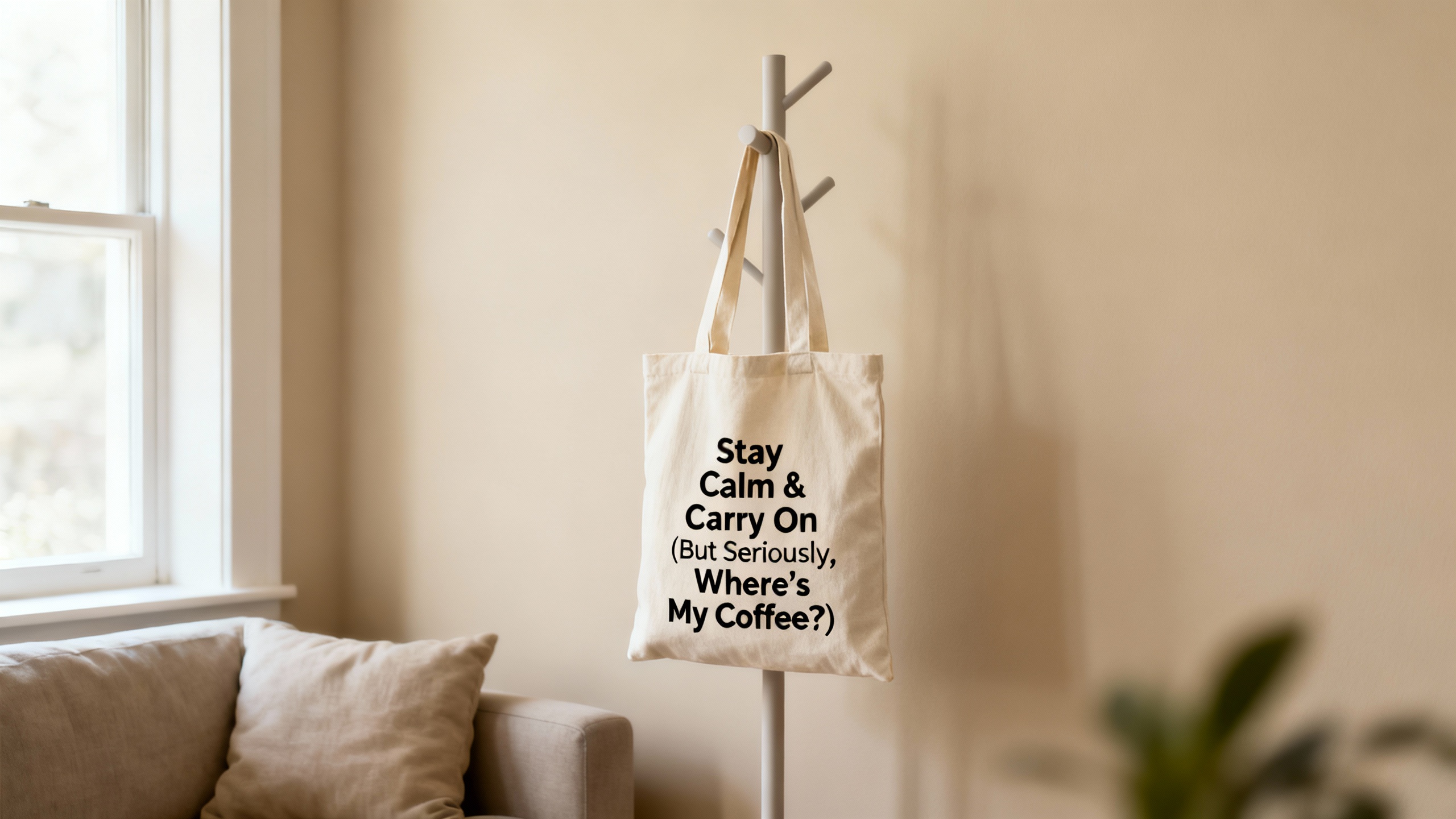
The rise of ironic mental health merchandise

What Toxic Positivity Actually Is

Before we talk design, we need a precise definition.

Across clinical and popular psychology sources, toxic positivity is described as an excessive or rigid insistence on staying positive that dismisses, minimizes, or suppresses genuine painful emotions. The Anxiety and Depression Association of America explains that it becomes harmful when positive thinking turns into a requirement, as in “good vibes only” workplaces or relationships where sadness, anxiety, or grief are treated as personal failures. Psychology Today calls it the act of avoiding or rejecting negative emotions by insisting on positive thinking instead.

A key nuance is that healthy optimism is not the problem. In cognitive behavioral therapy, reframing thoughts can help people cope, but only when the full range of emotions is acknowledged. Healthy positivity says: “This situation is hard, and we can still look for options.” Toxic positivity says: “Stop feeling that way; just be grateful and smile.”

Several themes repeat across research and expert commentary. Everyday Health notes that suppressing emotions tends to strengthen them and can even raise long‑term health risks, referencing a 12‑year Journal of Psychosomatic Research study that linked habitual emotion suppression with higher mortality. MyWellbeing’s clinicians emphasize that discouraging uncomfortable emotions leads to shame and teaches people to disconnect from their own reality. AIA’s mental health piece describes how constant “stay positive” pressure makes people hide distress and avoid seeking help.

In relationships, therapist Abby Medcalf and others describe common red flags: being told to “get over it,” hearing clichés like “everything happens for a reason,” or walking away feeling guilty for having feelings at all. In workplaces, Atlassian’s communication research shows similar patterns: glossing over real problems with “you’ve got this” and “we’re a family here” undermines psychological safety instead of supporting it.

Put simply, emotions like sadness, anger, and fear are not bugs to be deleted. They are signals. Toxic positivity is the attempt to mute those signals with a layer of forced cheer.

Why People Are Pushing Back

The backlash against toxic positivity is not theoretical. Science of People surveyed its audience and found that roughly 67.8 percent had experienced toxic positivity in the previous week. Atlassian cites a survey where almost 68 percent of respondents reported experiencing it from someone recently, and more than 75 percent admitted ignoring their own emotions in favor of being happy.

Since around 2020, the topic has exploded in public conversation. The Anxiety and Depression Association of America notes that searches for “toxic positivity” roughly doubled from early 2020, and major outlets like the Wall Street Journal and multiple psychology platforms have covered it in depth. This timing is not accidental. A global health crisis, social upheaval, and economic instability collided with social feeds full of “good vibes only” content. Many people were grieving, exhausted, or anxious while still being told to stay positive.

At work, Forbes and Atlassian both describe how corporate cultures tied positivity to professionalism. Employees were expected to be upbeat during layoffs, cost‑cutting, or unrealistic workloads. A SHRM report on workplace culture highlights that employees who rate their culture poorly are far more likely to be job hunting, and toxic positivity is one of the culture risks driving that dissatisfaction.

In that context, ironic anti‑positivity designs are not just jokes. They are small acts of resistance. When someone buys a hoodie that says “It is OK to not be OK,” especially if it visually mocks the typical sunshine‑and‑rainbows aesthetic, they are declaring: “I am done pretending.”

For younger consumers especially, mental health talk is more open than it was for previous generations. They understand ideas like emotional validation, psychological safety, and trauma. They also grew up on meme culture, where irony, self‑deprecation, and dark humor are common ways to process pain. The result is a perfect storm for “anti toxic positivity” merch: it feels honest, it speaks their language, and it pushes back against a norm they have personally suffered from.

How Irony Became A Coping Tool

Mental health professionals repeatedly emphasize that allowing the full range of emotions is healthier than chasing constant happiness. MyWellbeing describes being human as inherently uncomfortable and stresses that the real default is mixed emotions, not permanent joy. The Therapy Group DC and Insight Psychology both recommend normalizing difficult feelings and practicing emotional validation rather than rushing to fix them.

Irony and satire, when used well, support those goals rather than undermine them. A mug that says “Happiness is not a choice; therapy is” in a parody of inspirational script typography can do several things at once. It names a harmful message (“happiness is a choice”), challenges it, and replaces it with a healthier alternative (seeking support). For someone who has been told to “stop whining” or “toughen up,” seeing that message on a coworker’s desk can feel like instant validation.

From a psychological standpoint, there are at least three reasons this works.

First, naming the problem reduces confusion. Verywell Mind notes that toxic positivity can make people doubt their own experiences and feel guilty for normal distress. When a design explicitly calls out phrases like “good vibes only” as harmful, it helps people realize, “The issue is not that I am too sensitive; the issue is that my emotions were being invalidated.”

Second, shared humor creates connection. Atlassian’s work on toxic positivity and psychological safety emphasizes that feeling understood and validated reduces stress and increases closeness. Wearing a T‑shirt that jokes about burnout or overused wellness clichés is a way of signaling to others, “You are not alone in feeling this way.”

Third, humor lowers defensiveness. When ideas are challenged directly, people can feel attacked. When they are mocked gently through design, people may be more open to rethinking them. A wall print that reworks “everything happens for a reason” into a playful critique can spark conversation in a way a lecture rarely will.
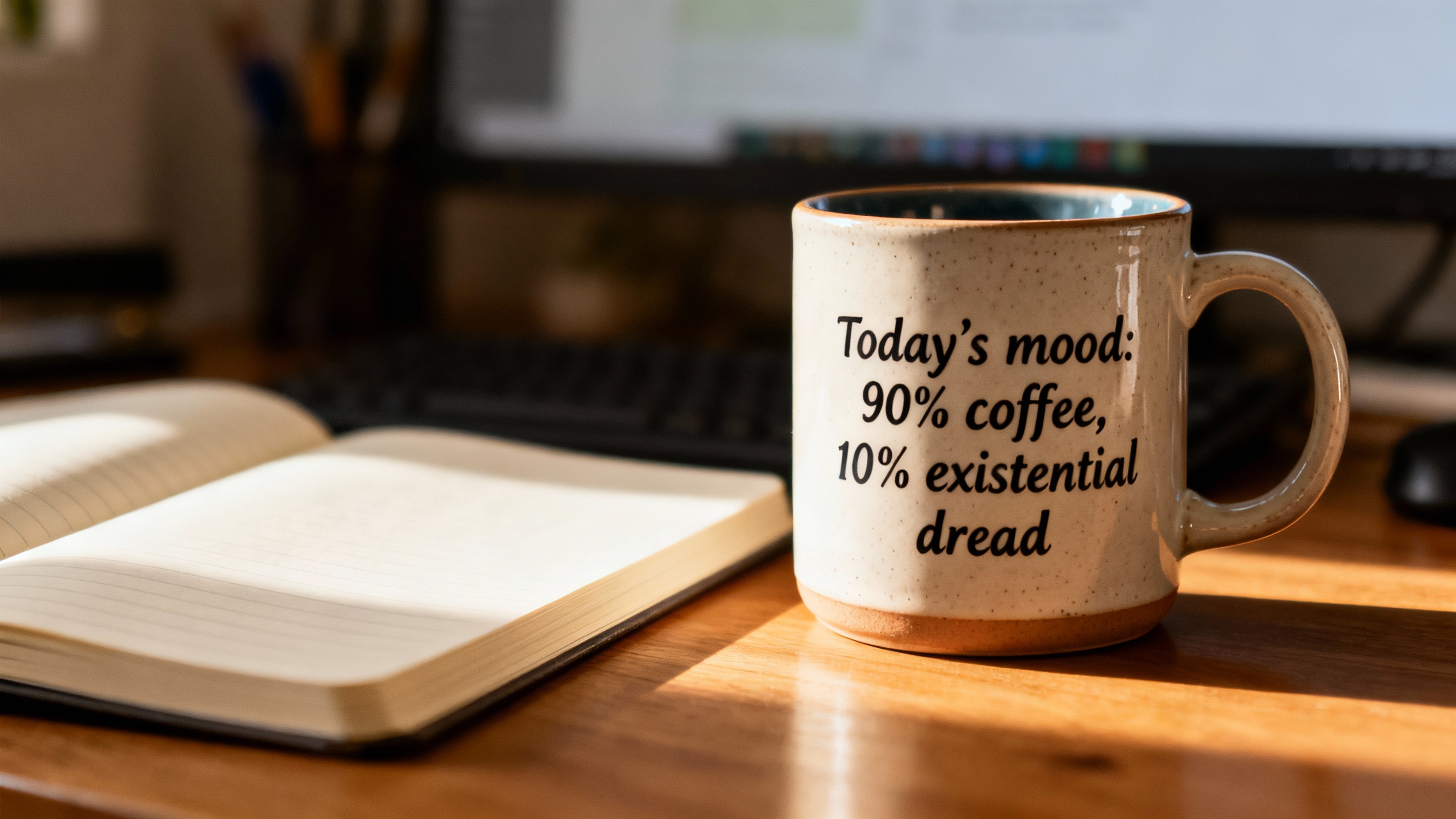
Anti-toxic positivity branding for dropshipping

What The Research Says About Why These Designs Feel Good

Although there is not yet a body of research specifically on ironic merch, the psychology of emotions gives us solid clues about why these products resonate.

Everyday Health highlights that suppressing emotions tends to amplify them and is linked to more distress, even including greater suicidal thinking in healthcare workers who heavily suppressed feelings during the pandemic. AIA’s coverage stresses that hiding real feelings to maintain an upbeat image increases isolation and makes people less likely to ask for support. The Therapy Group DC warns that chronic emotional suppression can worsen mood disorders and increase burnout.

On the positive side, multiple sources emphasize emotional validation as a core antidote. Abby Medcalf, the Anxiety and Depression Association of America, Verywell Mind, and Insight Psychology all recommend responses like “I’m here,” “That sounds difficult,” and “Your feelings make sense” instead of “Look on the bright side.” Atlassian references psychologist Marsha Linehan’s definition of validation as communicating that a person’s reactions make sense in their context.

When a product reflects those validating messages, it becomes more than a joke. It is a micro dose of the healthier alternative. A journal cover that says “All emotions welcome here” echoes the therapeutic stance that there are no good or bad emotions, only signals. A sweatshirt that reads “You do not have to get over it quickly” counters the rush to resolution that fuels toxic positivity.

Science of People connects denial of emotions with higher depression over a ten‑year period and shows that nearly seven in ten of their audience experienced toxic positivity in a single week. Everyday Health cites a long‑term study where people who habitually suppressed emotions faced higher risks of death from various causes. Put together, these findings suggest that normalizing honest emotional expression is not just trendy; it is protective.

In other words, these designs feel good because they align with how our brains and bodies actually work. They say what therapy and research have been saying for years, but in the language of streetwear and home decor.

The Business Case: Why This Matters For Print‑On‑Demand Brands

From an e‑commerce standpoint, the rise of anti‑toxic positivity designs reveals several commercial truths.

Customers increasingly expect brands to be emotionally literate. Workplace research by Atlassian, SHRM, and Everything DiSC shows that cultures that dismiss feelings see more disengagement, less innovation, and higher turnover. Consumers are part of those cultures. They are tired of being told to smile through everything, and they bring that fatigue into their shopping choices.

Mental health is now a major identity pillar. Verywell Mind notes that people on the receiving end of toxic positivity often hide their feelings and pressure themselves to “get over it.” Buying and wearing merch that explicitly rejects that pressure is a form of identity repair. It declares: “I value authenticity over performance.” For a brand, tapping into that identity can create strong emotional loyalty.

On‑demand printing economics align well with cultural micro‑trends. Because you can test designs with low upfront risk, you can iterate rapidly on niche phrases and visual jokes that speak to specific segments, such as therapists, burned‑out tech workers, or people recovering from perfectionism. That said, the bar for taste and ethics is higher than for a basic aesthetic slogan. You are dealing with people’s mental health narratives, not just their color preferences.

To make that trade‑off clearer, it helps to look at the opportunity and risk side by side.

Perspective

Potential Upside For Your Brand

Potential Downside If Mishandled

Customer connection

Deep loyalty from buyers who feel seen and validated in their emotional reality

Backlash if people feel you are mocking or trivializing real mental health struggles

Differentiation

Clear positioning against generic “good vibes only” brands; stronger storytelling

Trend fatigue if you repeat shallow jokes without evolving your message

Impact

Ability to normalize healthy emotional expression at scale through products

Harm to individuals if designs accidentally shame, dismiss, or glorify suffering

Longevity

Platform for long‑term mental‑health aligned brand and community

Short‑lived virality with reputational risk if it feels exploitative rather than caring

The takeaway is simple. This niche can be both profitable and genuinely helpful, but only if you adopt the same balanced emotional stance that therapists recommend: honest about pain, hopeful about growth, and never dismissive.

Designing Ethically: A Practical Framework For Founders

If you want to design into this space as a founder, it helps to work from a clear mental‑health philosophy rather than chasing slogans that happen to be trending on social media.

Start by defining what you believe about emotions. The most sustainable brands in this niche treat emotions the way the clinicians in the research notes do: as information, not as moral grades. That means accepting that fear, grief, and anger belong on the canvas alongside joy. When your internal philosophy is “all emotions are valid,” you naturally reject designs that shame people for struggling.

Next, use humor to validate rather than dismiss. Toxic positivity often shows up as jokes that minimize pain, such as “someone has it worse” or “choose happiness.” In contrast, the examples therapists give as healthy alternatives sound like “I can see why you are upset,” “That sounds really tough,” or “You can feel thankful and still feel stressed; both can be true.” If your design makes the customer feel understood in their difficulty, it is probably aligned with healthier messaging. If it makes light of the difficulty itself, it is worth rethinking.

It is also wise to embed emotionally safe messaging in the details. That can mean including a small line in the product description acknowledging that your product is not a substitute for professional help, or curating a section of your site that explains what toxic positivity is, citing sources like Verywell Mind, Psychology Today, and Everyday Health in plain language. This does not have to read like a medical text. It can be a short note that says, in effect, “If these designs resonate because you are struggling, talking to a therapist or counselor can help.”

Whenever possible, collaborate with people who have professional or lived expertise. That might mean hiring a copywriter with mental‑health training, inviting a therapist to review messaging for obvious red flags, or simply asking a diverse group of potential customers whether a design feels validating or insensitive. Therapy Group DC and other clinical sources explicitly recommend seeking professional support when emotions feel overwhelming; that logic applies to brand building as well. If you are designing in deep waters, it helps to have a guide.

Finally, align the entire customer journey with your message. A hoodie that says “Rest is not a reward” but ships with a marketing email shaming people for not doing more is a mismatch. On the other hand, a product line that includes calming color palettes, journal prompts on packaging, and emails that normalize rest is consistent with research‑backed self‑compassion.

Why good vibes only slogans are outdated

Copy And Visuals: Turning Psychology Into Design

To convert all of this into concrete creative decisions, focus on two layers: what you say and how it looks.

On the copy side, borrow the tone of validating statements that therapists recommend. Verywell Mind and Insight Psychology highlight phrases like “I’m here for you,” “That must be really hard,” and “Your feelings are valid.” Wording such as “It is OK if this still hurts,” “You are not too sensitive,” or “You do not have to be positive about everything” transfers that stance into short, punchy slogans that fit on apparel.

On the visual side, contrast is powerful. Many toxic positivity clichés live in pastel gradients, handwritten scripts, and overly cheerful icons. Twisting that aesthetic by pairing gentle visuals with honest text creates emotional impact. For example, soft colors with the phrase “Mixed feelings club,” or retro sunshine paired with “I am allowed to be sad” dramatizes the tension between expectation and reality. That tension is exactly what customers are responding to.

Consider also the settings where products will be used. At work, Atlassian and SHRM emphasize the need for psychological safety and open conversation. Designs that can live on mugs, notebooks, or desktop prints without violating office norms but still send a clear anti‑toxic‑positivity signal can be especially valuable. At home, larger wall art can be more direct, serving as a daily reminder to the buyer that all feelings are welcome.

Throughout, keep in mind that the goal is not to glorify despair. Healthy alternatives to toxic positivity, according to Everyday Health and the Anxiety and Depression Association of America, involve emotional acceptance and balanced thinking with the aim of feeling better, not necessarily feeling happy. That is a subtle but crucial distinction. The best designs capture both halves: honest about pain, gentle about growth.
Emotional honesty in apparel branding

Common Pitfalls To Avoid

When brands rush into this niche, certain mistakes show up again and again.

One common pitfall is flipping all the way into cynicism. Rejecting toxic positivity does not mean celebrating helplessness or suggesting that nothing can improve. Psychology Today warns against pathologizing all positivity, and several experts emphasize that optimism and gratitude, used properly, support human flourishing. If your catalog drifts into messages that say, in effect, “everything is awful and that is the whole story,” you risk alienating customers who are seeking hope as well as honesty.

Another risk is using other people’s trauma as an aesthetic. Articles from AIA, Verywell Mind, and Everyday Health all stress that depression, anxiety, and grief are serious experiences. Turning diagnoses into punchlines or using self‑harm references for shock value crosses a line from validation into exploitation. When in doubt, imagine explaining a design to someone currently in crisis. If you would hesitate, reconsider.

There is also a brand‑strategy risk in making toxic positivity the only thing you talk about. As Atlassian points out in the context of workplaces, the real goal is psychological safety and authentic connection, not constant critique of positivity. For your brand, that means allowing room for celebration, joy, and lighthearted fun alongside the deeper material. Over time, the strongest positioning is not “we are against toxic positivity,” but “we are for emotionally honest, sustainable wellbeing.”

Short FAQ For Founders

Is it ethical to build a business around mental‑health‑themed humor?

It can be, if the business is grounded in validation rather than mockery. The research summarized by Everyday Health, Verywell Mind, and clinical groups like the Therapy Group DC emphasizes that acknowledging and naming difficult emotions is healthy. If your products help people feel seen, encourage support‑seeking, and avoid glamorizing harm, you are operating in line with that guidance.

How do I know if a design crosses the line into toxic positivity or trivialization?

Look at the underlying message. Toxic positivity designs usually tell people to move on, be grateful, or stop feeling what they feel. Trivializing designs turn serious suffering into a joke or a brag. Healthy designs do the opposite: they give people permission to feel, name tough experiences honestly, and, at most, gently invite self‑compassion or next steps like rest, connection, or therapy. Getting feedback from people with lived experience and from mental‑health professionals can help you spot issues early.

Does rejecting toxic positivity mean I should avoid positive messages entirely?

No. The research does not argue against optimism; it argues against denial. Balanced, realistic positivity that says “this is hard, and we can figure it out” aligns with what experts recommend. In design terms, that means you can absolutely sell uplifting products, as long as they do not erase or shame the harder parts of life.

Closing

If you build in the on‑demand printing and dropshipping world, you sit at the intersection of culture, commerce, and psychology. The rise of anti‑toxic‑positivity designs is a signal that your customers are done with surface‑level “good vibes” and are hungry for products that meet them where they really are. Treat that not as a cheap meme to exploit, but as an opportunity to build a brand that is emotionally intelligent, research‑aware, and genuinely supportive of the people who wear your work.

References

  1. https://scholarcommons.sc.edu/senior_theses/607/
  2. https://insightspsychology.org/the-dark-side-of-toxic-positivity/
  3. https://www.allinahealth.org/healthysetgo/thrive/toxic-positivity-when-good-vibes-hurt-mental-health
  4. https://www.shrm.org/executive-network/insights/preventing-toxic-positivity-in-workplace
  5. https://adaa.org/learn-from-us/from-the-experts/blog-posts/consumer/toxic-positivity
  6. https://www.laureltherapy.net/blog/toxic-positivity-the-bright-side-that-can-be-dark
  7. https://www.researchgate.net/publication/396015414_Bibliometric_Analysis_of_the_Term_Toxic_Positivity_in_Workplace
  8. https://www.verywellmind.com/what-is-toxic-positivity-5093958
  9. https://abbymedcalf.com/how-to-deal-with-toxic-positivity-in-all-your-relationships-2/
  10. https://www.besttherapists.com/blog/toxic-positivity-examples

Like the article

0
Why “Toxic Positivity” Ironic Designs Are Booming In Mental Health Culture

Why “Toxic Positivity” Ironic Designs Are Booming In Mental Health Culture

From “Good Vibes Only” To “Actually, I’m Not OK”

If you run an on‑demand printing or dropshipping brand today, you have probably noticed a very specific style of mental health merch taking over: T‑shirts that twist “good vibes only” into “mixed vibes always,” tote bags that say “please stop telling me to be positive,” and posters that parody self‑help slogans with dark, honest humor.

On the surface, it looks like another meme trend. Underneath, it is a cultural backlash against something clinicians now call “toxic positivity” and a signal that customers want more emotionally honest products. Articles from Everyday Health, Verywell Mind, Psychology Today, and the Anxiety and Depression Association of America all converge on the same idea: when positivity is used to shut down real feelings, it stops being helpful and starts to harm mental health.

For founders in the print‑on‑demand and dropshipping space, this shift is not just aesthetic. It changes how you design, message, and position your brand. You are no longer selling only a graphic on cotton; you are selling a stance on how people are allowed to feel. That is a powerful value proposition, and also a serious responsibility.

In this article, I will unpack why toxic positivity is under fire, why ironic design around it is resonating so strongly, and how to build a business that leverages this trend without exploiting people’s pain.

The rise of ironic mental health merchandise

What Toxic Positivity Actually Is

Before we talk design, we need a precise definition.

Across clinical and popular psychology sources, toxic positivity is described as an excessive or rigid insistence on staying positive that dismisses, minimizes, or suppresses genuine painful emotions. The Anxiety and Depression Association of America explains that it becomes harmful when positive thinking turns into a requirement, as in “good vibes only” workplaces or relationships where sadness, anxiety, or grief are treated as personal failures. Psychology Today calls it the act of avoiding or rejecting negative emotions by insisting on positive thinking instead.

A key nuance is that healthy optimism is not the problem. In cognitive behavioral therapy, reframing thoughts can help people cope, but only when the full range of emotions is acknowledged. Healthy positivity says: “This situation is hard, and we can still look for options.” Toxic positivity says: “Stop feeling that way; just be grateful and smile.”

Several themes repeat across research and expert commentary. Everyday Health notes that suppressing emotions tends to strengthen them and can even raise long‑term health risks, referencing a 12‑year Journal of Psychosomatic Research study that linked habitual emotion suppression with higher mortality. MyWellbeing’s clinicians emphasize that discouraging uncomfortable emotions leads to shame and teaches people to disconnect from their own reality. AIA’s mental health piece describes how constant “stay positive” pressure makes people hide distress and avoid seeking help.

In relationships, therapist Abby Medcalf and others describe common red flags: being told to “get over it,” hearing clichés like “everything happens for a reason,” or walking away feeling guilty for having feelings at all. In workplaces, Atlassian’s communication research shows similar patterns: glossing over real problems with “you’ve got this” and “we’re a family here” undermines psychological safety instead of supporting it.

Put simply, emotions like sadness, anger, and fear are not bugs to be deleted. They are signals. Toxic positivity is the attempt to mute those signals with a layer of forced cheer.

Why People Are Pushing Back

The backlash against toxic positivity is not theoretical. Science of People surveyed its audience and found that roughly 67.8 percent had experienced toxic positivity in the previous week. Atlassian cites a survey where almost 68 percent of respondents reported experiencing it from someone recently, and more than 75 percent admitted ignoring their own emotions in favor of being happy.

Since around 2020, the topic has exploded in public conversation. The Anxiety and Depression Association of America notes that searches for “toxic positivity” roughly doubled from early 2020, and major outlets like the Wall Street Journal and multiple psychology platforms have covered it in depth. This timing is not accidental. A global health crisis, social upheaval, and economic instability collided with social feeds full of “good vibes only” content. Many people were grieving, exhausted, or anxious while still being told to stay positive.

At work, Forbes and Atlassian both describe how corporate cultures tied positivity to professionalism. Employees were expected to be upbeat during layoffs, cost‑cutting, or unrealistic workloads. A SHRM report on workplace culture highlights that employees who rate their culture poorly are far more likely to be job hunting, and toxic positivity is one of the culture risks driving that dissatisfaction.

In that context, ironic anti‑positivity designs are not just jokes. They are small acts of resistance. When someone buys a hoodie that says “It is OK to not be OK,” especially if it visually mocks the typical sunshine‑and‑rainbows aesthetic, they are declaring: “I am done pretending.”

For younger consumers especially, mental health talk is more open than it was for previous generations. They understand ideas like emotional validation, psychological safety, and trauma. They also grew up on meme culture, where irony, self‑deprecation, and dark humor are common ways to process pain. The result is a perfect storm for “anti toxic positivity” merch: it feels honest, it speaks their language, and it pushes back against a norm they have personally suffered from.

How Irony Became A Coping Tool

Mental health professionals repeatedly emphasize that allowing the full range of emotions is healthier than chasing constant happiness. MyWellbeing describes being human as inherently uncomfortable and stresses that the real default is mixed emotions, not permanent joy. The Therapy Group DC and Insight Psychology both recommend normalizing difficult feelings and practicing emotional validation rather than rushing to fix them.

Irony and satire, when used well, support those goals rather than undermine them. A mug that says “Happiness is not a choice; therapy is” in a parody of inspirational script typography can do several things at once. It names a harmful message (“happiness is a choice”), challenges it, and replaces it with a healthier alternative (seeking support). For someone who has been told to “stop whining” or “toughen up,” seeing that message on a coworker’s desk can feel like instant validation.

From a psychological standpoint, there are at least three reasons this works.

First, naming the problem reduces confusion. Verywell Mind notes that toxic positivity can make people doubt their own experiences and feel guilty for normal distress. When a design explicitly calls out phrases like “good vibes only” as harmful, it helps people realize, “The issue is not that I am too sensitive; the issue is that my emotions were being invalidated.”

Second, shared humor creates connection. Atlassian’s work on toxic positivity and psychological safety emphasizes that feeling understood and validated reduces stress and increases closeness. Wearing a T‑shirt that jokes about burnout or overused wellness clichés is a way of signaling to others, “You are not alone in feeling this way.”

Third, humor lowers defensiveness. When ideas are challenged directly, people can feel attacked. When they are mocked gently through design, people may be more open to rethinking them. A wall print that reworks “everything happens for a reason” into a playful critique can spark conversation in a way a lecture rarely will.

Anti-toxic positivity branding for dropshipping

What The Research Says About Why These Designs Feel Good

Although there is not yet a body of research specifically on ironic merch, the psychology of emotions gives us solid clues about why these products resonate.

Everyday Health highlights that suppressing emotions tends to amplify them and is linked to more distress, even including greater suicidal thinking in healthcare workers who heavily suppressed feelings during the pandemic. AIA’s coverage stresses that hiding real feelings to maintain an upbeat image increases isolation and makes people less likely to ask for support. The Therapy Group DC warns that chronic emotional suppression can worsen mood disorders and increase burnout.

On the positive side, multiple sources emphasize emotional validation as a core antidote. Abby Medcalf, the Anxiety and Depression Association of America, Verywell Mind, and Insight Psychology all recommend responses like “I’m here,” “That sounds difficult,” and “Your feelings make sense” instead of “Look on the bright side.” Atlassian references psychologist Marsha Linehan’s definition of validation as communicating that a person’s reactions make sense in their context.

When a product reflects those validating messages, it becomes more than a joke. It is a micro dose of the healthier alternative. A journal cover that says “All emotions welcome here” echoes the therapeutic stance that there are no good or bad emotions, only signals. A sweatshirt that reads “You do not have to get over it quickly” counters the rush to resolution that fuels toxic positivity.

Science of People connects denial of emotions with higher depression over a ten‑year period and shows that nearly seven in ten of their audience experienced toxic positivity in a single week. Everyday Health cites a long‑term study where people who habitually suppressed emotions faced higher risks of death from various causes. Put together, these findings suggest that normalizing honest emotional expression is not just trendy; it is protective.

In other words, these designs feel good because they align with how our brains and bodies actually work. They say what therapy and research have been saying for years, but in the language of streetwear and home decor.

The Business Case: Why This Matters For Print‑On‑Demand Brands

From an e‑commerce standpoint, the rise of anti‑toxic positivity designs reveals several commercial truths.

Customers increasingly expect brands to be emotionally literate. Workplace research by Atlassian, SHRM, and Everything DiSC shows that cultures that dismiss feelings see more disengagement, less innovation, and higher turnover. Consumers are part of those cultures. They are tired of being told to smile through everything, and they bring that fatigue into their shopping choices.

Mental health is now a major identity pillar. Verywell Mind notes that people on the receiving end of toxic positivity often hide their feelings and pressure themselves to “get over it.” Buying and wearing merch that explicitly rejects that pressure is a form of identity repair. It declares: “I value authenticity over performance.” For a brand, tapping into that identity can create strong emotional loyalty.

On‑demand printing economics align well with cultural micro‑trends. Because you can test designs with low upfront risk, you can iterate rapidly on niche phrases and visual jokes that speak to specific segments, such as therapists, burned‑out tech workers, or people recovering from perfectionism. That said, the bar for taste and ethics is higher than for a basic aesthetic slogan. You are dealing with people’s mental health narratives, not just their color preferences.

To make that trade‑off clearer, it helps to look at the opportunity and risk side by side.

Perspective

Potential Upside For Your Brand

Potential Downside If Mishandled

Customer connection

Deep loyalty from buyers who feel seen and validated in their emotional reality

Backlash if people feel you are mocking or trivializing real mental health struggles

Differentiation

Clear positioning against generic “good vibes only” brands; stronger storytelling

Trend fatigue if you repeat shallow jokes without evolving your message

Impact

Ability to normalize healthy emotional expression at scale through products

Harm to individuals if designs accidentally shame, dismiss, or glorify suffering

Longevity

Platform for long‑term mental‑health aligned brand and community

Short‑lived virality with reputational risk if it feels exploitative rather than caring

The takeaway is simple. This niche can be both profitable and genuinely helpful, but only if you adopt the same balanced emotional stance that therapists recommend: honest about pain, hopeful about growth, and never dismissive.

Designing Ethically: A Practical Framework For Founders

If you want to design into this space as a founder, it helps to work from a clear mental‑health philosophy rather than chasing slogans that happen to be trending on social media.

Start by defining what you believe about emotions. The most sustainable brands in this niche treat emotions the way the clinicians in the research notes do: as information, not as moral grades. That means accepting that fear, grief, and anger belong on the canvas alongside joy. When your internal philosophy is “all emotions are valid,” you naturally reject designs that shame people for struggling.

Next, use humor to validate rather than dismiss. Toxic positivity often shows up as jokes that minimize pain, such as “someone has it worse” or “choose happiness.” In contrast, the examples therapists give as healthy alternatives sound like “I can see why you are upset,” “That sounds really tough,” or “You can feel thankful and still feel stressed; both can be true.” If your design makes the customer feel understood in their difficulty, it is probably aligned with healthier messaging. If it makes light of the difficulty itself, it is worth rethinking.

It is also wise to embed emotionally safe messaging in the details. That can mean including a small line in the product description acknowledging that your product is not a substitute for professional help, or curating a section of your site that explains what toxic positivity is, citing sources like Verywell Mind, Psychology Today, and Everyday Health in plain language. This does not have to read like a medical text. It can be a short note that says, in effect, “If these designs resonate because you are struggling, talking to a therapist or counselor can help.”

Whenever possible, collaborate with people who have professional or lived expertise. That might mean hiring a copywriter with mental‑health training, inviting a therapist to review messaging for obvious red flags, or simply asking a diverse group of potential customers whether a design feels validating or insensitive. Therapy Group DC and other clinical sources explicitly recommend seeking professional support when emotions feel overwhelming; that logic applies to brand building as well. If you are designing in deep waters, it helps to have a guide.

Finally, align the entire customer journey with your message. A hoodie that says “Rest is not a reward” but ships with a marketing email shaming people for not doing more is a mismatch. On the other hand, a product line that includes calming color palettes, journal prompts on packaging, and emails that normalize rest is consistent with research‑backed self‑compassion.

Why good vibes only slogans are outdated

Copy And Visuals: Turning Psychology Into Design

To convert all of this into concrete creative decisions, focus on two layers: what you say and how it looks.

On the copy side, borrow the tone of validating statements that therapists recommend. Verywell Mind and Insight Psychology highlight phrases like “I’m here for you,” “That must be really hard,” and “Your feelings are valid.” Wording such as “It is OK if this still hurts,” “You are not too sensitive,” or “You do not have to be positive about everything” transfers that stance into short, punchy slogans that fit on apparel.

On the visual side, contrast is powerful. Many toxic positivity clichés live in pastel gradients, handwritten scripts, and overly cheerful icons. Twisting that aesthetic by pairing gentle visuals with honest text creates emotional impact. For example, soft colors with the phrase “Mixed feelings club,” or retro sunshine paired with “I am allowed to be sad” dramatizes the tension between expectation and reality. That tension is exactly what customers are responding to.

Consider also the settings where products will be used. At work, Atlassian and SHRM emphasize the need for psychological safety and open conversation. Designs that can live on mugs, notebooks, or desktop prints without violating office norms but still send a clear anti‑toxic‑positivity signal can be especially valuable. At home, larger wall art can be more direct, serving as a daily reminder to the buyer that all feelings are welcome.

Throughout, keep in mind that the goal is not to glorify despair. Healthy alternatives to toxic positivity, according to Everyday Health and the Anxiety and Depression Association of America, involve emotional acceptance and balanced thinking with the aim of feeling better, not necessarily feeling happy. That is a subtle but crucial distinction. The best designs capture both halves: honest about pain, gentle about growth.

Emotional honesty in apparel branding

Common Pitfalls To Avoid

When brands rush into this niche, certain mistakes show up again and again.

One common pitfall is flipping all the way into cynicism. Rejecting toxic positivity does not mean celebrating helplessness or suggesting that nothing can improve. Psychology Today warns against pathologizing all positivity, and several experts emphasize that optimism and gratitude, used properly, support human flourishing. If your catalog drifts into messages that say, in effect, “everything is awful and that is the whole story,” you risk alienating customers who are seeking hope as well as honesty.

Another risk is using other people’s trauma as an aesthetic. Articles from AIA, Verywell Mind, and Everyday Health all stress that depression, anxiety, and grief are serious experiences. Turning diagnoses into punchlines or using self‑harm references for shock value crosses a line from validation into exploitation. When in doubt, imagine explaining a design to someone currently in crisis. If you would hesitate, reconsider.

There is also a brand‑strategy risk in making toxic positivity the only thing you talk about. As Atlassian points out in the context of workplaces, the real goal is psychological safety and authentic connection, not constant critique of positivity. For your brand, that means allowing room for celebration, joy, and lighthearted fun alongside the deeper material. Over time, the strongest positioning is not “we are against toxic positivity,” but “we are for emotionally honest, sustainable wellbeing.”

Short FAQ For Founders

Is it ethical to build a business around mental‑health‑themed humor?

It can be, if the business is grounded in validation rather than mockery. The research summarized by Everyday Health, Verywell Mind, and clinical groups like the Therapy Group DC emphasizes that acknowledging and naming difficult emotions is healthy. If your products help people feel seen, encourage support‑seeking, and avoid glamorizing harm, you are operating in line with that guidance.

How do I know if a design crosses the line into toxic positivity or trivialization?

Look at the underlying message. Toxic positivity designs usually tell people to move on, be grateful, or stop feeling what they feel. Trivializing designs turn serious suffering into a joke or a brag. Healthy designs do the opposite: they give people permission to feel, name tough experiences honestly, and, at most, gently invite self‑compassion or next steps like rest, connection, or therapy. Getting feedback from people with lived experience and from mental‑health professionals can help you spot issues early.

Does rejecting toxic positivity mean I should avoid positive messages entirely?

No. The research does not argue against optimism; it argues against denial. Balanced, realistic positivity that says “this is hard, and we can figure it out” aligns with what experts recommend. In design terms, that means you can absolutely sell uplifting products, as long as they do not erase or shame the harder parts of life.

Closing

If you build in the on‑demand printing and dropshipping world, you sit at the intersection of culture, commerce, and psychology. The rise of anti‑toxic‑positivity designs is a signal that your customers are done with surface‑level “good vibes” and are hungry for products that meet them where they really are. Treat that not as a cheap meme to exploit, but as an opportunity to build a brand that is emotionally intelligent, research‑aware, and genuinely supportive of the people who wear your work.

References

  1. https://scholarcommons.sc.edu/senior_theses/607/
  2. https://insightspsychology.org/the-dark-side-of-toxic-positivity/
  3. https://www.allinahealth.org/healthysetgo/thrive/toxic-positivity-when-good-vibes-hurt-mental-health
  4. https://www.shrm.org/executive-network/insights/preventing-toxic-positivity-in-workplace
  5. https://adaa.org/learn-from-us/from-the-experts/blog-posts/consumer/toxic-positivity
  6. https://www.laureltherapy.net/blog/toxic-positivity-the-bright-side-that-can-be-dark
  7. https://www.researchgate.net/publication/396015414_Bibliometric_Analysis_of_the_Term_Toxic_Positivity_in_Workplace
  8. https://www.verywellmind.com/what-is-toxic-positivity-5093958
  9. https://abbymedcalf.com/how-to-deal-with-toxic-positivity-in-all-your-relationships-2/
  10. https://www.besttherapists.com/blog/toxic-positivity-examples
Like the article

0