

Artistic Personalized Gifts – Creative Custom Designs That Actually Sell

Artistic Personalized Gifts – Creative Custom Designs That Actually Sell

Jan 3, 2026 by Iris POD e-Commerce 101

Why Artistic Personalized Gifts Are Winning Right Now

If you run or advise an on-demand printing or dropshipping store, you have probably noticed the same trend I have watched for years: generic gifts are becoming background noise. Customers still buy them, but what gets remembered, photographed, and shared are the artistic personalized gifts that feel designed just for one person, one relationship, one moment.

Publishers and retailers across the gift industry reinforce this shift toward personalization. Shutterfly frames personalized gifts as a way to tell a family’s story through photo blankets, custom mugs, and canvas prints. Southern Living highlights dozens of personalized ideas, from embroidered pet-themed items to engraved kitchenware, emphasizing how names, handwriting, and recipes turn everyday objects into meaningful keepsakes. Business Insider’s sentimental gift guide leans heavily on customization, from handwriting-printed mugs to engraved cast-iron skillets intended to be passed down. Wirecutter at The New York Times features deeply customizable Converse sneakers in its personalized gift list, praising their design flexibility and wearability.

The message is consistent: when you allow buyers to infuse their own stories into your products, you are not just selling a mug or a blanket. You are selling a piece of personal history. For an e-commerce entrepreneur, that is powerful. Personalized gifts typically command higher perceived value, create stronger loyalty, and are harder to compare on price alone.

The opportunity becomes even stronger when you combine personalization with real artistry and a robust on-demand production backbone. That is where creative custom designs come in.

What Counts as an Artistic Personalized Gift?

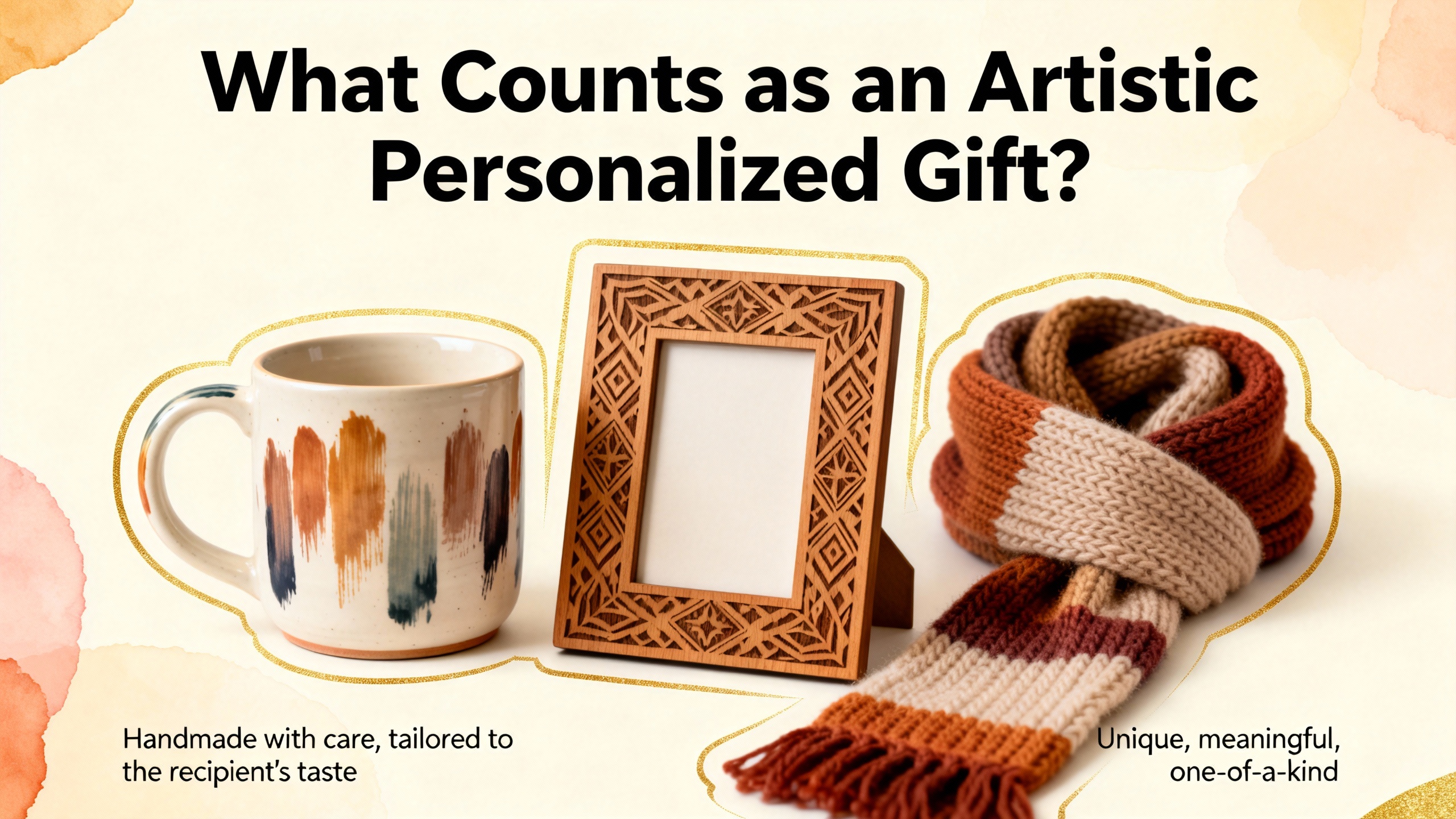
Personalized gifts, broadly, are products customized with photos, names, initials, dates, locations, or short messages. Artistic personalized gifts go a step further. They use design thinking, visual storytelling, and often collaboration with artists to turn those personal details into something visually compelling and emotionally rich.

In practical terms, an artistic personalized gift typically has three layers.

The base product format. This might be a photo blanket, canvas print, jewelry piece, leather wallet, cutting board, pair of sneakers, or ceramic mug. Shutterfly, Walgreens Photo, and many similar platforms demonstrate how flexible this base can be, spanning decorative pieces, functional objects, and keepsakes.

The design system. This is the “creative custom” part: the visual template, illustration style, typography, and layout that give your catalog a recognizable aesthetic. Guides from Southern Living, Business Insider, and Today show how strong design elevates everything from recipe tea towels to enamel canisters and 30‑ounce tumblers.

The personal data. These are the photos, names, dates, locations, recipes, and messages customers provide. Uncommon Goods describes personalization as adding names, dates, or custom details to make objects feel more meaningful; many brands also weave in pets, kids’ drawings, and handwritten notes.

When those three layers are aligned, your products stop looking like generic “upload a photo here” templates and start feeling like boutique, artist-designed pieces that happen to be made one at a time.
Creative custom design gift ideas

Core Categories of Artistic Personalized Gifts

Decorative Art and Home Décor

Decorative personalized gifts transform walls, shelves, and sofas into storytelling spaces. Shutterfly highlights items such as photo blankets, canvas prints, tabletop photo panels, and framed prints as ways to showcase special memories as home décor. Walgreens Photo similarly promotes photo blankets, canvas prints, and framed prints to brighten any room.

Beyond pure photo products, there is a growing movement toward decor that blends illustration, typography, and location or event-based storytelling. Southern Living describes custom watercolor house portraits, wedding venue illustrations, and canvas prints that combine lyrics with dates as examples of art that honors specific moments. Business Insider echoes this direction with crystal-etched photo blocks and acrylic displays blending photos and favorite songs.

For a print-on-demand seller, decorative art is a natural entry point. The formats are familiar, the perceived value is high, and the ordering flow is straightforward. The differentiator is your design aesthetic: house portraits, minimal line art, bold graphic posters, or cozy family-centric collages.

Functional Everyday Pieces

Functional gifts pull their weight twice. They are used constantly and they remind the recipient of the relationship that inspired them. Shutterfly points to photo mugs, tote bags, calendars, mouse pads, and personalized phone cases as everyday items that gain emotional weight when customized. Walgreens Photo groups these under “functional gifts,” emphasizing that they are essentials with a personal twist.

Guides from Today and Southern Living show how personalization can elevate even more utilitarian pieces: monogrammed enamel canisters, personalized bamboo cutting boards, engraved coasters, recipe tea towels, tumblers, leather pouches, docking stations, and planners. Business Insider goes deeper into the kitchen, highlighting recipe-engraved cutting boards, engraved cast-iron skillets, customized dishes, and family cookbooks that turn recipes into heirlooms.

If you run an on-demand print or dropshipping operation, functional goods are workhorses. They are easy to understand, easy to gift, and often reordered. The design challenge is to keep them visually considered so they feel like thoughtful keepsakes, not just branded swag.

Keepsake and Memorial Gifts

Keepsake gifts are designed to be cherished over many years. Shutterfly and Walgreens Photo mention custom puzzles and ornaments as one-of-a-kind surprises, especially around the holidays. BloomsyBox’s anniversary guide treats gifts as symbolic representations of emotion, recommending thoughtful items and experiences that honor milestones like first and fifth anniversaries, often paired with flowers as timeless add-ons.

Memorial gifts are a particularly sensitive but important niche. Personal Creations highlights personalized memorial items in its promotions, specifically calling out memorial gifts and running time-limited storewide discounts with significant savings to drive purchases. A customer review on GiftsForYouNow describes a pet photo memorial garden flag that keeps the memory of a beloved dog alive in a serene outdoor setting, illustrating how a simple printed flag, when personalized and placed thoughtfully, becomes emotionally profound.

For entrepreneurs, keepsake and memorial categories require careful positioning. They benefit from subtle, respectful designs and clear communication about quality and longevity. When handled well, they create strong emotional loyalty and word-of-mouth referrals.

Jewelry, Fashion, and Accessories

Personalized jewelry and fashion accessories are among the most enduring categories in this space. Smart.DHgate’s guide on celebrating achievements emphasizes custom necklaces, engraved bracelets, and designer watches as symbolic reminders of milestones. Southern Living and Today both showcase initial earrings, name necklaces, bracelets, embroidered slippers, socks printed with faces or pets, and monogrammed tote bags as ways to keep a giver “with” the recipient in everyday life.

Wirecutter’s personalized gift guide at The New York Times highlights customizable Converse Chuck Taylor low-top sneakers: customers choose colors and prints for each panel and can add embroidery of up to six letters. The editors recommend subtle embroidered initials on the heel stripe as a widely appealing touch, demonstrating that personalization can remain refined rather than loud.

For print-on-demand platforms, apparel and shoes require more sophisticated production partners, but accessories like hats, scarves, totes, and leather goods can be powerful canvases for artistic personalization, especially when you integrate hand-drawn monograms, location coordinates, or minimalist iconography.

Luxury and Artisanal Pieces

At the higher end of the market, artistic personalized gifts often blur into collectible art. A bronze sculpture category from a specialty sculpture retailer positions bronze art as “luxury gift ideas” for birthdays, anniversaries, weddings, and housewarmings, signaling that art objects can mark life events just as effectively as jewelry.

Architectural Digest’s gift guide for women includes carefully selected scents, home objects, and wearable pieces that serve as “thoughtful tokens,” often with design-led appeal. Uncommon Goods curates hundreds of unique personalized gifts made by independent makers, paired with policies such as “forever returns” and commitments to no leather, feathers, or fur. This mix of ethics, artistry, and personalization attracts buyers seeking more than mass-market offerings.

For a dropshipping or on-demand entrepreneur, this suggests a roadmap: collaborate with independent artists, elevate your product photography, and position select personalized pieces as artful investments rather than commodities.

Pros and Cons of Selling Artistic Personalized Gifts

Strategic Advantages

From a business perspective, the upside of artistic personalized gifts is substantial. Personalization instantly differentiates your catalog from marketplace clones. When your designs are genuinely artistic, you also compete less on price and more on taste and story.

Industry examples underscore a few consistent advantages. Mark and Graham’s “gifts by occasion” concept, with filters for birthdays, weddings, housewarmings, and retirements, shows how personalization allows highly targeted merchandising. Shutterfly’s emphasis on high-quality materials and craftsmanship reinforces that customers are willing to pay for lasting keepsakes. Uncommon Goods signals that supporting independent makers and offering personalized designs can sustain a distinct brand identity over decades.

Personalized gifts also tend to be more shareable. Sentimental items featured in guides by Southern Living, Today, and Business Insider are often photographed, posted, and discussed, generating organic visibility that generic gifts rarely enjoy.

Operational Challenges

However, personalized gifts are not operationally simple. Every order is, in effect, a one-off production run. That introduces a few challenges.

Design complexity can slow ordering if you offer too many options or unclear templates. Customers may[2025-11-17T17:20:26] stream error: stream disconnected before completion: stream closed before response.completed; retrying 1/5 in 183ms…

Planning blog content for PoD entrepreneurs

I’m focusing on writing a blog aimed at entrepreneurs interested in print-on-demand or dropshipping. I’ll include definitions, product categories, and creative ways to stand out, especially in design and emotional positioning. Operations like on-demand printing and customer expectations for personalized gifts will be key topics.

To keep it cohesive, I won’t include bullet points but might use a Markdown table for organization. Optional FAQs might provide extra value, and I’ll ensure the total word count is within 1500-3000 words. Outlining blog on personalized gifts

I’m aiming for about 2200 words for a blog titled "Artistic Personalized Gifts: How Creative Custom Designs Power Modern E-commerce."

First, I’ll discuss why personalized gifts are gaining popularity in 2025, emphasizing emotional appeal and supporting sources. Next, I’ll clarify the difference between basic customization and more artistic, personalized designs. I plan to include sections on decorative keepsakes, using data from Shutterfly and Walgreens, and functional everyday items like mugs and tote bags. Each section will have design strategies along with pros and cons. Structuring blog sections for personalized gifts

I’m planning to include a section on Jewelry, Apparel, and Wearables, focusing on personalized jewelry and custom wearables, highlighting their subtlety and visibility as pros, but also mentioning potential issues with size and returns.

Next, I'll address Memorial and Milestone Gifts, emphasizing emotional stakes and the importance of quality.

Then, I’ll cover Design Principles for creating standout custom products, using insights about personalization techniques. Lastly, I'll describe how to build an artistic personalized gift line, giving a conceptual overview without using a numbered list. Detailing blog subsections for personalized gifts

I’m outlining subsections like Selecting Strategic Product Categories, where I can include a table summarizing key categories along with their margins and complexity. This should be valuable as business advice rather than just facts.

Next, I’ll explore crafting collections around occasions, drawing insights from sources like BloomsyBox and Mark & Graham.

Then, I’ll address collaborating with makers and suppliers, emphasizing the importance of having a reliable print partner for dropshipping without naming specific brands.

Lastly, I’ll discuss operational considerations, focusing on lead times and holiday cutoffs based on provided notes. Drafting blog sections on personalized gifts

I’m planning several subsections in my blog, starting with Lead Times, Cutoff Dates, and Customer Expectations, along with Quality Control for products I don’t touch. Then, I’ll discuss Pricing and Promotions, using examples like Personal Creations' limited-time offers to illustrate urgency and margin math.

Next is Marketing Artistic Personalized Gifts, emphasizing emotional clarity and using insightful references. I’ll also consider Ethical and Privacy Considerations, touching on cookie usage.

For FAQs, I’ll provide practical advice without bullet points or numbered steps, keeping the persona of a Senior E-commerce Entrepreneurship Mentor throughout. I want to integrate my sources thoughtfully while maintaining accuracy and avoiding fabrication, using a table to summarize important details in the design section. Structuring the blog on personalized gifts

I’m thinking about the structure for the blog titled "The New Era of Artistic Personalized Gifts."

I'll start with an introduction that sets the context and establishes my role as a mentor. Then, I'll explore why personalized gifts outperform generic ones, citing sources and emphasizing emotional appeal.

I’ll define the difference between artistic and generic personalization, then outline key product areas for creative designs, including a table for clarity.

Subsequent sections will cover design frameworks, scaling gift catalogs, operations in on-demand printing, and marketing. I’ll include a short FAQ with three questions, and I need to remember not to include any URLs or Markdown links. Let’s start drafting! Outlining blog on personalized gifts

I’m aiming for about 2200 words for a blog titled "Artistic Personalized Gifts: How Creative Custom Designs Power Modern E-commerce."

First, I’ll discuss why personalized gifts are gaining popularity in 2025, emphasizing emotional appeal and supporting sources. Next, I’ll clarify the difference between basic customization and more artistic, personalized designs. I plan to include sections on decorative keepsakes, using data from Shutterfly and Walgreens, and functional everyday items like mugs and tote bags. Each section will have design strategies along with pros and cons. Structuring blog sections for personalized gifts

I’m planning to include a section on Jewelry, Apparel, and Wearables, focusing on personalized jewelry and custom wearables, highlighting their subtlety and visibility as pros, but also mentioning potential issues with size and returns.

Next, I'll address Memorial and Milestone Gifts, emphasizing emotional stakes and the importance of quality.

Then, I’ll cover Design Principles for creating standout custom products, using insights about personalization techniques. Lastly, I'll describe how to build an artistic personalized gift line, giving a conceptual overview without using a numbered list. Detailing blog subsections for personalized gifts

I’m outlining subsections like Selecting Strategic Product Categories, where I can include a table summarizing key categories along with their margins and complexity. This should be valuable as business advice rather than just facts.

Next, I’ll explore crafting collections around occasions, drawing insights from sources like BloomsyBox and Mark & Graham.

Then, I’ll address collaborating with makers and suppliers, emphasizing the importance of having a reliable print partner for dropshipping without naming specific brands.

Lastly, I’ll discuss operational considerations, focusing on lead times and holiday cutoffs based on provided notes. Drafting blog sections on personalized gifts

I’m planning several subsections in my blog, starting with Lead Times, Cutoff Dates, and Customer Expectations, along with Quality Control for products I don’t touch. Then, I’ll discuss Pricing and Promotions, using examples like Personal Creations' limited-time offers to illustrate urgency and margin math.

Next is Marketing Artistic Personalized Gifts, emphasizing emotional clarity and using insightful references. I’ll also consider Ethical and Privacy Considerations, touching on cookie usage.

For FAQs, I’ll provide practical advice without bullet points or numbered steps, keeping the persona of a Senior E-commerce Entrepreneurship Mentor throughout. I want to integrate my sources thoughtfully while maintaining accuracy and avoiding fabrication, using a table to summarize important details in the design section. Structuring the blog on personalized gifts

I’m thinking about the structure for the blog titled "The New Era of Artistic Personalized Gifts."

I'll start with an introduction that sets the context and establishes my role as a mentor. Then, I'll explore why personalized gifts outperform generic ones, citing sources and emphasizing emotional appeal.

I’ll define the difference between artistic and generic personalization, then outline key product areas for creative designs, including a table for clarity.

Subsequent sections will cover design frameworks, scaling gift catalogs, operations in on-demand printing, and marketing. I’ll include a short FAQ with three questions, and I need to remember not to include any URLs or Markdown links. Let’s start drafting!

Like the article

0
Artistic Personalized Gifts – Creative Custom Designs That Actually Sell

Artistic Personalized Gifts – Creative Custom Designs That Actually Sell

Why Artistic Personalized Gifts Are Winning Right Now

If you run or advise an on-demand printing or dropshipping store, you have probably noticed the same trend I have watched for years: generic gifts are becoming background noise. Customers still buy them, but what gets remembered, photographed, and shared are the artistic personalized gifts that feel designed just for one person, one relationship, one moment.

Publishers and retailers across the gift industry reinforce this shift toward personalization. Shutterfly frames personalized gifts as a way to tell a family’s story through photo blankets, custom mugs, and canvas prints. Southern Living highlights dozens of personalized ideas, from embroidered pet-themed items to engraved kitchenware, emphasizing how names, handwriting, and recipes turn everyday objects into meaningful keepsakes. Business Insider’s sentimental gift guide leans heavily on customization, from handwriting-printed mugs to engraved cast-iron skillets intended to be passed down. Wirecutter at The New York Times features deeply customizable Converse sneakers in its personalized gift list, praising their design flexibility and wearability.

The message is consistent: when you allow buyers to infuse their own stories into your products, you are not just selling a mug or a blanket. You are selling a piece of personal history. For an e-commerce entrepreneur, that is powerful. Personalized gifts typically command higher perceived value, create stronger loyalty, and are harder to compare on price alone.

The opportunity becomes even stronger when you combine personalization with real artistry and a robust on-demand production backbone. That is where creative custom designs come in.

What Counts as an Artistic Personalized Gift?

Personalized gifts, broadly, are products customized with photos, names, initials, dates, locations, or short messages. Artistic personalized gifts go a step further. They use design thinking, visual storytelling, and often collaboration with artists to turn those personal details into something visually compelling and emotionally rich.

In practical terms, an artistic personalized gift typically has three layers.

The base product format. This might be a photo blanket, canvas print, jewelry piece, leather wallet, cutting board, pair of sneakers, or ceramic mug. Shutterfly, Walgreens Photo, and many similar platforms demonstrate how flexible this base can be, spanning decorative pieces, functional objects, and keepsakes.

The design system. This is the “creative custom” part: the visual template, illustration style, typography, and layout that give your catalog a recognizable aesthetic. Guides from Southern Living, Business Insider, and Today show how strong design elevates everything from recipe tea towels to enamel canisters and 30‑ounce tumblers.

The personal data. These are the photos, names, dates, locations, recipes, and messages customers provide. Uncommon Goods describes personalization as adding names, dates, or custom details to make objects feel more meaningful; many brands also weave in pets, kids’ drawings, and handwritten notes.

When those three layers are aligned, your products stop looking like generic “upload a photo here” templates and start feeling like boutique, artist-designed pieces that happen to be made one at a time.

Creative custom design gift ideas

Core Categories of Artistic Personalized Gifts

Decorative Art and Home Décor

Decorative personalized gifts transform walls, shelves, and sofas into storytelling spaces. Shutterfly highlights items such as photo blankets, canvas prints, tabletop photo panels, and framed prints as ways to showcase special memories as home décor. Walgreens Photo similarly promotes photo blankets, canvas prints, and framed prints to brighten any room.

Beyond pure photo products, there is a growing movement toward decor that blends illustration, typography, and location or event-based storytelling. Southern Living describes custom watercolor house portraits, wedding venue illustrations, and canvas prints that combine lyrics with dates as examples of art that honors specific moments. Business Insider echoes this direction with crystal-etched photo blocks and acrylic displays blending photos and favorite songs.

For a print-on-demand seller, decorative art is a natural entry point. The formats are familiar, the perceived value is high, and the ordering flow is straightforward. The differentiator is your design aesthetic: house portraits, minimal line art, bold graphic posters, or cozy family-centric collages.

Functional Everyday Pieces

Functional gifts pull their weight twice. They are used constantly and they remind the recipient of the relationship that inspired them. Shutterfly points to photo mugs, tote bags, calendars, mouse pads, and personalized phone cases as everyday items that gain emotional weight when customized. Walgreens Photo groups these under “functional gifts,” emphasizing that they are essentials with a personal twist.

Guides from Today and Southern Living show how personalization can elevate even more utilitarian pieces: monogrammed enamel canisters, personalized bamboo cutting boards, engraved coasters, recipe tea towels, tumblers, leather pouches, docking stations, and planners. Business Insider goes deeper into the kitchen, highlighting recipe-engraved cutting boards, engraved cast-iron skillets, customized dishes, and family cookbooks that turn recipes into heirlooms.

If you run an on-demand print or dropshipping operation, functional goods are workhorses. They are easy to understand, easy to gift, and often reordered. The design challenge is to keep them visually considered so they feel like thoughtful keepsakes, not just branded swag.

Keepsake and Memorial Gifts

Keepsake gifts are designed to be cherished over many years. Shutterfly and Walgreens Photo mention custom puzzles and ornaments as one-of-a-kind surprises, especially around the holidays. BloomsyBox’s anniversary guide treats gifts as symbolic representations of emotion, recommending thoughtful items and experiences that honor milestones like first and fifth anniversaries, often paired with flowers as timeless add-ons.

Memorial gifts are a particularly sensitive but important niche. Personal Creations highlights personalized memorial items in its promotions, specifically calling out memorial gifts and running time-limited storewide discounts with significant savings to drive purchases. A customer review on GiftsForYouNow describes a pet photo memorial garden flag that keeps the memory of a beloved dog alive in a serene outdoor setting, illustrating how a simple printed flag, when personalized and placed thoughtfully, becomes emotionally profound.

For entrepreneurs, keepsake and memorial categories require careful positioning. They benefit from subtle, respectful designs and clear communication about quality and longevity. When handled well, they create strong emotional loyalty and word-of-mouth referrals.

Jewelry, Fashion, and Accessories

Personalized jewelry and fashion accessories are among the most enduring categories in this space. Smart.DHgate’s guide on celebrating achievements emphasizes custom necklaces, engraved bracelets, and designer watches as symbolic reminders of milestones. Southern Living and Today both showcase initial earrings, name necklaces, bracelets, embroidered slippers, socks printed with faces or pets, and monogrammed tote bags as ways to keep a giver “with” the recipient in everyday life.

Wirecutter’s personalized gift guide at The New York Times highlights customizable Converse Chuck Taylor low-top sneakers: customers choose colors and prints for each panel and can add embroidery of up to six letters. The editors recommend subtle embroidered initials on the heel stripe as a widely appealing touch, demonstrating that personalization can remain refined rather than loud.

For print-on-demand platforms, apparel and shoes require more sophisticated production partners, but accessories like hats, scarves, totes, and leather goods can be powerful canvases for artistic personalization, especially when you integrate hand-drawn monograms, location coordinates, or minimalist iconography.

Luxury and Artisanal Pieces

At the higher end of the market, artistic personalized gifts often blur into collectible art. A bronze sculpture category from a specialty sculpture retailer positions bronze art as “luxury gift ideas” for birthdays, anniversaries, weddings, and housewarmings, signaling that art objects can mark life events just as effectively as jewelry.

Architectural Digest’s gift guide for women includes carefully selected scents, home objects, and wearable pieces that serve as “thoughtful tokens,” often with design-led appeal. Uncommon Goods curates hundreds of unique personalized gifts made by independent makers, paired with policies such as “forever returns” and commitments to no leather, feathers, or fur. This mix of ethics, artistry, and personalization attracts buyers seeking more than mass-market offerings.

For a dropshipping or on-demand entrepreneur, this suggests a roadmap: collaborate with independent artists, elevate your product photography, and position select personalized pieces as artful investments rather than commodities.

Pros and Cons of Selling Artistic Personalized Gifts

Strategic Advantages

From a business perspective, the upside of artistic personalized gifts is substantial. Personalization instantly differentiates your catalog from marketplace clones. When your designs are genuinely artistic, you also compete less on price and more on taste and story.

Industry examples underscore a few consistent advantages. Mark and Graham’s “gifts by occasion” concept, with filters for birthdays, weddings, housewarmings, and retirements, shows how personalization allows highly targeted merchandising. Shutterfly’s emphasis on high-quality materials and craftsmanship reinforces that customers are willing to pay for lasting keepsakes. Uncommon Goods signals that supporting independent makers and offering personalized designs can sustain a distinct brand identity over decades.

Personalized gifts also tend to be more shareable. Sentimental items featured in guides by Southern Living, Today, and Business Insider are often photographed, posted, and discussed, generating organic visibility that generic gifts rarely enjoy.

Operational Challenges

However, personalized gifts are not operationally simple. Every order is, in effect, a one-off production run. That introduces a few challenges.

Design complexity can slow ordering if you offer too many options or unclear templates. Customers may[2025-11-17T17:20:26] stream error: stream disconnected before completion: stream closed before response.completed; retrying 1/5 in 183ms…

Planning blog content for PoD entrepreneurs

I’m focusing on writing a blog aimed at entrepreneurs interested in print-on-demand or dropshipping. I’ll include definitions, product categories, and creative ways to stand out, especially in design and emotional positioning. Operations like on-demand printing and customer expectations for personalized gifts will be key topics.

To keep it cohesive, I won’t include bullet points but might use a Markdown table for organization. Optional FAQs might provide extra value, and I’ll ensure the total word count is within 1500-3000 words. Outlining blog on personalized gifts

I’m aiming for about 2200 words for a blog titled "Artistic Personalized Gifts: How Creative Custom Designs Power Modern E-commerce."

First, I’ll discuss why personalized gifts are gaining popularity in 2025, emphasizing emotional appeal and supporting sources. Next, I’ll clarify the difference between basic customization and more artistic, personalized designs. I plan to include sections on decorative keepsakes, using data from Shutterfly and Walgreens, and functional everyday items like mugs and tote bags. Each section will have design strategies along with pros and cons. Structuring blog sections for personalized gifts

I’m planning to include a section on Jewelry, Apparel, and Wearables, focusing on personalized jewelry and custom wearables, highlighting their subtlety and visibility as pros, but also mentioning potential issues with size and returns.

Next, I'll address Memorial and Milestone Gifts, emphasizing emotional stakes and the importance of quality.

Then, I’ll cover Design Principles for creating standout custom products, using insights about personalization techniques. Lastly, I'll describe how to build an artistic personalized gift line, giving a conceptual overview without using a numbered list. Detailing blog subsections for personalized gifts

I’m outlining subsections like Selecting Strategic Product Categories, where I can include a table summarizing key categories along with their margins and complexity. This should be valuable as business advice rather than just facts.

Next, I’ll explore crafting collections around occasions, drawing insights from sources like BloomsyBox and Mark & Graham.

Then, I’ll address collaborating with makers and suppliers, emphasizing the importance of having a reliable print partner for dropshipping without naming specific brands.

Lastly, I’ll discuss operational considerations, focusing on lead times and holiday cutoffs based on provided notes. Drafting blog sections on personalized gifts

I’m planning several subsections in my blog, starting with Lead Times, Cutoff Dates, and Customer Expectations, along with Quality Control for products I don’t touch. Then, I’ll discuss Pricing and Promotions, using examples like Personal Creations' limited-time offers to illustrate urgency and margin math.

Next is Marketing Artistic Personalized Gifts, emphasizing emotional clarity and using insightful references. I’ll also consider Ethical and Privacy Considerations, touching on cookie usage.

For FAQs, I’ll provide practical advice without bullet points or numbered steps, keeping the persona of a Senior E-commerce Entrepreneurship Mentor throughout. I want to integrate my sources thoughtfully while maintaining accuracy and avoiding fabrication, using a table to summarize important details in the design section. Structuring the blog on personalized gifts

I’m thinking about the structure for the blog titled "The New Era of Artistic Personalized Gifts."

I'll start with an introduction that sets the context and establishes my role as a mentor. Then, I'll explore why personalized gifts outperform generic ones, citing sources and emphasizing emotional appeal.

I’ll define the difference between artistic and generic personalization, then outline key product areas for creative designs, including a table for clarity.

Subsequent sections will cover design frameworks, scaling gift catalogs, operations in on-demand printing, and marketing. I’ll include a short FAQ with three questions, and I need to remember not to include any URLs or Markdown links. Let’s start drafting! Outlining blog on personalized gifts

I’m aiming for about 2200 words for a blog titled "Artistic Personalized Gifts: How Creative Custom Designs Power Modern E-commerce."

First, I’ll discuss why personalized gifts are gaining popularity in 2025, emphasizing emotional appeal and supporting sources. Next, I’ll clarify the difference between basic customization and more artistic, personalized designs. I plan to include sections on decorative keepsakes, using data from Shutterfly and Walgreens, and functional everyday items like mugs and tote bags. Each section will have design strategies along with pros and cons. Structuring blog sections for personalized gifts

I’m planning to include a section on Jewelry, Apparel, and Wearables, focusing on personalized jewelry and custom wearables, highlighting their subtlety and visibility as pros, but also mentioning potential issues with size and returns.

Next, I'll address Memorial and Milestone Gifts, emphasizing emotional stakes and the importance of quality.

Then, I’ll cover Design Principles for creating standout custom products, using insights about personalization techniques. Lastly, I'll describe how to build an artistic personalized gift line, giving a conceptual overview without using a numbered list. Detailing blog subsections for personalized gifts

I’m outlining subsections like Selecting Strategic Product Categories, where I can include a table summarizing key categories along with their margins and complexity. This should be valuable as business advice rather than just facts.

Next, I’ll explore crafting collections around occasions, drawing insights from sources like BloomsyBox and Mark & Graham.

Then, I’ll address collaborating with makers and suppliers, emphasizing the importance of having a reliable print partner for dropshipping without naming specific brands.

Lastly, I’ll discuss operational considerations, focusing on lead times and holiday cutoffs based on provided notes. Drafting blog sections on personalized gifts

I’m planning several subsections in my blog, starting with Lead Times, Cutoff Dates, and Customer Expectations, along with Quality Control for products I don’t touch. Then, I’ll discuss Pricing and Promotions, using examples like Personal Creations' limited-time offers to illustrate urgency and margin math.

Next is Marketing Artistic Personalized Gifts, emphasizing emotional clarity and using insightful references. I’ll also consider Ethical and Privacy Considerations, touching on cookie usage.

For FAQs, I’ll provide practical advice without bullet points or numbered steps, keeping the persona of a Senior E-commerce Entrepreneurship Mentor throughout. I want to integrate my sources thoughtfully while maintaining accuracy and avoiding fabrication, using a table to summarize important details in the design section. Structuring the blog on personalized gifts

I’m thinking about the structure for the blog titled "The New Era of Artistic Personalized Gifts."

I'll start with an introduction that sets the context and establishes my role as a mentor. Then, I'll explore why personalized gifts outperform generic ones, citing sources and emphasizing emotional appeal.

I’ll define the difference between artistic and generic personalization, then outline key product areas for creative designs, including a table for clarity.

Subsequent sections will cover design frameworks, scaling gift catalogs, operations in on-demand printing, and marketing. I’ll include a short FAQ with three questions, and I need to remember not to include any URLs or Markdown links. Let’s start drafting!

Like the article

0