8 Best Print-on-Demand Companies to Start a Clothing Brand in 2026

8 Best Print-on-Demand Companies to Start a Clothing Brand in 2026

Nov 11, 2026 by Gina POD e-Commerce 101

Key Takeaways

  • Different clothing styles need different POD suppliers, from everyday basics to AOP fashion and streetwear.
  • Inkedjoy stands out for AOP apparel and accessories, Apliiq for private labels, and Contrado for custom fabrics.
  • No MOQ doesn't mean zero startup costs. Samples, branding materials, and shipping still cost money.
  • Order samples to check fabric, fit, and print quality. Compare total fulfillment costs before setting prices.

You've picked the designs for your first clothing collection. The mockups look promising, but the hoodie sample feels too thin, and the supplier can't provide the neck labels you want. But Switching providers means you have to order a new samples and reworking your pricing.

That's why finding the best print- on- demand companies for clothing brands takes more than just browsing product catalogs and price. POD lets you launch without buying inventory, but your supplier still determines which garments you can sell, how your branding appears, and what each order costs to fulfill.

To save your times, we compares 8 POD clothing companies with different strengths below, from AOP apparel to premium streerwear. See what each company does best and which one fits the clothing brand you have in mind.

Best Print-on-Demand Clothing: Quick picks

Inkedjoy : AOP Apparel, Fashion Accessories & Custom Branding

Apliiq : Private Label and Retail- Ready Apparel

Printful : All- in- One POD and Branding

Printify : Flexible Print Provider Selection

Contrado : Premium Design- Led Fashion Brands

Tapstitch : Streetwear Clothing Startups

TPOP : Eco- Conscious Clothing Brands

Gelato : International Production and Fulfillment

How We Evaluated These POD Companies

We focused on the factors that affect your first clothing collection, upfront investment, and long- term growth. Here's how we prioritized them.

Criteria Priority What We Looked At
Apparel quality & customization High Fabric, fit, garment styles, print methods, design flexibility
Startup costs & MOQ High Setup fees, MOQ, product costs, shipping, additional charges
Profit margin range High Profit margin potential
Catalogue depth Medium to High Diversity of clothing styles
Integration platform Medium to High Shopify, Etsy, WooCommerce, order sync
Branding & private label options Medium to High Labels, packaging, branding costs & MOQ, product eligibility
Returns & refund policy Medium Reprint terms and damaged order handling
Sustainability Lower Clothing materials, certifications, packaging

8 Best Print- on- Demand Companies to Start a Clothing Brand

Here's a quick look at where each one has an edge, so you can focus on the suppliers that matter most to your clothing brand and check the details on overviews below later.

What matter most Leading Suppliers
Largest apparel selection Printify, Apliiq, Tapstitch, TPOP
Most flexible customization Contrado, Apliiq, Printify
Fatest Fulfillment for US & EU Gelato, Printful, Printify, Apliiq
Most competitive price Inkedjoy, Printify, Printful
Most extensive branding Apliiq, Inkedjoy, Printful
Most integrations Printful, Printify, Gelato,
Best for AOP clothing Inkedjoy, Contrado, Printful, Printify

Inkedjoy

650+ Clothing & Accessories | Branding Available | 4 - 8 days Global shipping | Est. Margin: 35-60%

Worth Trying: AOP Dresses, Graphic T- Shirts, Leggings, Hoodies, Tote Bags, AOP Swimsuits

Inkedjoy is a good choice for designers who want to build a clothing brand around original prints with various of fashion style, . You can apply the same patterns across different products to create coordinated collections, while its competitive product prices make experimenting with new designs more affordable.
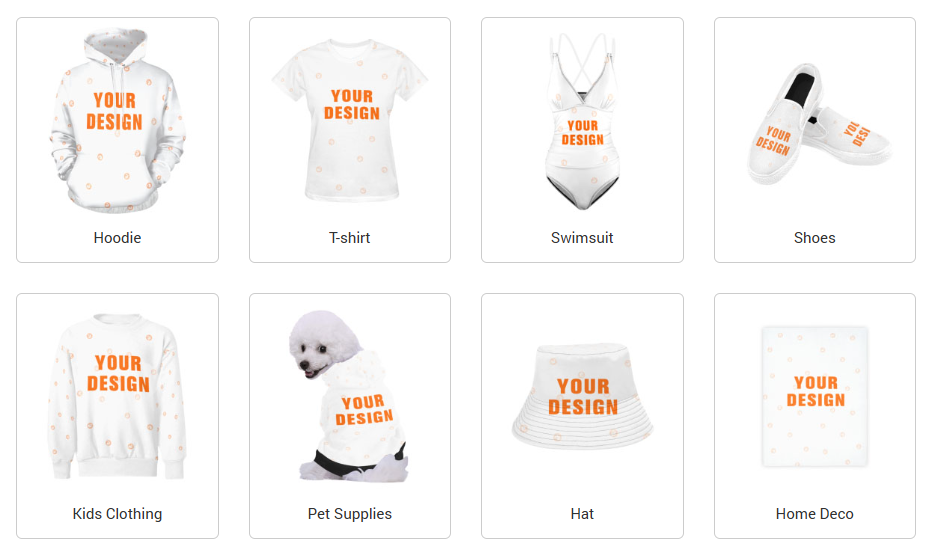
Inkedjoy clothing print on demand

Many AOP garments use polyester blends and sublimation printing, allowing designs to cover more of the fabric than standard front prints. This makes Inkedjoy particularly useful for brands where color and pattern are central to the clothing's appeal.

Pros:

  • Wide selections of apparel and fashion accessories.
  • White-labeling and custom branding services.
  • Competitive product prices.
  • US, AU fulfillment available for selected products.

Cons:

  • International delivery may take longer times.
  • Limited natural - fiber options for clothing

Best For: Fashion startups creating women's casual or athletic collections with original prints and custom branding.

Contrado

40+ Printable Fabrics | Custom Branding | 2 - 5 days shipping | Est. Margin: 20-70%

Worth Trying: Skater Dresses, Wrap Dresses, Bomber Jackets, Kimonos, Midi Skirts, Silk Scarves

When you're designing a premium dress or statement jacket, the fabric and cut matter just as much as the print. Contrado gives independent designers more room to experiment with materials, from soft jerseys to luxurious silks, across a range of made- to- order fashion pieces.

Many garments are printed and sewn in- house using existing patterns, so you can create distinctive pieces without developing clothing patterns from scratch. The trade- off is higher production costs, making Contrado a better fit for fashion brands that can support premium retail prices.

Pros:

  • In- house printing and cut- and- sew production.
  • Custom labels and white - label fulfillment.
  • Wide selection of premium printable fabrics.

Cons:

  • Higher production costs than basic POD apparel.
  • Longer production and shipping times than basic tees.
  • Garment customization is limited to available patterns and options.

Best For: Independent fashion designers creating premium dresses, statement pieces, and small collections featuring original fabric prints.

Printful

590+ Clothing & Apparel | Branding available | 3- 4 days shipping | Est. Margin: 20-50%

Worth Trying: DTG T- Shirts, Embroidered Hoodies & Caps, Crewneck Sweatshirts, Polo Shirts

Managing a clothing store gets complicated when printing, branding, and fulfillment are handled by different partners. Printful brings these tasks into one workflow, with DTG, embroidery apparel alongside printed inside labels and white - label shipping.

That convenience suits founders who want to spend less time coordinating suppliers, but for seller who want custom packaging and inserts, it is worth noting that, unlike inkedjoy, these branding services are not unlimited and require advance inventory and storage fees.

Pros:

  • Strong ecommerce integrations and Al design tools.
  • Multiple international fulfillment locations.

Cons:

  • Higher product price.
  • Branding availability varies by product and fulfillment location.

Best for: Clothing startups launching branded T- shirts, hoodies, and embroidered basics through one integrated fulfillment partner.

Printify

2000+ Clothing Style | Branding available | 2- 5 days shipping | Est. Margin: 25-50%

Worth Trying: Garment- Dyed T- shirts, Oversized Tees, Heavyweight Hoodies, Sweatshirts

Printify lets you are able to compare print providers easily rather than relying on a single production partner. Even for the same T- shirt, you may find different prices, printing options, and shipping locations. However, quality and fulfillment can vary between providers, so ordering samples before settling on one is especially important.

For branding services printify offers, printed neck labels are available for selected T- shirts and sweatshirts with tearaway tags, insert are cost $0.25 each on the free plans.

Pros:

  • Wide variety of apparel blanks and print providers.
  • Compare production costs and shipping locations.

Cons

  • Product quality and fulfillment vary by provider.
  • Branding options are not available across all products.

Best For: Clothing startups who want to comparing different T- shirt blanks and print providers before committing to a core collection.

Apliiq

1,200+ Apparel Styles | Private- Label Branding | 2- 7 days shipping | Est. Margin: 30-55%

Worth Trying: Heavyweight T- shirts, Oversized Hoodies, Embroidered Sweatshirts, Workwear Jackets, Joggers, Patch Caps

Putting a logo on a hoodie is easy; making it feel like your own label takes more. Apliq offers a wide range of apparel blanks alongside embroidery, patches, and private- label finishing, helping founders build distinctive clothing without developing garments from scratch. Private labels and neck prints have no MOQ, but woven labels require 100 pieces, while printed labels and embroidered patches require 50. These minimums matter when planning your launch budget.

Pros:

  • Extensive embroidery, labeling, and garment decoration options.
  • Private labels and neck prints available on demand.
  • US- based production and fulfillment.

Cons:

  • Advanced branding requires upfront material purchases.
  • Additional decoration and labeling increase production costs.
  • Some custom finishing options take longer to prepare.

Best For: Founders building a private-label streetwear or casual clothing line with embroidered details, sewn-in labels, and distinctive garment finishes.

Tapstitch

1,000+ Apparel Styles | Branding available | 3-6 days shipping | Est. Margin: 25-50%

Worth Trying: Heavyweight Drop- Shoulder Tees, Mineral- Wash Boxy T- Shirts, Vintage- Wash & OversizedHoodies,

If you are a Streetwear buyers that care a lot about hoodie's cut and weight before its graphic, Tapstitch offers boxy tees, oversized hoodies, and washed styles, including 300 GSM T- shirts and 420 GSM hoodies.

These ready- made silhouettes help new labels build distinctive collections without developing their own patterns. Custom neck labels and hangtags can be added to single- item orders, but only through international fulfillment. That's worth considering if faster US- based shipping is also a priority.

Pros:

  • Distinctive oversized, boxy, and vintage- washed styles.
  • Heavyweight fabric options for T- shirts, hoodies, and sweatpants.
  • US fulfillment available for selected products.

Cons:

  • Catalog outside streetwear is fairly limited.
  • Washed finishes may vary slightly between production batches.
  • Branding extras are fewer than others POD suppliers.

Best For: Streetwear startups launching small collections of vintage- washed tees, oversized hoodies, and matching sweatpants.

TPOP

1,000+ Apparel Styles | Branding available | 3- 10 days shipping | Est. Margin: 20-40%

Worth Trying: Organic Cotton T- shirts, Oversized Tees, Crewneck Sweatshirts, Hoodie Dresses, Recycled Tote Bags

TPOP is the kind of platform you need if you're a brand that prioritizes sustainability, especially when it comes to organic cotton wear. POP offers organic or recycled textiles, water- based inks, and plastic- free parcels, giving sellers specific features to support their brand story.

TPOP also supports on- demand collar printing on eligible garments without requiring bulk label purchases. One major limitation is its current suspension of US deliveries, making it better suited to brands serving European customers.

Pros:

Cons:

  • Currently does not ship to the US.
  • Smaller apparel selection.
  • Higher base cost than standard cotton.
  • Shipping outside Europe may cost more.

Best For: Green- minded brands that primarily target European buyers with their organic basics.

Gelato

310+ Apparel Styles | Branding available | 2- 4 days shipping | Est. Margin: 30-50%

Worth Trying: Classic Unisex T- shirts, Organic Cotton Tees, Pullover Hoodies, Embroidered Polo Shirts

You'll be printing your products really close to your customer when using Gelato. An order from Germany, for instance, is going to be printed somewhere in Europe. An order placed in Brazil, however, will result in the product being printed in South America. That will help you save on transportation time as well as reduce customs- related issues.

However, apparel availability and printing options vary by production location, so, if you use gelato to start your clothing brand, you should check the product page details before promising local fulfillment.

Pros:

  • Local production in many countries.
  • Faster delivery for global buyers.
  • Lower shipping costs on international orders.

Cons:

  • Apparel catalog is smaller than apparel-focus suppliers.
  • Blanks may differ between regions.
  • Branded packaging options are limited for apparel.

Best For: Sellers with a global audience who focus on core apparel.


Best POD Company by Apparel Type

Best POD Company by Apparel TypeDifferent garment types require varying materials, styles, and methods of printing. A top- tier tee supplier may be a poor choice for a dress. Therefore, select a supplier that is compatible with the goods planned for sale.

Best for Custom Women's Daily Clothing — Inkedjoy, Printify

At Inkedjoy, you can find dresses, tops, and leggings from womens's custom printed clothing with the possibility of all- over print. Printify enables sellers to pick different women's blanks from diverse suppliers. Use both platforms so that the results are a fair comparison based on fabric and fit.

Best for Classic T-Shirts & Sweatshirts — Gelato, Printful

Gelato is a company renowned mainly for delivering locally and providing affordable rates. Printful is a company mainly known for having great quality and branding tools that one can use. If you need to sell a product across different countries, go with Gelato; if you want a more polished look, Printful will help you achieve that.

Best for Embroidery Clothing Line — Apliiq, Printful

Both these suppliers are great at embroidery. Apliiq is unique in that they provide you with private label trims. Printful, on the other hand, makes the whole process very user- friendly and quick with their sampling.

Best for Branded Hoodies & Jackets — Tapstitch, Apliiq

Tapstitch is the place to go if you want oversized, heavy hoodies at a reasonable cost. Apliiq not only has the possibility for you to include custom labels and embroidery. This duo would suit both a cost- conscious and a premium hoodie line.

Best for Activewear & Leggings — Inkedjoy, Printify, Printful

Inkedjoy leads the field when it comes to the creation of full body print leggings. Printify makes cost- saving options easily available by sourcing from several suppliers. Printing is easy with one reliable partner like Printful. However, always remember to try out samples to check stretch, opacity, and stitching strength.

Best for High-End Dresses & Fashion Apparel — Contrado, TPOP

Contrado supplies fabric alternatives and has a boutique finish. TPOP suits dresses and tops from organic materials, the perfect product line. They are both suitable for the premium segment.

What Makes a Good POD for Clothing Brands

Finding a supplier that can print your designs is the easy part. The harder part is choosing one that offers the right clothing, supports your brand identity, and leaves enough room for profit.

Clothing Quality & Design Flexibility

A T- shirt can look great in a mockup but feel disappointing once you put it on. Fabric, fit, stitching, and print durability all matter. A lightweight 150 GSM tee, for example, feels quite different from a structured 220 GSM one.

Choose the Right Printing Method for Your Designs

  • DTG: For cotton and complex graphics
  • Embroidery: For a premium, textured finish on suitable garments.
  • Subimation & Cut- and- Sew: For edge- to- edge designs on polyester fabrics.

Order samples in different sizes, wash them, and check whether the quality stays consistent across repeat orders.

Branding & Private Label Options

Branding & Private Label OptionsCustom neck labels, hangtags, and packaging can make ordinary garments feel like part of your own clothing line. But offering these services doesn't mean every product qualifies.


Check whether labels are printed on demand or require an upfront purchase, along with any setup fees or minimum quantities. For a new brand, simple branding touches may be enough until you've identified your bestsellers.

Startup Costs & Profit Margins

No minimum order means you can avoid buying inventory upfront, but samples, store fees, and branding materials still cost money.

A $10 T-shirt blank won't necessarily cost  $10 to fulfill. Printing, shipping, labels, and transaction fees can quickly eat into your profit. So, when you picking the most cost - effective print on demand supplier from a group of qualified ones, look at the total cost rather than the unit price of the product.

Fulfillment Speed & Reliability

Customers care about when their orders arrive, not which company handles production.

Check production and shipping times separately, especially for international orders. Even suppliers with multiple facilities may not produce every garment locally.

It's also worth checking tracking availability and replacement policies for damaged or misprinted items. These details matter when something goes wrong.

Integration & Scalability

Processing a few orders manually might be manageable. As sales grow, keeping track of sizes, colors, and shipping updates becomes harder.

That time, you will need a reliable supplier that handle multiple channe such as Shopify, Etsy, or WooCommerce integrations that automate orders and tracking. Also consider whether the supplier can support new collections and sales channels.

Switching later may mean ordering new samples, rebuilding listings, and adjusting product variants.

How to Start a Print on Demand Clothing Brand

You can be up and running in just a few weeks. Follow these four steps in order. Each step will reduce your risk before you go to market with ads.

Step 1: Define Your Niche and First Collection

Think about the customer first and foremost. Who is your target and what are their characteristics? What do they wear? What do they care about? How would they describe your brand in just one sentence?

Only then decide on two or three matching products that represent your brand style in the best way possible. A tee, a hoodie, and a cap work well together. For a launch- friendly, very focused capsule, not a large random catalog, is way better, and both your brand story and your product story will be very appealing to the customers.

Step 2: Choose a POD Supplier and Order Samples

To select your printing and fulfillment partner, start by looking at your product line. Are you aligned with suppliers already working with similar products? Next, check all: textile, size, print technology, branding options, and fulfillment areas.

After that, place your sample order. Verify every aspect: the quality of the fabric and print, the appropriateness of the size, the enduring qualities of the print. Test washing each one. Make sure you have taken into account the actual delivery time to your own address. Do not offer for sale any product that you have not personally inspected in your hands.

Step 3: Calculate Costs and Set Your Prices

The cost components fall into two categories. Initial outlays comprise samples, branding setup, domain, and store fees. Per- order costs cover product, shipping, labels, and payment fees.

For illustration, here's a basic tee's cost and price breakdown:

  • Retail price: $ 32.00
  • Blank and print: $ 12.50
  • Shipping: $4.50
  • Inside label: $1.00
  • Payment fees (around 2.9% plus 30 cents): $1.23

Profit per tee: approximately $12.77, or 40%

This profit margin is before ads. Returns, discount codes, and marketing efforts will reduce it even further. Set your price at a level that will cover all these costs. For example, a $32- priced tee might only generate a $6 profit after a 20% ad cost.

Step 4: Launch, Test, and Improve

Make your product pages available to the public with the right information about sizing, fabric details, clear photos, and delivery times. A trustworthy page reduces returns.

Then, monitor orders, customer reviews, returns, and authentic profit margins. Detect tendencies. Which design sells most? Which size is getting returned the most? Expand those designs and products that demonstrate real demand. Do away with those that do not.

5 Mistakes to Avoid When Starting a POD Clothing Brand

Starting without inventory reduces some risks, but a few overlooked details can still eat into your profits. Here are five mistakes worth avoiding.

Assuming No MOQ Means No Startup Costs

You won't need to stock hundreds of shirts, but samples, store subscriptions, branding materials, and marketing still require money. Starting without a realistic budget can leave you short of cash before your first collection gains traction.

Choosing a Supplier Based on Base Price Only

A $6 T - shirt isn't necessarily a better deal than a $10 one. High shipping fees, additional printing charges, or poor garment quality can quickly erase the savings. Compare the total fulfillment cost and product quality before choosing.

Investing in Advanced Branding Too Early

Custom woven labels, hangtags, and packaging can make your clothing feel more professional. But ordering hundreds of branded materials before knowing what sells ties up money you could spend on product testing. Start with essential branding and expand as demand grows.

Overlooking Sizing and Return Costs

A great design won't save a hoodie that fits poorly. Inconsistent sizing can lead to complaints, refunds, and replacement orders. Check actual garment measurements, provide clear size charts, and account for possible returns when setting prices.

Underestimating the Cost of Switching POD Suppliers

When suppliers get changed, you have to start with everything new - new samples, new mockups, new product pages, probably different feel, etc. Be very selective in your initial choice. Always test a backup supplier before you need one.

Conclusion

A true all- time winner print- on- demand service will never exist for a business like yours. It will be a match for your brand only if you select it as a result of thorough comparison based on your style, startup budget, profit margins, and daily workflow.

If you're considering an clothing line with branding required, try Inkedjoy's apparel and fashion accessories to see how different products could come together in your first collection.

FAQ

Can I use multiple POD companies for one clothing brand?

Yes, using various suppliers for different garment types is common. To be sure about quality and shipping time, place sample orders and ensure uniformity in fabric, fit, and packaging.

What is the difference between POD and private label clothing?

POD prints your design on generic clothes after receiving an order. Private label uses your label and cut for specific clothing selections without requiring minimum orders. Apliiq offers both options.

What is the best POD clothing supplier for beginners?

Inkedjoy suits AOP apparel and matching accessories, Apliiq specializes in private- label clothing, and Printful offers integrated production and fulfillment.

Is starting a clothing brand with print on demand still profitable in 2026?

Yes, but profits will be slimmer than many think, as gross margins of 40% to 60% are typical. Niche- focused brands with high product quality are doing well, though.

What is the best platform to start my clothing brand online?

Shopify gives you more control over your store's design, branding, and customer experience, while Etsy provides access to an existing marketplace audience. Shopify generally suits brands building an independent storefront, whereas Etsy can help sellers reach customers through marketplace search.


Read more

G

Written by

Gina

A skilled marketing specialist with expertise in e-commerce marketing and print-on-demand product research. She has extensive experience in keyword research, market analysis, and content strategy, helping brands uncover profitable opportunities, improve search visibility, and drive sustainable growth through data-driven marketing.

Like the article

0
8 Best Print-on-Demand Companies to Start a Clothing Brand in 2026

8 Best Print-on-Demand Companies to Start a Clothing Brand in 2026

Key Takeaways

  • Different clothing styles need different POD suppliers, from everyday basics to AOP fashion and streetwear.
  • Inkedjoy stands out for AOP apparel and accessories, Apliiq for private labels, and Contrado for custom fabrics.
  • No MOQ doesn't mean zero startup costs. Samples, branding materials, and shipping still cost money.
  • Order samples to check fabric, fit, and print quality. Compare total fulfillment costs before setting prices.

You've picked the designs for your first clothing collection. The mockups look promising, but the hoodie sample feels too thin, and the supplier can't provide the neck labels you want. But Switching providers means you have to order a new samples and reworking your pricing.

That's why finding the best print- on- demand companies for clothing brands takes more than just browsing product catalogs and price. POD lets you launch without buying inventory, but your supplier still determines which garments you can sell, how your branding appears, and what each order costs to fulfill.

To save your times, we compares 8 POD clothing companies with different strengths below, from AOP apparel to premium streerwear. See what each company does best and which one fits the clothing brand you have in mind.

Best Print-on-Demand Clothing: Quick picks

Inkedjoy : AOP Apparel, Fashion Accessories & Custom Branding

Apliiq : Private Label and Retail- Ready Apparel

Printful : All- in- One POD and Branding

Printify : Flexible Print Provider Selection

Contrado : Premium Design- Led Fashion Brands

Tapstitch : Streetwear Clothing Startups

TPOP : Eco- Conscious Clothing Brands

Gelato : International Production and Fulfillment

How We Evaluated These POD Companies

We focused on the factors that affect your first clothing collection, upfront investment, and long- term growth. Here's how we prioritized them.

Criteria Priority What We Looked At
Apparel quality & customization High Fabric, fit, garment styles, print methods, design flexibility
Startup costs & MOQ High Setup fees, MOQ, product costs, shipping, additional charges
Profit margin range High Profit margin potential
Catalogue depth Medium to High Diversity of clothing styles
Integration platform Medium to High Shopify, Etsy, WooCommerce, order sync
Branding & private label options Medium to High Labels, packaging, branding costs & MOQ, product eligibility
Returns & refund policy Medium Reprint terms and damaged order handling
Sustainability Lower Clothing materials, certifications, packaging

8 Best Print- on- Demand Companies to Start a Clothing Brand

Here's a quick look at where each one has an edge, so you can focus on the suppliers that matter most to your clothing brand and check the details on overviews below later.

What matter most Leading Suppliers
Largest apparel selection Printify, Apliiq, Tapstitch, TPOP
Most flexible customization Contrado, Apliiq, Printify
Fatest Fulfillment for US & EU Gelato, Printful, Printify, Apliiq
Most competitive price Inkedjoy, Printify, Printful
Most extensive branding Apliiq, Inkedjoy, Printful
Most integrations Printful, Printify, Gelato,
Best for AOP clothing Inkedjoy, Contrado, Printful, Printify

Inkedjoy

650+ Clothing & Accessories | Branding Available | 4 - 8 days Global shipping | Est. Margin: 35-60%

Worth Trying: AOP Dresses, Graphic T- Shirts, Leggings, Hoodies, Tote Bags, AOP Swimsuits

Inkedjoy is a good choice for designers who want to build a clothing brand around original prints with various of fashion style, . You can apply the same patterns across different products to create coordinated collections, while its competitive product prices make experimenting with new designs more affordable.

Inkedjoy clothing print on demand

Many AOP garments use polyester blends and sublimation printing, allowing designs to cover more of the fabric than standard front prints. This makes Inkedjoy particularly useful for brands where color and pattern are central to the clothing's appeal.

Pros:

  • Wide selections of apparel and fashion accessories.
  • White-labeling and custom branding services.
  • Competitive product prices.
  • US, AU fulfillment available for selected products.

Cons:

  • International delivery may take longer times.
  • Limited natural - fiber options for clothing

Best For: Fashion startups creating women's casual or athletic collections with original prints and custom branding.

Contrado

40+ Printable Fabrics | Custom Branding | 2 - 5 days shipping | Est. Margin: 20-70%

Worth Trying: Skater Dresses, Wrap Dresses, Bomber Jackets, Kimonos, Midi Skirts, Silk Scarves

When you're designing a premium dress or statement jacket, the fabric and cut matter just as much as the print. Contrado gives independent designers more room to experiment with materials, from soft jerseys to luxurious silks, across a range of made- to- order fashion pieces.

Many garments are printed and sewn in- house using existing patterns, so you can create distinctive pieces without developing clothing patterns from scratch. The trade- off is higher production costs, making Contrado a better fit for fashion brands that can support premium retail prices.

Pros:

  • In- house printing and cut- and- sew production.
  • Custom labels and white - label fulfillment.
  • Wide selection of premium printable fabrics.

Cons:

  • Higher production costs than basic POD apparel.
  • Longer production and shipping times than basic tees.
  • Garment customization is limited to available patterns and options.

Best For: Independent fashion designers creating premium dresses, statement pieces, and small collections featuring original fabric prints.

Printful

590+ Clothing & Apparel | Branding available | 3- 4 days shipping | Est. Margin: 20-50%

Worth Trying: DTG T- Shirts, Embroidered Hoodies & Caps, Crewneck Sweatshirts, Polo Shirts

Managing a clothing store gets complicated when printing, branding, and fulfillment are handled by different partners. Printful brings these tasks into one workflow, with DTG, embroidery apparel alongside printed inside labels and white - label shipping.

That convenience suits founders who want to spend less time coordinating suppliers, but for seller who want custom packaging and inserts, it is worth noting that, unlike inkedjoy, these branding services are not unlimited and require advance inventory and storage fees.

Pros:

  • Strong ecommerce integrations and Al design tools.
  • Multiple international fulfillment locations.

Cons:

  • Higher product price.
  • Branding availability varies by product and fulfillment location.

Best for: Clothing startups launching branded T- shirts, hoodies, and embroidered basics through one integrated fulfillment partner.

Printify

2000+ Clothing Style | Branding available | 2- 5 days shipping | Est. Margin: 25-50%

Worth Trying: Garment- Dyed T- shirts, Oversized Tees, Heavyweight Hoodies, Sweatshirts

Printify lets you are able to compare print providers easily rather than relying on a single production partner. Even for the same T- shirt, you may find different prices, printing options, and shipping locations. However, quality and fulfillment can vary between providers, so ordering samples before settling on one is especially important.

For branding services printify offers, printed neck labels are available for selected T- shirts and sweatshirts with tearaway tags, insert are cost $0.25 each on the free plans.

Pros:

  • Wide variety of apparel blanks and print providers.
  • Compare production costs and shipping locations.

Cons

  • Product quality and fulfillment vary by provider.
  • Branding options are not available across all products.

Best For: Clothing startups who want to comparing different T- shirt blanks and print providers before committing to a core collection.

Apliiq

1,200+ Apparel Styles | Private- Label Branding | 2- 7 days shipping | Est. Margin: 30-55%

Worth Trying: Heavyweight T- shirts, Oversized Hoodies, Embroidered Sweatshirts, Workwear Jackets, Joggers, Patch Caps

Putting a logo on a hoodie is easy; making it feel like your own label takes more. Apliq offers a wide range of apparel blanks alongside embroidery, patches, and private- label finishing, helping founders build distinctive clothing without developing garments from scratch. Private labels and neck prints have no MOQ, but woven labels require 100 pieces, while printed labels and embroidered patches require 50. These minimums matter when planning your launch budget.

Pros:

  • Extensive embroidery, labeling, and garment decoration options.
  • Private labels and neck prints available on demand.
  • US- based production and fulfillment.

Cons:

  • Advanced branding requires upfront material purchases.
  • Additional decoration and labeling increase production costs.
  • Some custom finishing options take longer to prepare.

Best For: Founders building a private-label streetwear or casual clothing line with embroidered details, sewn-in labels, and distinctive garment finishes.

Tapstitch

1,000+ Apparel Styles | Branding available | 3-6 days shipping | Est. Margin: 25-50%

Worth Trying: Heavyweight Drop- Shoulder Tees, Mineral- Wash Boxy T- Shirts, Vintage- Wash & OversizedHoodies,

If you are a Streetwear buyers that care a lot about hoodie's cut and weight before its graphic, Tapstitch offers boxy tees, oversized hoodies, and washed styles, including 300 GSM T- shirts and 420 GSM hoodies.

These ready- made silhouettes help new labels build distinctive collections without developing their own patterns. Custom neck labels and hangtags can be added to single- item orders, but only through international fulfillment. That's worth considering if faster US- based shipping is also a priority.

Pros:

  • Distinctive oversized, boxy, and vintage- washed styles.
  • Heavyweight fabric options for T- shirts, hoodies, and sweatpants.
  • US fulfillment available for selected products.

Cons:

  • Catalog outside streetwear is fairly limited.
  • Washed finishes may vary slightly between production batches.
  • Branding extras are fewer than others POD suppliers.

Best For: Streetwear startups launching small collections of vintage- washed tees, oversized hoodies, and matching sweatpants.

TPOP

1,000+ Apparel Styles | Branding available | 3- 10 days shipping | Est. Margin: 20-40%

Worth Trying: Organic Cotton T- shirts, Oversized Tees, Crewneck Sweatshirts, Hoodie Dresses, Recycled Tote Bags

TPOP is the kind of platform you need if you're a brand that prioritizes sustainability, especially when it comes to organic cotton wear. POP offers organic or recycled textiles, water- based inks, and plastic- free parcels, giving sellers specific features to support their brand story.

TPOP also supports on- demand collar printing on eligible garments without requiring bulk label purchases. One major limitation is its current suspension of US deliveries, making it better suited to brands serving European customers.

Pros:

Cons:

  • Currently does not ship to the US.
  • Smaller apparel selection.
  • Higher base cost than standard cotton.
  • Shipping outside Europe may cost more.

Best For: Green- minded brands that primarily target European buyers with their organic basics.

Gelato

310+ Apparel Styles | Branding available | 2- 4 days shipping | Est. Margin: 30-50%

Worth Trying: Classic Unisex T- shirts, Organic Cotton Tees, Pullover Hoodies, Embroidered Polo Shirts

You'll be printing your products really close to your customer when using Gelato. An order from Germany, for instance, is going to be printed somewhere in Europe. An order placed in Brazil, however, will result in the product being printed in South America. That will help you save on transportation time as well as reduce customs- related issues.

However, apparel availability and printing options vary by production location, so, if you use gelato to start your clothing brand, you should check the product page details before promising local fulfillment.

Pros:

  • Local production in many countries.
  • Faster delivery for global buyers.
  • Lower shipping costs on international orders.

Cons:

  • Apparel catalog is smaller than apparel-focus suppliers.
  • Blanks may differ between regions.
  • Branded packaging options are limited for apparel.

Best For: Sellers with a global audience who focus on core apparel.


Best POD Company by Apparel Type

Best POD Company by Apparel TypeDifferent garment types require varying materials, styles, and methods of printing. A top- tier tee supplier may be a poor choice for a dress. Therefore, select a supplier that is compatible with the goods planned for sale.

Best for Custom Women's Daily Clothing — Inkedjoy, Printify

At Inkedjoy, you can find dresses, tops, and leggings from womens's custom printed clothing with the possibility of all- over print. Printify enables sellers to pick different women's blanks from diverse suppliers. Use both platforms so that the results are a fair comparison based on fabric and fit.

Best for Classic T-Shirts & Sweatshirts — Gelato, Printful

Gelato is a company renowned mainly for delivering locally and providing affordable rates. Printful is a company mainly known for having great quality and branding tools that one can use. If you need to sell a product across different countries, go with Gelato; if you want a more polished look, Printful will help you achieve that.

Best for Embroidery Clothing Line — Apliiq, Printful

Both these suppliers are great at embroidery. Apliiq is unique in that they provide you with private label trims. Printful, on the other hand, makes the whole process very user- friendly and quick with their sampling.

Best for Branded Hoodies & Jackets — Tapstitch, Apliiq

Tapstitch is the place to go if you want oversized, heavy hoodies at a reasonable cost. Apliiq not only has the possibility for you to include custom labels and embroidery. This duo would suit both a cost- conscious and a premium hoodie line.

Best for Activewear & Leggings — Inkedjoy, Printify, Printful

Inkedjoy leads the field when it comes to the creation of full body print leggings. Printify makes cost- saving options easily available by sourcing from several suppliers. Printing is easy with one reliable partner like Printful. However, always remember to try out samples to check stretch, opacity, and stitching strength.

Best for High-End Dresses & Fashion Apparel — Contrado, TPOP

Contrado supplies fabric alternatives and has a boutique finish. TPOP suits dresses and tops from organic materials, the perfect product line. They are both suitable for the premium segment.

What Makes a Good POD for Clothing Brands

Finding a supplier that can print your designs is the easy part. The harder part is choosing one that offers the right clothing, supports your brand identity, and leaves enough room for profit.

Clothing Quality & Design Flexibility

A T- shirt can look great in a mockup but feel disappointing once you put it on. Fabric, fit, stitching, and print durability all matter. A lightweight 150 GSM tee, for example, feels quite different from a structured 220 GSM one.

Choose the Right Printing Method for Your Designs

  • DTG: For cotton and complex graphics
  • Embroidery: For a premium, textured finish on suitable garments.
  • Subimation & Cut- and- Sew: For edge- to- edge designs on polyester fabrics.

Order samples in different sizes, wash them, and check whether the quality stays consistent across repeat orders.

Branding & Private Label Options

Branding & Private Label OptionsCustom neck labels, hangtags, and packaging can make ordinary garments feel like part of your own clothing line. But offering these services doesn't mean every product qualifies.


Check whether labels are printed on demand or require an upfront purchase, along with any setup fees or minimum quantities. For a new brand, simple branding touches may be enough until you've identified your bestsellers.

Startup Costs & Profit Margins

No minimum order means you can avoid buying inventory upfront, but samples, store fees, and branding materials still cost money.

A $10 T-shirt blank won't necessarily cost  $10 to fulfill. Printing, shipping, labels, and transaction fees can quickly eat into your profit. So, when you picking the most cost - effective print on demand supplier from a group of qualified ones, look at the total cost rather than the unit price of the product.

Fulfillment Speed & Reliability

Customers care about when their orders arrive, not which company handles production.

Check production and shipping times separately, especially for international orders. Even suppliers with multiple facilities may not produce every garment locally.

It's also worth checking tracking availability and replacement policies for damaged or misprinted items. These details matter when something goes wrong.

Integration & Scalability

Processing a few orders manually might be manageable. As sales grow, keeping track of sizes, colors, and shipping updates becomes harder.

That time, you will need a reliable supplier that handle multiple channe such as Shopify, Etsy, or WooCommerce integrations that automate orders and tracking. Also consider whether the supplier can support new collections and sales channels.

Switching later may mean ordering new samples, rebuilding listings, and adjusting product variants.

How to Start a Print on Demand Clothing Brand

You can be up and running in just a few weeks. Follow these four steps in order. Each step will reduce your risk before you go to market with ads.

Step 1: Define Your Niche and First Collection

Think about the customer first and foremost. Who is your target and what are their characteristics? What do they wear? What do they care about? How would they describe your brand in just one sentence?

Only then decide on two or three matching products that represent your brand style in the best way possible. A tee, a hoodie, and a cap work well together. For a launch- friendly, very focused capsule, not a large random catalog, is way better, and both your brand story and your product story will be very appealing to the customers.

Step 2: Choose a POD Supplier and Order Samples

To select your printing and fulfillment partner, start by looking at your product line. Are you aligned with suppliers already working with similar products? Next, check all: textile, size, print technology, branding options, and fulfillment areas.

After that, place your sample order. Verify every aspect: the quality of the fabric and print, the appropriateness of the size, the enduring qualities of the print. Test washing each one. Make sure you have taken into account the actual delivery time to your own address. Do not offer for sale any product that you have not personally inspected in your hands.

Step 3: Calculate Costs and Set Your Prices

The cost components fall into two categories. Initial outlays comprise samples, branding setup, domain, and store fees. Per- order costs cover product, shipping, labels, and payment fees.

For illustration, here's a basic tee's cost and price breakdown:

  • Retail price: $ 32.00
  • Blank and print: $ 12.50
  • Shipping: $4.50
  • Inside label: $1.00
  • Payment fees (around 2.9% plus 30 cents): $1.23

Profit per tee: approximately $12.77, or 40%

This profit margin is before ads. Returns, discount codes, and marketing efforts will reduce it even further. Set your price at a level that will cover all these costs. For example, a $32- priced tee might only generate a $6 profit after a 20% ad cost.

Step 4: Launch, Test, and Improve

Make your product pages available to the public with the right information about sizing, fabric details, clear photos, and delivery times. A trustworthy page reduces returns.

Then, monitor orders, customer reviews, returns, and authentic profit margins. Detect tendencies. Which design sells most? Which size is getting returned the most? Expand those designs and products that demonstrate real demand. Do away with those that do not.

5 Mistakes to Avoid When Starting a POD Clothing Brand

Starting without inventory reduces some risks, but a few overlooked details can still eat into your profits. Here are five mistakes worth avoiding.

Assuming No MOQ Means No Startup Costs

You won't need to stock hundreds of shirts, but samples, store subscriptions, branding materials, and marketing still require money. Starting without a realistic budget can leave you short of cash before your first collection gains traction.

Choosing a Supplier Based on Base Price Only

A $6 T - shirt isn't necessarily a better deal than a $10 one. High shipping fees, additional printing charges, or poor garment quality can quickly erase the savings. Compare the total fulfillment cost and product quality before choosing.

Investing in Advanced Branding Too Early

Custom woven labels, hangtags, and packaging can make your clothing feel more professional. But ordering hundreds of branded materials before knowing what sells ties up money you could spend on product testing. Start with essential branding and expand as demand grows.

Overlooking Sizing and Return Costs

A great design won't save a hoodie that fits poorly. Inconsistent sizing can lead to complaints, refunds, and replacement orders. Check actual garment measurements, provide clear size charts, and account for possible returns when setting prices.

Underestimating the Cost of Switching POD Suppliers

When suppliers get changed, you have to start with everything new - new samples, new mockups, new product pages, probably different feel, etc. Be very selective in your initial choice. Always test a backup supplier before you need one.

Conclusion

A true all- time winner print- on- demand service will never exist for a business like yours. It will be a match for your brand only if you select it as a result of thorough comparison based on your style, startup budget, profit margins, and daily workflow.

If you're considering an clothing line with branding required, try Inkedjoy's apparel and fashion accessories to see how different products could come together in your first collection.

FAQ

Can I use multiple POD companies for one clothing brand?

Yes, using various suppliers for different garment types is common. To be sure about quality and shipping time, place sample orders and ensure uniformity in fabric, fit, and packaging.

What is the difference between POD and private label clothing?

POD prints your design on generic clothes after receiving an order. Private label uses your label and cut for specific clothing selections without requiring minimum orders. Apliiq offers both options.

What is the best POD clothing supplier for beginners?

Inkedjoy suits AOP apparel and matching accessories, Apliiq specializes in private- label clothing, and Printful offers integrated production and fulfillment.

Is starting a clothing brand with print on demand still profitable in 2026?

Yes, but profits will be slimmer than many think, as gross margins of 40% to 60% are typical. Niche- focused brands with high product quality are doing well, though.

What is the best platform to start my clothing brand online?

Shopify gives you more control over your store's design, branding, and customer experience, while Etsy provides access to an existing marketplace audience. Shopify generally suits brands building an independent storefront, whereas Etsy can help sellers reach customers through marketplace search.


Read more

G

Written by

Gina

A skilled marketing specialist with expertise in e-commerce marketing and print-on-demand product research. She has extensive experience in keyword research, market analysis, and content strategy, helping brands uncover profitable opportunities, improve search visibility, and drive sustainable growth through data-driven marketing.

Like the article

0