
Printify Alternative: Top Personalized Gifts Platforms

Printify Alternative: Top Personalized Gifts Platforms

Jan 3, 2026 by Iris POD e-Commerce 101

Personalized gifts are no longer a novelty. They sit at the heart of modern ecommerce, especially in on‑demand printing and dropshipping. Research cited by Deloitte shows that roughly one in five consumers interested in customized products are willing to pay around a 20% price premium, and studies highlighted by McKinsey and other personalization platforms consistently show higher revenue, stronger loyalty, and better marketing efficiency when brands get personalization right.

If you currently rely on Printify, you are already playing in the on‑demand arena. Printify’s network of more than 110 production locations across 12 countries gives you broad coverage and a solid baseline catalog. But the most resilient and profitable personalized‑gift brands rarely depend on a single POD provider. Instead, they combine alternative print partners, stronger storefront platforms, better personalization apps, and smarter data‑driven experiences.

This guide walks through the top categories of Printify alternatives for personalized gifts: POD networks that complement or replace Printify, ecommerce platforms and apps that turn basic POD into a rich personalization experience, and consumer and corporate gift platforms you can study as benchmarks. Throughout, the focus is practical: what to use, why it matters, and how to future‑proof your business as demand for personalization continues to rise.

Personalized Gifts in the POD and Dropshipping Model

At its core, a personalized gift is any item customized with details that are specific to the recipient or occasion. Research from guides like Prize Possessions and GiftsForYouNow describes personalization as names, dates, photos, monograms, and short messages engraved, printed, or embroidered onto trophies, jewelry, home decor, apparel, and keepsakes. Platforms like Shutterfly, Snapfish, and Vistaprint extend this definition into photo‑driven products such as wall art, blankets, calendars, and greeting cards, all created from a shopper’s own images and text.

In an on‑demand printing and dropshipping model, your store sells the customized product, but a third‑party provider actually prints and ships it. Articles from Teeinblue and Customily emphasize this division of labor: your storefront on Shopify, Etsy, or another channel captures the order, then sends the personalization details and design files to a POD provider like Printify, Printful, Gelato, or others. That provider handles printing, packing, shipping, and often taxes, so you do not need your own warehouse or production line.

Printify is one of several networks in this space, and it stands out for its global footprint of more than 110 locations in 12 countries. But Teeinblue’s research makes two points that every entrepreneur should internalize. First, there are multiple POD networks with comparable or complementary strengths. Second, the real leverage comes from how you combine your sales channels, personalization experience, and POD stack, not from allegiance to one print partner.

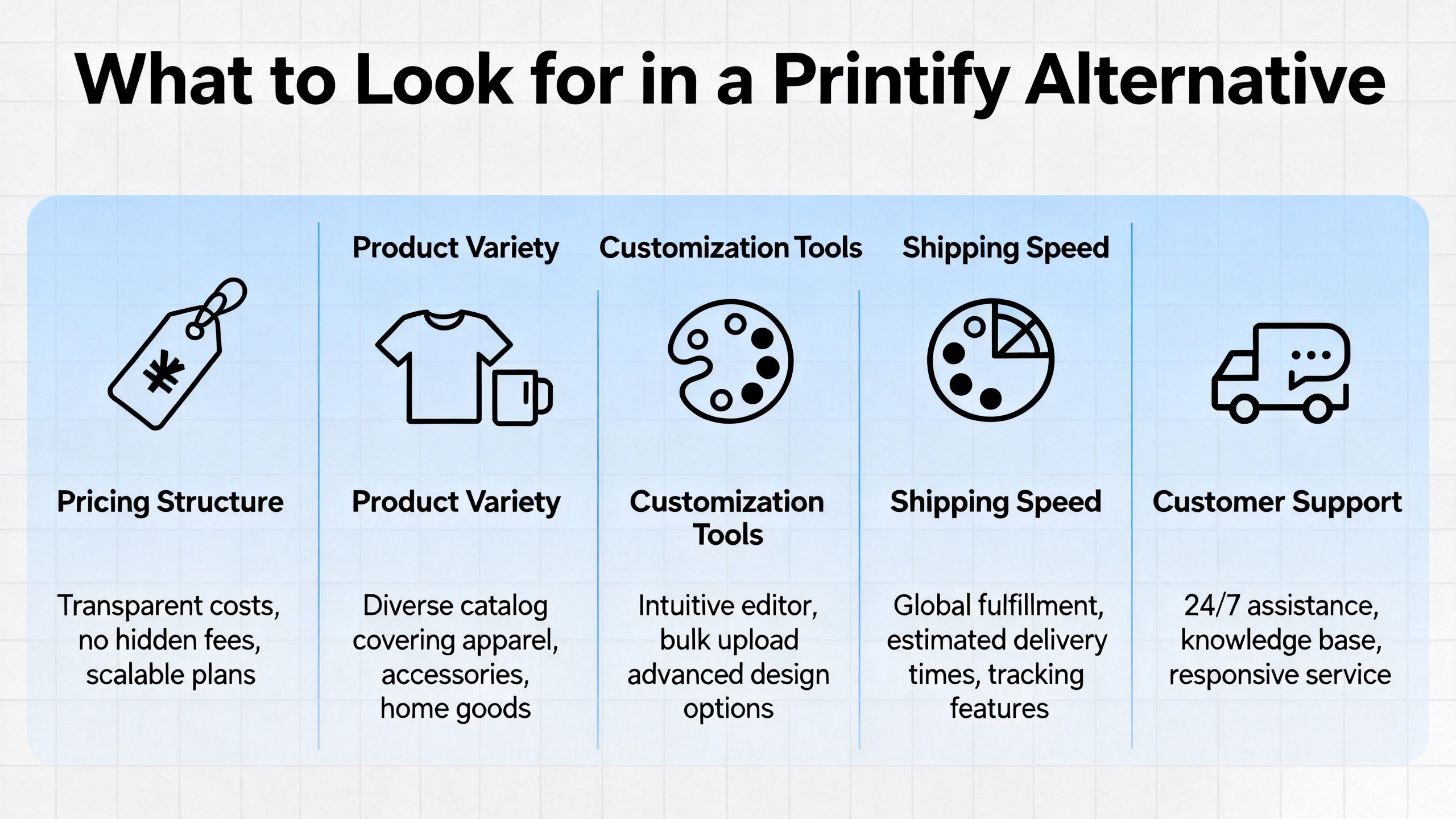
What to Look for in a Printify Alternative

Before picking an alternative, it helps to step back and think in systems. Printify is only one component in a broader personalization engine that includes your storefront, your product‑customization tools, and your data stack.

Several research sources provide a useful framework:

Contentful and Dynamic Yield argue that personalization should match your “maturity level,” moving from simple segments to hyper‑segmentation and predictive recommendations as you grow.

Tinybird’s work on real‑time personalization describes a feedback loop where user activity flows into a recommendation engine and back into your site via a low‑latency API in under a second.

Artifi Labs and Smart Customizer focus on the product‑customization layer: live visual previews, powerful text and image tools, and production‑ready output files.

When you evaluate Printify alternatives, you should consider at least the following dimensions.

First, catalog fit and depth. Teeinblue highlights POD providers like Printful, Gelato, merchOne, Dreamship, CustomCat, Shirtee.Cloud, and niche partners such as Yoycol, Gooten, Prodigi, Teelaunch, and Teezily. Printful, for example, offers more than 340 products and has capacity for over one million orders each month, while Gelato operates about 140 locations in 32 countries. If your gift brand leans heavily into wall art, sustainable frames, organic apparel, pet accessories, or all‑over‑print clothing, some of these networks may match your niche better than a generic catalog.

Second, personalization experience. Deloitte’s research on customization and work from Artifi Labs emphasize that shoppers want more than a text box. Leading platforms offer rich “canvas” areas where buyers can add and format text, upload images, choose colors and finishes, and see a live preview in two‑dimensional, three‑dimensional, or even 360‑degree views. The Shopify apps covered in Customily’s guide show why this matters: live previews, maps, QR codes, and even AI filters all reduce uncertainty, increase perceived value, and support higher prices.

Third, data‑driven personalization. Dynamic Yield, McKinsey, and Tinybird all show that content personalization is as important as product customization. Personalization engines that tailor offers, hero images, recommendations, and messaging based on behavior and segmentation can reduce acquisition costs by up to 50%, increase revenues by 5–15%, and improve marketing‑spend efficiency by up to 30%, according to McKinsey’s analysis. Epsilon and GBH Insights found that around 80% of consumers feel stronger affinity for brands that personalize experiences. Your POD and tech stack should make it easy to plug into tools like Contentful Personalization, real‑time data platforms, and analytics so you can move from a one‑size‑fits‑all storefront to a truly individualized experience.

Fourth, fulfillment workflow and automation. Artifi Labs and Smart Customizer stress the importance of production‑ready files and automation: the customization tool should pass correct print specifications straight to your POD provider, minimizing manual work. Apps like Customily and Zakeke generate print‑ready files automatically and connect directly to POD networks, which reduces mistakes and accelerates turnaround. When you evaluate an alternative to Printify, look at how tightly it integrates with your personalization app and whether it can operate in a multi‑provider environment.

Finally, scalability and security. Contentful’s guidance on choosing personalization tools highlights time to market, scalability, and compliance as key factors. As your volume grows or you expand into new regions, your POD partner and personalization stack must scale without bottlenecks. At the same time, because personalization relies heavily on customer data, you need providers that follow modern security practices and comply with regulations like GDPR and CCPA where applicable.

In practice, you will rarely replace Printify with a single monolithic alternative. Instead, you will graduate to a more modular system: one or more POD networks, a flexible storefront, advanced personalization apps, and data infrastructure capable of real‑time personalization.

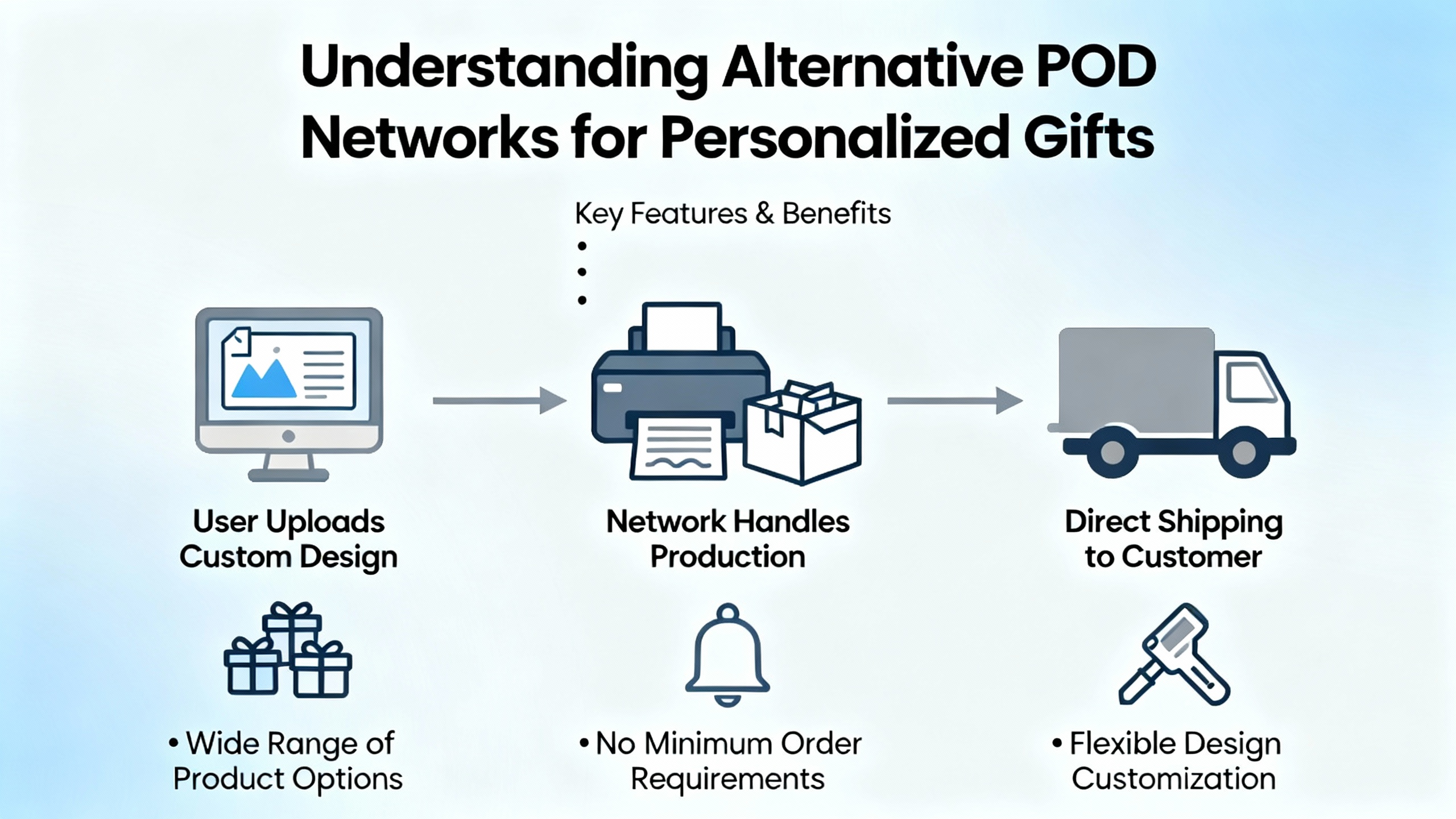
Alternative POD Networks for Personalized Gifts

Teeinblue’s overview of custom‑product platforms frames Printify as part of a broader ecosystem of POD networks. For a personalized‑gift business, the goal is not to “churn” from one to another, but to build a portfolio of providers that lets you mix resilience, specialization, and margin.

Broad POD Networks Beyond Printify

Several providers operate in the same general category as Printify, with wide catalogs and global reach. Printful, for example, combines a catalog of more than 340 SKUs with capacity for over one million orders each month, making it attractive when you need volume and variety across apparel, accessories, and home decor. Gelato runs roughly 140 production locations in 32 countries, giving you strong coverage for geographically distributed audiences and helping reduce shipping times through local production.

The same Teeinblue research mentions merchOne, Dreamship, CustomCat, and Shirtee.Cloud alongside Printify and Printful as dedicated POD partners used to offload production and fulfillment. The common pattern is clear: these networks allow you to plug in your ecommerce store, send orders and artwork automatically, and rely on them for printing, packing, and shipping. In a Printify‑alternative strategy, you might keep Printify for certain products and regions while routing other SKUs to Printful or Gelato, or you might lean on CustomCat or merchOne for specific apparel lines where they perform well.

Because these networks all support broad catalogs, the deciding factors usually come down to where they have facilities, which products they excel at, and how they integrate with your personalization apps. From a risk‑management perspective, spreading volume across multiple POD networks also reduces the impact of outages, supply constraints, or quality issues at any single provider.

Niche POD Partners for Specialized Gifts

For many high‑margin personalized gifts, specialization matters more than brute catalog size. Teeinblue’s guide calls out several niche POD partners that are particularly relevant for personalized gifts.

Yoycol is recommended for all‑over‑print apparel, making it a strong fit for fully printed hoodies, leggings, or shirts where the design covers the entire garment rather than a small print area. Gooten is suggested for homeware and pet accessories, which are natural personalized‑gift categories; think custom pet bowls, pillows, and blankets that feature names, photos, or illustrations. Prodigi is highlighted for sustainable frames and canvases, a compelling option if your brand leans into eco‑conscious wall art and home decor. Teelaunch is recommended for cards and cutting boards, covering both stationery and kitchen gifts that can be personalized for weddings, housewarmings, and holidays. Teezily focuses on organic apparel, aligning with audiences that care about organic fabrics and responsible production.

Here is a concise snapshot of these niche partners.

POD partner

Strength in personalized gifts

Yoycol

All‑over‑print apparel for fully printed garments

Gooten

Homeware and pet accessories

Prodigi

Sustainable framed prints and canvases

Teelaunch

Cards and cutting boards for stationery and kitchen gifts

Teezily

Organic apparel for eco‑focused audiences

As you build a Printify‑alternative stack, consider routing specialized SKUs to these niche providers while keeping more generic items with your preferred broad POD network. That mix can help you create collections that feel differentiated, not just another standard t‑shirt catalog.
Top Print On Demand Platforms Like Printify

Shopify and Other Storefronts as Your Printify Alternative Engine

Changing POD partners is only half of the story. To truly build a better alternative to a Printify‑only setup, you need a storefront that treats personalization as a first‑class citizen.

Shopify as the Personalization Hub

Teeinblue’s research positions Shopify as the most beginner‑friendly platform for customized products. Shopify powers about 4.8 million sites and has generated roughly $700 billion in sales; its app store hosts more than 8,000 apps, including product‑personalization tools and POD integrations. Plans start at around $25 per month, with promotional offers such as a discounted first month noted in the research.

For a personalized‑gift entrepreneur, Shopify’s strength lies in this ecosystem. You can connect multiple POD providers, run advanced personalization apps, and extend your stack with analytics, email, loyalty, and recommendation tools—all without writing everything from scratch. When you move away from a one‑provider mindset and treat Shopify as the hub for multiple POD networks and personalization layers, Printify becomes just one of several interchangeable fulfillment options.

Sellfy offers another route: an all‑in‑one platform tailored to creators and POD sellers. As described in Teeinblue’s article, you can build a store, add customizable on‑demand items, and let Sellfy handle printing, shipping, and taxes. Plans start at about $19 per month and there are no additional transaction fees, but there is also no built‑in audience, so you are responsible for driving traffic. For lean setups or creators who want simplicity, Sellfy can function as a streamlined alternative to a more complex Shopify plus apps stack.

Shopify Personalization Apps that Turn POD into Gifts

Where Shopify really becomes a Printify alternative engine is at the app layer. Customily’s review of Shopify personalization apps breaks down how different tools serve different types of gift businesses.

Customily is framed as the most complete all‑in‑one solution. It offers live product previews, unlimited personalization options including text, photos, clipart, textures, maps, QR codes, and AI filters, and automatically generates print‑ready files. Crucially, it integrates directly with POD partners like Printify, Printful, ShineOn, JetPrint, Digital On Demand, merchOne, Gooten, and Gelato. For a scaling personalized‑gift brand, this means one consistent personalization experience across multiple POD networks and categories—jewelry for Valentine’s Day, ornaments and mugs for the holiday season, and home decor for family‑focused gifting—without constantly reinventing your workflow.

Qstomizer focuses on live product customization for apparel and everyday gifts such as t‑shirts, mugs, phone cases, and accessories. It offers live previews, a mobile‑friendly user interface, multi‑language support, and exportable production files, making it a strong choice for small‑to‑medium stores that want shoppers to see their design on the product without needing every advanced feature that Customily provides.

Zakeke differentiates itself through three‑dimensional and augmented‑reality visualization combined with text and image customization. This is especially powerful for complex or premium items like jewelry and home decor, where three‑dimensional or AR previews can significantly influence buying decisions. Customily’s article notes this is particularly impactful in the fourth quarter, when consumers are shopping for bigger gifts and are more willing to spend time on design and evaluation.

Infinite Options takes a simpler approach. It provides option forms such as dropdowns, text fields, and checkboxes without live previews. It is budget‑friendly and ideal for basic personalization like engraving, embroidery, or monogramming on items such as engraved jewelry and personalized frames and keepsakes. If your products are straightforward and your margins are tight, this kind of lightweight tool can be enough.

Zepto Product Personalizer combines option forms with live previews and supports conditional logic for personalization fields, all while integrating smoothly with Shopify themes. It is recommended for small‑to‑mid‑size stores that need flexible yet affordable customization, particularly for products such as mugs, tumblers, and ornaments.

Across these apps, Customily’s article emphasizes that choice should depend on the product type, the visual experience you want to deliver, your fulfillment workflow, and your growth plans. Stores focused on ornaments, for example, should prioritize live previews and direct POD integrations ahead of the fourth quarter. Engraved jewelry businesses may only need clear form‑based personalization, while premium items such as rings or furniture benefit from three‑dimensional or AR visualization.

When you combine Shopify, one or more of these personalization apps, and multiple POD partners, you have created a powerful Printify alternative setup: you own the storefront and experience, while Printify and its peers become interchangeable components behind the scenes.

Marketplaces and Channels Beyond Your Own Store

Not every Printify alternative is a tech stack. Sometimes the right move is to complement your own store with marketplaces where demand already exists.

Etsy is one of the most important channels for handmade and custom items. Teeinblue notes that Etsy hosts roughly seven million stores and about ninety‑six million active buyers. Fees include a listing charge of about twenty cents per item for up to four months or until the first sale, plus a 6.5 percent transaction fee and payment‑processing costs. For personalized gifts, Etsy’s search and category structure make it easier for buyers to find custom items, but you must factor fees into your pricing and margin strategy.

Amazon’s Amazon Custom program lets sellers add text, image, or logo personalization to listings after enabling customization on a Professional seller account. The Professional plan costs about $39.99 per month and is recommended for higher‑volume sellers seeking global reach and better placement on product detail pages. Combined with the Amazon Custom consumer experience described in the Prize Possessions research, this makes Amazon a powerful channel for personalized gifts when you can manage the operational and competitive pressure.

eBay supports basic personalization through a “Personalize” attribute and a “message to seller” field. It uses non‑refundable listing fees and a final value fee that typically ranges from around three to fifteen percent of the total sale, including shipping. This can work for simple, text‑only personalization, but it is not designed for complex live‑preview experiences.

Bonanza is portrayed as a seller‑friendly alternative to eBay, with more than fifty thousand sellers and thirty‑five million items. It offers simple text personalization and charges no listing or monthly fees, only a small transaction fee of twenty‑five cents plus 3.5 percent of the final offer value. This low‑risk cost structure can be a good way to test new personalized‑gift ideas without committing to high fixed fees.

Facebook Marketplace is free to list on and reaches over two billion users. Integrated with platforms like Shopify, it is especially useful for local or hyperlocal sales of custom products, although sellers may need to invest in paid Facebook ads to boost visibility.

When you consider these channels as part of a Printify alternative strategy, the key is diversification: your own Shopify store anchored by personalization apps, supported by one or more marketplaces such as Etsy or Amazon Custom where buyers already search for personalized gifts, with Printify and alternative POD networks fulfilling from behind the scenes.

Consumer Personalized‑Gift Platforms Worth Studying

Even if you do not sell on every platform, studying consumer‑facing personalized‑gift brands is invaluable. They show what “good” looks like in product curation, design, and customer experience.

Prize Possessions is a family‑owned specialty engraver founded in 2002 that focuses on custom‑engraved awards and gifts across golf, corporate, yachting and sailing, scholastic, and outdoor categories. The company handles both one‑off heirloom gifts and large recognition programs, with no minimums for individuals and low wholesale minimums plus volume discounts for organizations. They also source items beyond their catalog and offer rush production and expedited shipping. For any Printify‑based seller targeting corporate recognition or club awards, Prize Possessions is a benchmark for craftsmanship, service, and B2B readiness.

Things Remembered centers on engraved keepsakes and jewelry for milestones such as engagements, weddings, graduations, retirements, and landmark birthdays. Personalization usually involves names, initials, and dates, turning otherwise standard items into long‑term heirlooms. This focus on sentiment, occasion, and presentation is critical in the personalized‑gift space.

Mark and Graham emphasizes monogram‑driven style across bags, totes, accessories, jewelry, linens, glassware, and home accents. Their assortment includes colorful, timeless designs and reportedly up to about one hundred monogram styles, making it ideal for wedding parties, hosts, new homeowners, and coordinated group gifts. If you want to build a brand where the monogram is the hero, their approach to styling and assortment is worth dissecting.

GiftsForYouNow positions itself as a year‑round source for personalized gifts and decor. It offers baby blankets and pillows as long‑lasting keepsakes, Christmas ornaments and stocking stuffers, holiday photo frames, personalized wall art, outdoor items like doormats and garden stones, and wedding and anniversary gifts such as monogrammed plaques and embroidered throws. The company supports several personalization methods—including printing, embroidery, and engraving—and some products are specifically designed to include many names, such as shirts for grandparents that can hold up to thirty grandchild names. That ability to elegantly display multiple names is an important design pattern for family‑oriented gifts.

On the photo and memory side, Shutterfly specializes in photo‑based gifts such as wall art, home decor, mugs, blankets, and custom puzzles. It uses templates and online tools to help customers upload images and add text, making it ideal for family milestones like birthdays, Mother’s Day, Father’s Day, and housewarmings. Snapfish focuses on customizable photo cards and stationery for thank‑you notes, birthdays, graduations, weddings, and other occasions, with professionally designed templates that non‑designers can easily adapt. Vistaprint’s photo‑gift offering includes framed prints, canvases, pillows, blankets, acrylic blocks, wood prints, ornaments, mugs, calendars, and practical personalized items for weddings, anniversaries, and graduations, along with suggestions on how to assemble matching holiday gift sets for a cohesive look.

Uncommon Goods curates hundreds of unique personalized gift ideas, often from independent makers, and emphasizes originality and creativity along with an ethical sourcing policy that excludes leather, feathers, and fur. The company has maintained this stance since its founding in 1999 and offers benefits such as a “forever returns” promise and free shipping for loyalty program members. That blend of personalization, design, and values is increasingly important to modern consumers.

Even mainstream fashion items can become deeply personalized. Wirecutter’s gift guide discusses customizable Converse Chuck Taylor All Star sneakers, where buyers can choose colors and prints for nearly every visible part of the shoe and even add embroidery of up to six letters in specific locations. That level of control shows how far personalized design can go while still feeling accessible.

Finally, a short testimonial from TrendingCustom highlights the emotional impact of personalized gifts. A customer buying a Mother’s Day gift described the item as very pretty, and the recipient loved it, underscoring that even when you lack technical details about materials or shipping, the perceived beauty and personal relevance of the gift drive satisfaction.

As a Printify‑based entrepreneur, these brands are not necessarily your direct Printify alternatives, but they set the bar for quality, storytelling, and user experience that your own store should aim to match or beat.

Corporate and B2B Gifting Platforms in the Ecosystem

If your personalized‑gift catalog appeals to corporate buyers, it is worth understanding the corporate gifting landscape, even if you do not immediately integrate with these platforms.

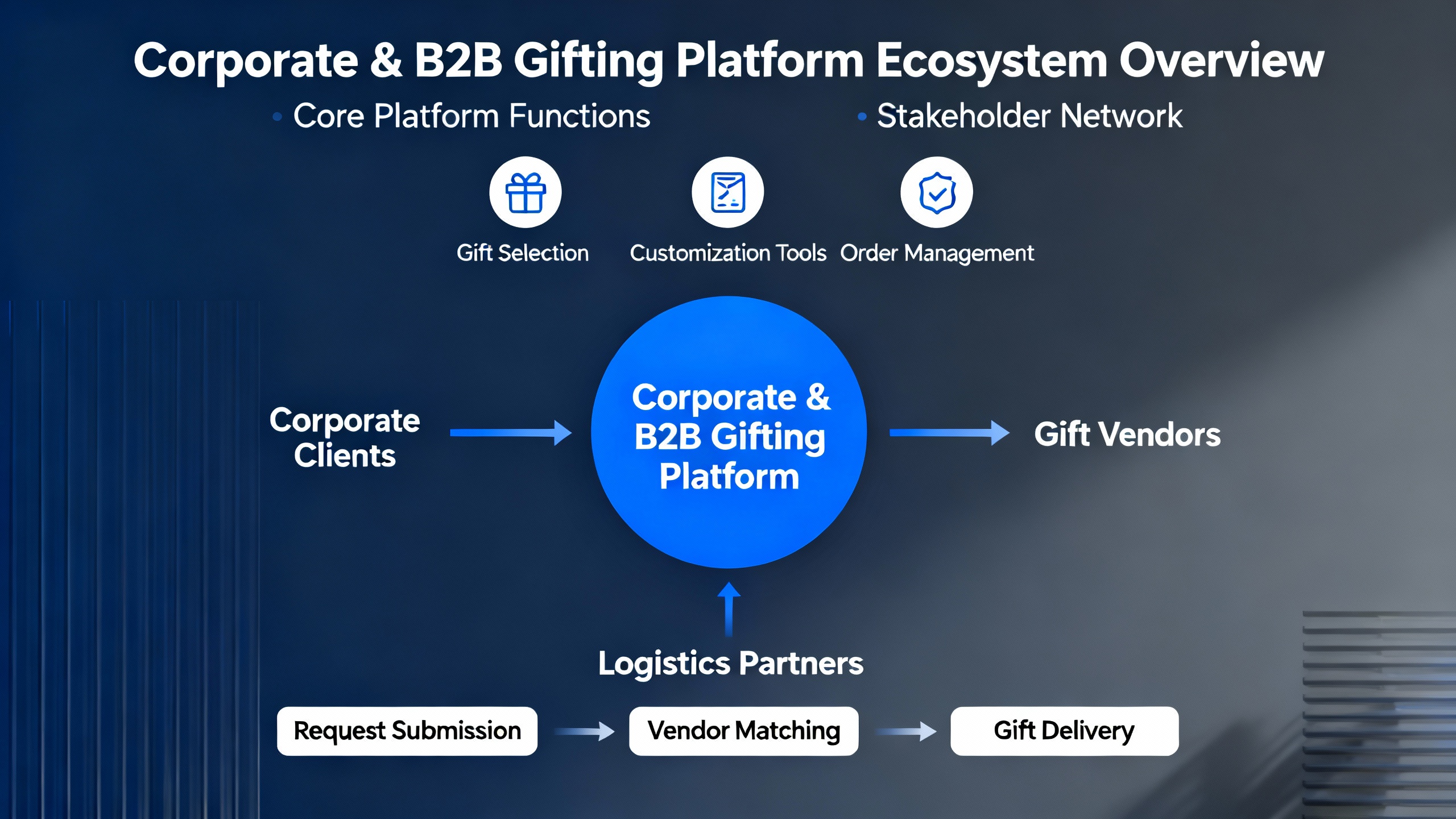
OnGoody’s overview of corporate gifting platforms describes how companies like Goody, Sendoso, Postal, Reachdesk, Sugarwish, Loop & Tie, Snappy, &Open, and PerkUp help organizations automate, personalize, and scale gifts for employees, clients, and prospects. These platforms emphasize international shipping, CRM and HRIS integrations, budget controls, and analytics to track engagement and return on investment.

Goody offers an all‑in‑one experience with bulk gifting, employee appreciation, branded swag, client gifts, a large catalog from more than four hundred brands, broad international coverage, and strong public reviews, often without requiring a software subscription. Sendoso targets enterprise account‑based marketing and sales teams with warehousing, extensive CRM and marketing integrations, and robust analytics but typically requires opaque twelve‑month contracts starting around tens of thousands of dollars per year. Postal and Reachdesk operate in a similar space, combining merchandise, experiences, swag, and global direct mail with subscription pricing and mixed but generally positive reviews.

Sugarwish specializes in fun, recipient‑choice treats such as snacks, candy, and coffee on a pay‑per‑gift model with no software subscription, shipping internationally but sometimes at high per‑gift costs. Loop & Tie focuses on sustainable, small‑business‑friendly gifting with curated collections, while Snappy is widely used for employee gifts and swag with a gamified “unwrap” experience and HR system integrations. &Open emphasizes design‑forward, B‑Corp‑certified gifts, and PerkUp offers locally sourced gifts and gift cards across many countries with deep integrations into corporate systems.

From a Printify‑alternative perspective, these platforms show how corporate buyers now expect gifting to work: recipient choice, global reach, digital tracking, and alignment with brand values. As you develop your own catalog and fulfillment stack, design it so you can one day plug into this ecosystem or, at minimum, mirror its level of professionalism when you sell directly to corporate accounts.
Printify Vs Competitors For Custom Gifts

Leveling Up with Personalization Technology

Beyond the mechanics of printing and shipping, the most successful personalized‑gift brands invest heavily in personalization technology.

Dynamic Yield defines website personalization as dynamically tailoring on‑site content, navigation, offers, and messaging to each visitor based on real‑time behavior and historical data. Their research references a consumer survey where about 63 percent of respondents consider personalization an expected standard and notes that personalization already accounts for roughly 14 percent of overall marketing spend. McKinsey’s work on personalized marketing adds that 71 percent of consumers expect personalized interactions and 76 percent become frustrated when personalization is missing. These expectations apply just as much to gift shops as they do to big retailers.

Contentful’s guide to choosing personalization tools suggests aligning your tools with your personalization maturity. Early‑stage brands might start with basic audience segments and simple content variations. As you grow, you can move toward hyper‑segmentation and predictive personalization, incorporating product recommendations, dynamic pricing, and smart social proof. Key considerations include business requirements, project scope, time to market, scalability, and security. They also recommend prioritizing features using “must‑have,” “should‑have,” “could‑have,” and “no need” tiers to avoid overbuying features you will not use.

Tinybird’s deep dive into real‑time personalization describes a system where user events stream into a real‑time data platform, are enriched and analyzed, and then power a low‑latency API that returns personalized recommendations in milliseconds. Examples span ecommerce (personalized product offers during checkout), travel (tailored hotel deals based on referral source and behavior), sports betting (personalized odds or incentives for hesitant bettors), social media feeds, and account‑based marketing campaigns. And, as mentioned earlier, an Epsilon and GBH Insights study found that about 80 percent of consumers feel stronger affinity toward brands that personalize their experiences, which translates directly into higher lifetime value.

On the product‑customization side, Artifi Labs and Smart Customizer outline what a modern product‑personalization platform should do: provide intuitive, mobile‑friendly interfaces where shoppers can add and format text, upload images from their devices or social platforms, apply effects like background removal or grayscale, and see accurate previews in two or three dimensions. Behind the scenes, administrators should have a self‑service console with reusable templates, reusable digital assets, and rules that control what can be customized, while the system generates production‑ready output files that can be sent directly into your POD workflow. Integration with ecommerce platforms such as Shopify, BigCommerce, Magento, and Znode should be handled through extensions and APIs.

When you combine these elements, your Printify alternative is no longer defined by which POD provider you use. It is defined by your ability to guide each visitor toward the right personalized product, make the customization process delightful and error‑free, and fulfill the order reliably through one or more POD networks.

Bringing It All Together

Printify remains a powerful ally for personalized‑gift entrepreneurs, but it should not be your only one. Research across ecommerce, personalization, and product customization makes it clear that the most resilient businesses pair multiple POD providers, own their core storefront (often on Shopify), invest in advanced personalization apps, and build a data‑driven personalization stack that can adapt in real time.

As you plan your next phase, ask where your real bottleneck is. If you are constrained by catalog or geography, experiment with POD networks such as Printful, Gelato, or niche partners like Gooten, Prodigi, or Teelaunch. If your challenge is conversion and perceived value, focus on the personalization experience with apps like Customily, Zakeke, or Zepto and richer previews. If you are fighting rising acquisition costs and inconsistent repeat purchases, prioritize personalization technology and data infrastructure that can match offers and content to each visitor more intelligently.

In the long run, your competitive advantage will not come from being “the store that uses Printify,” but from being the brand that consistently delivers meaningful, beautifully personalized gifts, on time, at scale, across whichever platforms and providers best serve your customers.

References

  1. https://www.giftsforyounow.com/personalized-gifts.aspx?srsltid=AfmBOopKaz78hJbasWF7Tc5ahfUgiGWOTqw3Yk73lJDIJr3cX8NPowgD
  2. https://www.personalcreations.com/?srsltid=AfmBOoovfSce4iW0recJZDygtpvtru8etmwwtPzvX3XG96JCtx_w2tRn
  3. https://www.personalizationmall.com/?srsltid=AfmBOopJ78bv83qIQUflrG1j9Rbw964cxw1WKv5AJLA2_fF5BJO7y2AM
  4. https://www.reachdesk.com/
  5. https://www.snapfish.com/home
  6. https://www.thingsremembered.com/
  7. https://trendingcustom.com/?srsltid=AfmBOor5LVvDRqaWwzuljLW9mYP83v_Luma6_WaxYrakIwydau1j7nr9
  8. https://www.vistaprint.com/photo-gifts?srsltid=AfmBOooOBRawUhDFE3hWrI-zDFR8k3NQbtmdsQxYQN2Z7qIe0rC0OPHZ
  9. https://www.customily.com/post/5-best-shopify-apps-for-selling-personalized-gifts
  10. https://www.ongoody.com/blog/best-corporate-gifting-platforms?srsltid=AfmBOoqpLR2T3hrRvOOXmdV4x6Nt10S4x5JYP521rY93-DS662HYlT7a

Like the article

0
Printify Alternative: Top Personalized Gifts Platforms

Printify Alternative: Top Personalized Gifts Platforms

Personalized gifts are no longer a novelty. They sit at the heart of modern ecommerce, especially in on‑demand printing and dropshipping. Research cited by Deloitte shows that roughly one in five consumers interested in customized products are willing to pay around a 20% price premium, and studies highlighted by McKinsey and other personalization platforms consistently show higher revenue, stronger loyalty, and better marketing efficiency when brands get personalization right.

If you currently rely on Printify, you are already playing in the on‑demand arena. Printify’s network of more than 110 production locations across 12 countries gives you broad coverage and a solid baseline catalog. But the most resilient and profitable personalized‑gift brands rarely depend on a single POD provider. Instead, they combine alternative print partners, stronger storefront platforms, better personalization apps, and smarter data‑driven experiences.

This guide walks through the top categories of Printify alternatives for personalized gifts: POD networks that complement or replace Printify, ecommerce platforms and apps that turn basic POD into a rich personalization experience, and consumer and corporate gift platforms you can study as benchmarks. Throughout, the focus is practical: what to use, why it matters, and how to future‑proof your business as demand for personalization continues to rise.

Personalized Gifts in the POD and Dropshipping Model

At its core, a personalized gift is any item customized with details that are specific to the recipient or occasion. Research from guides like Prize Possessions and GiftsForYouNow describes personalization as names, dates, photos, monograms, and short messages engraved, printed, or embroidered onto trophies, jewelry, home decor, apparel, and keepsakes. Platforms like Shutterfly, Snapfish, and Vistaprint extend this definition into photo‑driven products such as wall art, blankets, calendars, and greeting cards, all created from a shopper’s own images and text.

In an on‑demand printing and dropshipping model, your store sells the customized product, but a third‑party provider actually prints and ships it. Articles from Teeinblue and Customily emphasize this division of labor: your storefront on Shopify, Etsy, or another channel captures the order, then sends the personalization details and design files to a POD provider like Printify, Printful, Gelato, or others. That provider handles printing, packing, shipping, and often taxes, so you do not need your own warehouse or production line.

Printify is one of several networks in this space, and it stands out for its global footprint of more than 110 locations in 12 countries. But Teeinblue’s research makes two points that every entrepreneur should internalize. First, there are multiple POD networks with comparable or complementary strengths. Second, the real leverage comes from how you combine your sales channels, personalization experience, and POD stack, not from allegiance to one print partner.

What to Look for in a Printify Alternative

Before picking an alternative, it helps to step back and think in systems. Printify is only one component in a broader personalization engine that includes your storefront, your product‑customization tools, and your data stack.

Several research sources provide a useful framework:

Contentful and Dynamic Yield argue that personalization should match your “maturity level,” moving from simple segments to hyper‑segmentation and predictive recommendations as you grow.

Tinybird’s work on real‑time personalization describes a feedback loop where user activity flows into a recommendation engine and back into your site via a low‑latency API in under a second.

Artifi Labs and Smart Customizer focus on the product‑customization layer: live visual previews, powerful text and image tools, and production‑ready output files.

When you evaluate Printify alternatives, you should consider at least the following dimensions.

First, catalog fit and depth. Teeinblue highlights POD providers like Printful, Gelato, merchOne, Dreamship, CustomCat, Shirtee.Cloud, and niche partners such as Yoycol, Gooten, Prodigi, Teelaunch, and Teezily. Printful, for example, offers more than 340 products and has capacity for over one million orders each month, while Gelato operates about 140 locations in 32 countries. If your gift brand leans heavily into wall art, sustainable frames, organic apparel, pet accessories, or all‑over‑print clothing, some of these networks may match your niche better than a generic catalog.

Second, personalization experience. Deloitte’s research on customization and work from Artifi Labs emphasize that shoppers want more than a text box. Leading platforms offer rich “canvas” areas where buyers can add and format text, upload images, choose colors and finishes, and see a live preview in two‑dimensional, three‑dimensional, or even 360‑degree views. The Shopify apps covered in Customily’s guide show why this matters: live previews, maps, QR codes, and even AI filters all reduce uncertainty, increase perceived value, and support higher prices.

Third, data‑driven personalization. Dynamic Yield, McKinsey, and Tinybird all show that content personalization is as important as product customization. Personalization engines that tailor offers, hero images, recommendations, and messaging based on behavior and segmentation can reduce acquisition costs by up to 50%, increase revenues by 5–15%, and improve marketing‑spend efficiency by up to 30%, according to McKinsey’s analysis. Epsilon and GBH Insights found that around 80% of consumers feel stronger affinity for brands that personalize experiences. Your POD and tech stack should make it easy to plug into tools like Contentful Personalization, real‑time data platforms, and analytics so you can move from a one‑size‑fits‑all storefront to a truly individualized experience.

Fourth, fulfillment workflow and automation. Artifi Labs and Smart Customizer stress the importance of production‑ready files and automation: the customization tool should pass correct print specifications straight to your POD provider, minimizing manual work. Apps like Customily and Zakeke generate print‑ready files automatically and connect directly to POD networks, which reduces mistakes and accelerates turnaround. When you evaluate an alternative to Printify, look at how tightly it integrates with your personalization app and whether it can operate in a multi‑provider environment.

Finally, scalability and security. Contentful’s guidance on choosing personalization tools highlights time to market, scalability, and compliance as key factors. As your volume grows or you expand into new regions, your POD partner and personalization stack must scale without bottlenecks. At the same time, because personalization relies heavily on customer data, you need providers that follow modern security practices and comply with regulations like GDPR and CCPA where applicable.

In practice, you will rarely replace Printify with a single monolithic alternative. Instead, you will graduate to a more modular system: one or more POD networks, a flexible storefront, advanced personalization apps, and data infrastructure capable of real‑time personalization.

Alternative POD Networks for Personalized Gifts

Teeinblue’s overview of custom‑product platforms frames Printify as part of a broader ecosystem of POD networks. For a personalized‑gift business, the goal is not to “churn” from one to another, but to build a portfolio of providers that lets you mix resilience, specialization, and margin.

Broad POD Networks Beyond Printify

Several providers operate in the same general category as Printify, with wide catalogs and global reach. Printful, for example, combines a catalog of more than 340 SKUs with capacity for over one million orders each month, making it attractive when you need volume and variety across apparel, accessories, and home decor. Gelato runs roughly 140 production locations in 32 countries, giving you strong coverage for geographically distributed audiences and helping reduce shipping times through local production.

The same Teeinblue research mentions merchOne, Dreamship, CustomCat, and Shirtee.Cloud alongside Printify and Printful as dedicated POD partners used to offload production and fulfillment. The common pattern is clear: these networks allow you to plug in your ecommerce store, send orders and artwork automatically, and rely on them for printing, packing, and shipping. In a Printify‑alternative strategy, you might keep Printify for certain products and regions while routing other SKUs to Printful or Gelato, or you might lean on CustomCat or merchOne for specific apparel lines where they perform well.

Because these networks all support broad catalogs, the deciding factors usually come down to where they have facilities, which products they excel at, and how they integrate with your personalization apps. From a risk‑management perspective, spreading volume across multiple POD networks also reduces the impact of outages, supply constraints, or quality issues at any single provider.

Niche POD Partners for Specialized Gifts

For many high‑margin personalized gifts, specialization matters more than brute catalog size. Teeinblue’s guide calls out several niche POD partners that are particularly relevant for personalized gifts.

Yoycol is recommended for all‑over‑print apparel, making it a strong fit for fully printed hoodies, leggings, or shirts where the design covers the entire garment rather than a small print area. Gooten is suggested for homeware and pet accessories, which are natural personalized‑gift categories; think custom pet bowls, pillows, and blankets that feature names, photos, or illustrations. Prodigi is highlighted for sustainable frames and canvases, a compelling option if your brand leans into eco‑conscious wall art and home decor. Teelaunch is recommended for cards and cutting boards, covering both stationery and kitchen gifts that can be personalized for weddings, housewarmings, and holidays. Teezily focuses on organic apparel, aligning with audiences that care about organic fabrics and responsible production.

Here is a concise snapshot of these niche partners.

POD partner

Strength in personalized gifts

Yoycol

All‑over‑print apparel for fully printed garments

Gooten

Homeware and pet accessories

Prodigi

Sustainable framed prints and canvases

Teelaunch

Cards and cutting boards for stationery and kitchen gifts

Teezily

Organic apparel for eco‑focused audiences

As you build a Printify‑alternative stack, consider routing specialized SKUs to these niche providers while keeping more generic items with your preferred broad POD network. That mix can help you create collections that feel differentiated, not just another standard t‑shirt catalog.

Top Print On Demand Platforms Like Printify

Shopify and Other Storefronts as Your Printify Alternative Engine

Changing POD partners is only half of the story. To truly build a better alternative to a Printify‑only setup, you need a storefront that treats personalization as a first‑class citizen.

Shopify as the Personalization Hub

Teeinblue’s research positions Shopify as the most beginner‑friendly platform for customized products. Shopify powers about 4.8 million sites and has generated roughly $700 billion in sales; its app store hosts more than 8,000 apps, including product‑personalization tools and POD integrations. Plans start at around $25 per month, with promotional offers such as a discounted first month noted in the research.

For a personalized‑gift entrepreneur, Shopify’s strength lies in this ecosystem. You can connect multiple POD providers, run advanced personalization apps, and extend your stack with analytics, email, loyalty, and recommendation tools—all without writing everything from scratch. When you move away from a one‑provider mindset and treat Shopify as the hub for multiple POD networks and personalization layers, Printify becomes just one of several interchangeable fulfillment options.

Sellfy offers another route: an all‑in‑one platform tailored to creators and POD sellers. As described in Teeinblue’s article, you can build a store, add customizable on‑demand items, and let Sellfy handle printing, shipping, and taxes. Plans start at about $19 per month and there are no additional transaction fees, but there is also no built‑in audience, so you are responsible for driving traffic. For lean setups or creators who want simplicity, Sellfy can function as a streamlined alternative to a more complex Shopify plus apps stack.

Shopify Personalization Apps that Turn POD into Gifts

Where Shopify really becomes a Printify alternative engine is at the app layer. Customily’s review of Shopify personalization apps breaks down how different tools serve different types of gift businesses.

Customily is framed as the most complete all‑in‑one solution. It offers live product previews, unlimited personalization options including text, photos, clipart, textures, maps, QR codes, and AI filters, and automatically generates print‑ready files. Crucially, it integrates directly with POD partners like Printify, Printful, ShineOn, JetPrint, Digital On Demand, merchOne, Gooten, and Gelato. For a scaling personalized‑gift brand, this means one consistent personalization experience across multiple POD networks and categories—jewelry for Valentine’s Day, ornaments and mugs for the holiday season, and home decor for family‑focused gifting—without constantly reinventing your workflow.

Qstomizer focuses on live product customization for apparel and everyday gifts such as t‑shirts, mugs, phone cases, and accessories. It offers live previews, a mobile‑friendly user interface, multi‑language support, and exportable production files, making it a strong choice for small‑to‑medium stores that want shoppers to see their design on the product without needing every advanced feature that Customily provides.

Zakeke differentiates itself through three‑dimensional and augmented‑reality visualization combined with text and image customization. This is especially powerful for complex or premium items like jewelry and home decor, where three‑dimensional or AR previews can significantly influence buying decisions. Customily’s article notes this is particularly impactful in the fourth quarter, when consumers are shopping for bigger gifts and are more willing to spend time on design and evaluation.

Infinite Options takes a simpler approach. It provides option forms such as dropdowns, text fields, and checkboxes without live previews. It is budget‑friendly and ideal for basic personalization like engraving, embroidery, or monogramming on items such as engraved jewelry and personalized frames and keepsakes. If your products are straightforward and your margins are tight, this kind of lightweight tool can be enough.

Zepto Product Personalizer combines option forms with live previews and supports conditional logic for personalization fields, all while integrating smoothly with Shopify themes. It is recommended for small‑to‑mid‑size stores that need flexible yet affordable customization, particularly for products such as mugs, tumblers, and ornaments.

Across these apps, Customily’s article emphasizes that choice should depend on the product type, the visual experience you want to deliver, your fulfillment workflow, and your growth plans. Stores focused on ornaments, for example, should prioritize live previews and direct POD integrations ahead of the fourth quarter. Engraved jewelry businesses may only need clear form‑based personalization, while premium items such as rings or furniture benefit from three‑dimensional or AR visualization.

When you combine Shopify, one or more of these personalization apps, and multiple POD partners, you have created a powerful Printify alternative setup: you own the storefront and experience, while Printify and its peers become interchangeable components behind the scenes.

Marketplaces and Channels Beyond Your Own Store

Not every Printify alternative is a tech stack. Sometimes the right move is to complement your own store with marketplaces where demand already exists.

Etsy is one of the most important channels for handmade and custom items. Teeinblue notes that Etsy hosts roughly seven million stores and about ninety‑six million active buyers. Fees include a listing charge of about twenty cents per item for up to four months or until the first sale, plus a 6.5 percent transaction fee and payment‑processing costs. For personalized gifts, Etsy’s search and category structure make it easier for buyers to find custom items, but you must factor fees into your pricing and margin strategy.

Amazon’s Amazon Custom program lets sellers add text, image, or logo personalization to listings after enabling customization on a Professional seller account. The Professional plan costs about $39.99 per month and is recommended for higher‑volume sellers seeking global reach and better placement on product detail pages. Combined with the Amazon Custom consumer experience described in the Prize Possessions research, this makes Amazon a powerful channel for personalized gifts when you can manage the operational and competitive pressure.

eBay supports basic personalization through a “Personalize” attribute and a “message to seller” field. It uses non‑refundable listing fees and a final value fee that typically ranges from around three to fifteen percent of the total sale, including shipping. This can work for simple, text‑only personalization, but it is not designed for complex live‑preview experiences.

Bonanza is portrayed as a seller‑friendly alternative to eBay, with more than fifty thousand sellers and thirty‑five million items. It offers simple text personalization and charges no listing or monthly fees, only a small transaction fee of twenty‑five cents plus 3.5 percent of the final offer value. This low‑risk cost structure can be a good way to test new personalized‑gift ideas without committing to high fixed fees.

Facebook Marketplace is free to list on and reaches over two billion users. Integrated with platforms like Shopify, it is especially useful for local or hyperlocal sales of custom products, although sellers may need to invest in paid Facebook ads to boost visibility.

When you consider these channels as part of a Printify alternative strategy, the key is diversification: your own Shopify store anchored by personalization apps, supported by one or more marketplaces such as Etsy or Amazon Custom where buyers already search for personalized gifts, with Printify and alternative POD networks fulfilling from behind the scenes.

Consumer Personalized‑Gift Platforms Worth Studying

Even if you do not sell on every platform, studying consumer‑facing personalized‑gift brands is invaluable. They show what “good” looks like in product curation, design, and customer experience.

Prize Possessions is a family‑owned specialty engraver founded in 2002 that focuses on custom‑engraved awards and gifts across golf, corporate, yachting and sailing, scholastic, and outdoor categories. The company handles both one‑off heirloom gifts and large recognition programs, with no minimums for individuals and low wholesale minimums plus volume discounts for organizations. They also source items beyond their catalog and offer rush production and expedited shipping. For any Printify‑based seller targeting corporate recognition or club awards, Prize Possessions is a benchmark for craftsmanship, service, and B2B readiness.

Things Remembered centers on engraved keepsakes and jewelry for milestones such as engagements, weddings, graduations, retirements, and landmark birthdays. Personalization usually involves names, initials, and dates, turning otherwise standard items into long‑term heirlooms. This focus on sentiment, occasion, and presentation is critical in the personalized‑gift space.

Mark and Graham emphasizes monogram‑driven style across bags, totes, accessories, jewelry, linens, glassware, and home accents. Their assortment includes colorful, timeless designs and reportedly up to about one hundred monogram styles, making it ideal for wedding parties, hosts, new homeowners, and coordinated group gifts. If you want to build a brand where the monogram is the hero, their approach to styling and assortment is worth dissecting.

GiftsForYouNow positions itself as a year‑round source for personalized gifts and decor. It offers baby blankets and pillows as long‑lasting keepsakes, Christmas ornaments and stocking stuffers, holiday photo frames, personalized wall art, outdoor items like doormats and garden stones, and wedding and anniversary gifts such as monogrammed plaques and embroidered throws. The company supports several personalization methods—including printing, embroidery, and engraving—and some products are specifically designed to include many names, such as shirts for grandparents that can hold up to thirty grandchild names. That ability to elegantly display multiple names is an important design pattern for family‑oriented gifts.

On the photo and memory side, Shutterfly specializes in photo‑based gifts such as wall art, home decor, mugs, blankets, and custom puzzles. It uses templates and online tools to help customers upload images and add text, making it ideal for family milestones like birthdays, Mother’s Day, Father’s Day, and housewarmings. Snapfish focuses on customizable photo cards and stationery for thank‑you notes, birthdays, graduations, weddings, and other occasions, with professionally designed templates that non‑designers can easily adapt. Vistaprint’s photo‑gift offering includes framed prints, canvases, pillows, blankets, acrylic blocks, wood prints, ornaments, mugs, calendars, and practical personalized items for weddings, anniversaries, and graduations, along with suggestions on how to assemble matching holiday gift sets for a cohesive look.

Uncommon Goods curates hundreds of unique personalized gift ideas, often from independent makers, and emphasizes originality and creativity along with an ethical sourcing policy that excludes leather, feathers, and fur. The company has maintained this stance since its founding in 1999 and offers benefits such as a “forever returns” promise and free shipping for loyalty program members. That blend of personalization, design, and values is increasingly important to modern consumers.

Even mainstream fashion items can become deeply personalized. Wirecutter’s gift guide discusses customizable Converse Chuck Taylor All Star sneakers, where buyers can choose colors and prints for nearly every visible part of the shoe and even add embroidery of up to six letters in specific locations. That level of control shows how far personalized design can go while still feeling accessible.

Finally, a short testimonial from TrendingCustom highlights the emotional impact of personalized gifts. A customer buying a Mother’s Day gift described the item as very pretty, and the recipient loved it, underscoring that even when you lack technical details about materials or shipping, the perceived beauty and personal relevance of the gift drive satisfaction.

As a Printify‑based entrepreneur, these brands are not necessarily your direct Printify alternatives, but they set the bar for quality, storytelling, and user experience that your own store should aim to match or beat.

Corporate and B2B Gifting Platforms in the Ecosystem

If your personalized‑gift catalog appeals to corporate buyers, it is worth understanding the corporate gifting landscape, even if you do not immediately integrate with these platforms.

OnGoody’s overview of corporate gifting platforms describes how companies like Goody, Sendoso, Postal, Reachdesk, Sugarwish, Loop & Tie, Snappy, &Open, and PerkUp help organizations automate, personalize, and scale gifts for employees, clients, and prospects. These platforms emphasize international shipping, CRM and HRIS integrations, budget controls, and analytics to track engagement and return on investment.

Goody offers an all‑in‑one experience with bulk gifting, employee appreciation, branded swag, client gifts, a large catalog from more than four hundred brands, broad international coverage, and strong public reviews, often without requiring a software subscription. Sendoso targets enterprise account‑based marketing and sales teams with warehousing, extensive CRM and marketing integrations, and robust analytics but typically requires opaque twelve‑month contracts starting around tens of thousands of dollars per year. Postal and Reachdesk operate in a similar space, combining merchandise, experiences, swag, and global direct mail with subscription pricing and mixed but generally positive reviews.

Sugarwish specializes in fun, recipient‑choice treats such as snacks, candy, and coffee on a pay‑per‑gift model with no software subscription, shipping internationally but sometimes at high per‑gift costs. Loop & Tie focuses on sustainable, small‑business‑friendly gifting with curated collections, while Snappy is widely used for employee gifts and swag with a gamified “unwrap” experience and HR system integrations. &Open emphasizes design‑forward, B‑Corp‑certified gifts, and PerkUp offers locally sourced gifts and gift cards across many countries with deep integrations into corporate systems.

From a Printify‑alternative perspective, these platforms show how corporate buyers now expect gifting to work: recipient choice, global reach, digital tracking, and alignment with brand values. As you develop your own catalog and fulfillment stack, design it so you can one day plug into this ecosystem or, at minimum, mirror its level of professionalism when you sell directly to corporate accounts.

Printify Vs Competitors For Custom Gifts

Leveling Up with Personalization Technology

Beyond the mechanics of printing and shipping, the most successful personalized‑gift brands invest heavily in personalization technology.

Dynamic Yield defines website personalization as dynamically tailoring on‑site content, navigation, offers, and messaging to each visitor based on real‑time behavior and historical data. Their research references a consumer survey where about 63 percent of respondents consider personalization an expected standard and notes that personalization already accounts for roughly 14 percent of overall marketing spend. McKinsey’s work on personalized marketing adds that 71 percent of consumers expect personalized interactions and 76 percent become frustrated when personalization is missing. These expectations apply just as much to gift shops as they do to big retailers.

Contentful’s guide to choosing personalization tools suggests aligning your tools with your personalization maturity. Early‑stage brands might start with basic audience segments and simple content variations. As you grow, you can move toward hyper‑segmentation and predictive personalization, incorporating product recommendations, dynamic pricing, and smart social proof. Key considerations include business requirements, project scope, time to market, scalability, and security. They also recommend prioritizing features using “must‑have,” “should‑have,” “could‑have,” and “no need” tiers to avoid overbuying features you will not use.

Tinybird’s deep dive into real‑time personalization describes a system where user events stream into a real‑time data platform, are enriched and analyzed, and then power a low‑latency API that returns personalized recommendations in milliseconds. Examples span ecommerce (personalized product offers during checkout), travel (tailored hotel deals based on referral source and behavior), sports betting (personalized odds or incentives for hesitant bettors), social media feeds, and account‑based marketing campaigns. And, as mentioned earlier, an Epsilon and GBH Insights study found that about 80 percent of consumers feel stronger affinity toward brands that personalize their experiences, which translates directly into higher lifetime value.

On the product‑customization side, Artifi Labs and Smart Customizer outline what a modern product‑personalization platform should do: provide intuitive, mobile‑friendly interfaces where shoppers can add and format text, upload images from their devices or social platforms, apply effects like background removal or grayscale, and see accurate previews in two or three dimensions. Behind the scenes, administrators should have a self‑service console with reusable templates, reusable digital assets, and rules that control what can be customized, while the system generates production‑ready output files that can be sent directly into your POD workflow. Integration with ecommerce platforms such as Shopify, BigCommerce, Magento, and Znode should be handled through extensions and APIs.

When you combine these elements, your Printify alternative is no longer defined by which POD provider you use. It is defined by your ability to guide each visitor toward the right personalized product, make the customization process delightful and error‑free, and fulfill the order reliably through one or more POD networks.

Bringing It All Together

Printify remains a powerful ally for personalized‑gift entrepreneurs, but it should not be your only one. Research across ecommerce, personalization, and product customization makes it clear that the most resilient businesses pair multiple POD providers, own their core storefront (often on Shopify), invest in advanced personalization apps, and build a data‑driven personalization stack that can adapt in real time.

As you plan your next phase, ask where your real bottleneck is. If you are constrained by catalog or geography, experiment with POD networks such as Printful, Gelato, or niche partners like Gooten, Prodigi, or Teelaunch. If your challenge is conversion and perceived value, focus on the personalization experience with apps like Customily, Zakeke, or Zepto and richer previews. If you are fighting rising acquisition costs and inconsistent repeat purchases, prioritize personalization technology and data infrastructure that can match offers and content to each visitor more intelligently.

In the long run, your competitive advantage will not come from being “the store that uses Printify,” but from being the brand that consistently delivers meaningful, beautifully personalized gifts, on time, at scale, across whichever platforms and providers best serve your customers.

References

  1. https://www.giftsforyounow.com/personalized-gifts.aspx?srsltid=AfmBOopKaz78hJbasWF7Tc5ahfUgiGWOTqw3Yk73lJDIJr3cX8NPowgD
  2. https://www.personalcreations.com/?srsltid=AfmBOoovfSce4iW0recJZDygtpvtru8etmwwtPzvX3XG96JCtx_w2tRn
  3. https://www.personalizationmall.com/?srsltid=AfmBOopJ78bv83qIQUflrG1j9Rbw964cxw1WKv5AJLA2_fF5BJO7y2AM
  4. https://www.reachdesk.com/
  5. https://www.snapfish.com/home
  6. https://www.thingsremembered.com/
  7. https://trendingcustom.com/?srsltid=AfmBOor5LVvDRqaWwzuljLW9mYP83v_Luma6_WaxYrakIwydau1j7nr9
  8. https://www.vistaprint.com/photo-gifts?srsltid=AfmBOooOBRawUhDFE3hWrI-zDFR8k3NQbtmdsQxYQN2Z7qIe0rC0OPHZ
  9. https://www.customily.com/post/5-best-shopify-apps-for-selling-personalized-gifts
  10. https://www.ongoody.com/blog/best-corporate-gifting-platforms?srsltid=AfmBOoqpLR2T3hrRvOOXmdV4x6Nt10S4x5JYP521rY93-DS662HYlT7a

Like the article

0