

Customized Anti-Christmas Gifts: A New Growth Lane For Serving Singles

Customized Anti-Christmas Gifts: A New Growth Lane For Serving Singles

Dec 25, 2025 by Iris POD e-Commerce 101

The Gift Ritual, And Who It Really Serves

If you study holiday merchandising long enough, you see the same pattern every year. Gift guides from places like The Strategist, Wirecutter, TODAY, and Real Simple slice the world into grandparents, couples, kids, hosts, coworkers, and “people who have everything.” Sherry’s classic 1983 work in Journal of Consumer Research frames gift giving as a social ritual that reinforces roles and obligations: parent, partner, grandchild, spouse. Singles seldom show up as a primary role in that picture.

Sherry described gift giving as a “ritual process” with three phases: you choose the gift, you present it, and then the relationship is subtly redefined. That lens is useful for founders. The mainstream holiday ritual still assumes a household built around couples and families. Singles are often forced into side roles: the flexible friend, the good aunt or uncle, the standby host.

At the same time, the broader gift market has been shifting decisively toward uniqueness and personalization. New York Magazine’s Strategist curates over a hundred gift ideas by identity and lifestyle. Wirecutter and TODAY devote entire guides to personalized gifts and custom experiences. Uncommon Goods lists hundreds of personalized SKUs and frames them as ways to express individuality, while Shutterfly builds an entire business around turning personal photos and names into physical keepsakes.

The opportunity is hiding in the gap between those two realities. On one side, consumer research says gifts are powerful tools for expressing identity and reshaping relationships. On the other, the commercial holiday script still largely ignores singles as a central audience. Customized anti-Christmas gifts for singles sit exactly in that gap: they use proven personalization mechanics, but rewire the ritual away from obligation and toward autonomy, humor, and chosen community.

From an e-commerce mentor’s perspective, that is the definition of a promising niche: emotionally loaded, structurally underserved, and operationally compatible with on-demand printing and dropshipping.

Personalized holiday gifts for single people strategy

What Are “Customized Anti-Christmas” Gifts?

Before you build a catalog around this idea, it needs a clear working definition. In a commercial context, “anti-Christmas” does not mean anti-community or anti-generosity. It means consciously stepping away from the sentimental, family-centric, picture-perfect imagery that dominates holiday merch.

A customized anti-Christmas gift for singles typically does three things. It acknowledges that the recipient may not resonate with traditional family or couple narratives. It replaces generic “joy and togetherness” messaging with humor, honesty, or self-directed care. And it uses personalization—names, dates, inside jokes, locations, or even life stories—to make that stance feel intentional rather than purely cynical.

The research summaries you have show how powerful that personalization layer is. Shutterfly positions personalized Christmas ornaments, blankets, and photo books as “one-of-a-kind” gifts that will be cherished over multiple seasons. CNN Underscored and TODAY highlight custom jewelry, pet portraits, nameplate accessories, and monogrammed home goods because they make people feel uniquely seen. Uncommon Goods offers hundreds of personalized gifts from independent makers and backs them with “forever returns” and a long-standing animal-friendly materials policy, signaling confidence that customers value these tailored items enough to justify the operational complexity.

An anti-Christmas product line for singles simply applies the same personalization toolbox to a different emotional script. Instead of yet another monogrammed family ornament, think of a print-on-demand poster that celebrates surviving another year solo on your own terms. Instead of matching family pajamas, think of intentionally non-matching, self-expressive loungewear that is made to be worn alone or with a chosen crew.

You can also combine the “anti” stance with the experiential dimension that Cassie Mogilner Holmes and Cindy Chan documented in their Journal of Consumer Research work. They showed that experiential gifts deepen relationships more than material ones, even when the giver does not participate. Translating that for singles might mean custom vouchers for a solo retreat day, a “do nothing” evening, or a tongue-in-cheek “cancel plans” pass that is printed to look like an event ticket. The object is material, but what is really being gifted is permission and experience.

A Simple Positioning Map

You can think of customized anti-Christmas gifts as a shift along two axes: from generic to personalized, and from traditional to subversive.

Axis

Traditional Christmas Gifts

Customized Anti-Christmas Gifts For Singles

Emotional narrative

Family unity, romance, nostalgia, obligation

Autonomy, humor, boundaries, chosen relationships

Personalization level

Name or monogram layered onto generic templates

Deep personalization: inside jokes, life stage, values

Social role assumption

Parent, partner, child, grandparent, host

Single individual, friend group, “found family,” self

Consumption style

Shared in family settings, on public holidays

Used alone, with friends, or in alternative gatherings

The table shows why this segment is natural for print-on-demand and dropshipping. You already know how to produce personalized designs at scale. You are simply reframing who they are for and what story they tell.

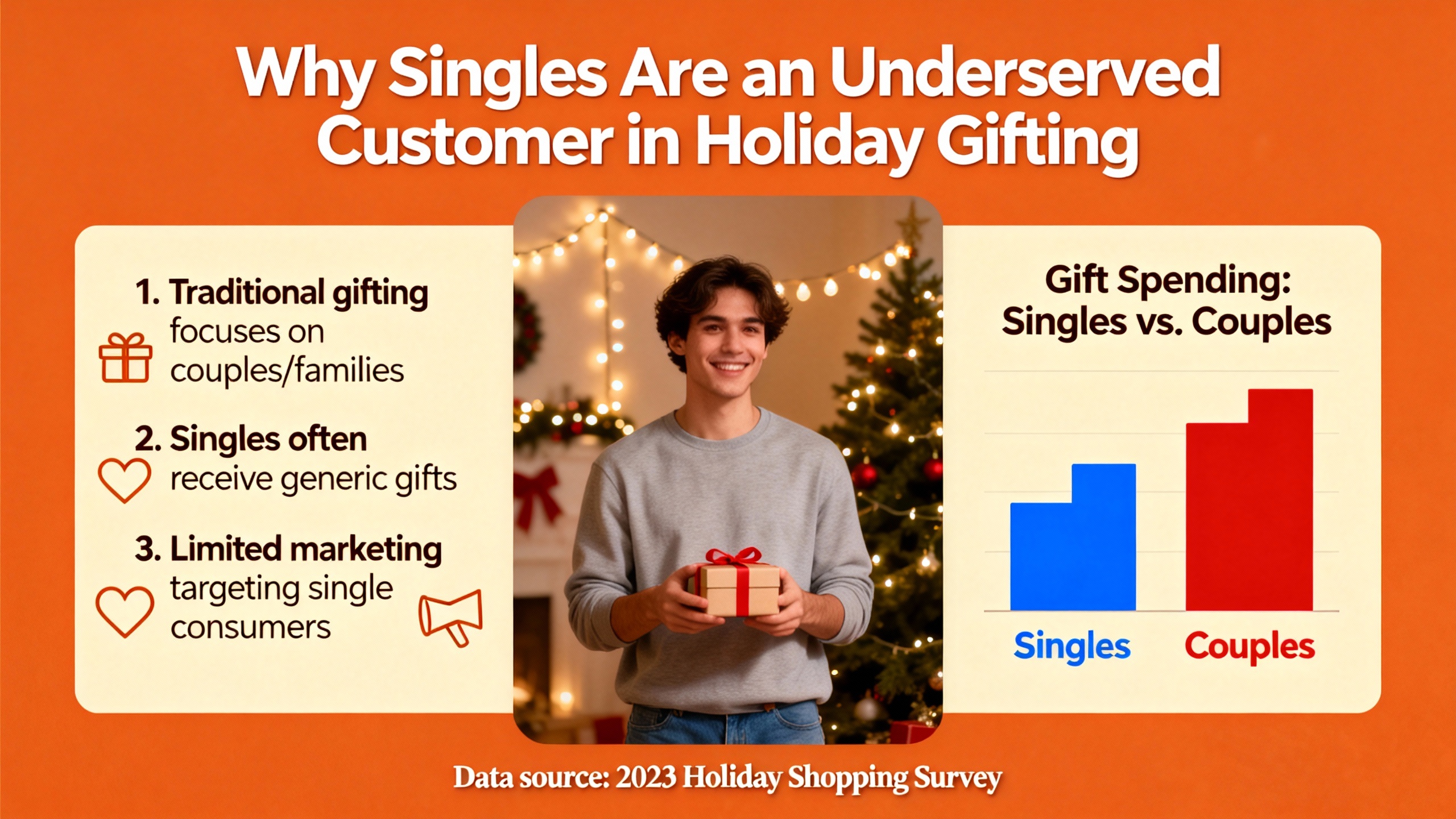
Why Singles Are An Underserved Customer In Holiday Gifting

Look at the research notes you already have. Strategist gift guides organize by relatives and hosts. Wirecutter reviews gifts for people “who have everything,” but the hero example is a personalized history book that celebrates decades of birthdays, implicitly for someone who already had a conventional life story. The Skimm curates “unique gifts for the friend who has everything,” again defining the recipient relationally. TODAY’s long list of personalized gifts includes clogs, tote bags, charms, fanny packs, and bookmarks with initials or names, and then segments them “for her” and “for him.”

Across all of that content, singles exist, but mostly as an afterthought: the cool aunt, the office Secret Santa, the difficult-to-buy-for friend. There is almost no mainstream editorial that says, explicitly, “You are single; here is how to design a holiday on your own terms.”

From Sherry’s anthropological perspective, that matters. Rituals tell people who they are and where they belong. When singles can only participate in Christmas as auxiliary characters in other people’s stories, the ritual reinforces a sense of marginality. Anti-Christmas gifting turns that dynamic on its head by making the single person’s own experience the main storyline.

There is also a well-being argument here, and it matters commercially. A white paper from the Greater Good Science Center synthesizes research showing that generosity and prosocial behavior are linked to higher happiness and life satisfaction, with effects that are small but consistent. The problem for many singles at the holidays is not that they do not want to give; it is that the only scripts they are offered feel misaligned with their reality.

A thoughtfully designed anti-Christmas line can invite singles back into the generous gift economy on new terms. It can validate solo life or nontraditional living arrangements while still encouraging gifts to friends, coworkers, neighbors, or even oneself. That is good for your customers and, if you structure it well, good for your business.
Niche e-commerce opportunities for anti-Christmas products

The Proof: Personalization And Experiences Already Sell

You do not have to guess whether personalized, off-template gifts convert. The research and market scans in your notes already answer that.

Uncommon Goods presents a 2025 collection of 386 personalized gifts and emphasizes independent makers and a generous returns policy. Nobody dedicates that much catalog space and margin structure to a product type unless it is working. Shutterfly has built a large franchise on personalized photo blankets, mugs, puzzles, and ornaments that turn everyday photos into emotional keepsakes.

Wirecutter’s personalized gift guide highlights custom Converse sneakers that allow buyers to configure almost every visual element, then add embroidered initials. TODAY’s coverage of personalized gifts features everything from custom bobbleheads to engraved cutting boards and monogrammed winter hats, often with multiple color, size, and font variables. Etsy leans heavily on personalization and uses deep discounts—up to seventy-five percent off some listings in the notes you have—to pull volume through that category.

The pattern is consistent. Retailers and reviewers stress three benefits of personalization. The gift feels more thoughtful and less likely to be regifted. It tells a story—about a relationship, a pet, a shared memory, or a milestone. And it justifies a premium because the item is perceived as one-of-a-kind.

Chan and Mogilner’s work on experiential gifts adds another layer. Experiences produce richer emotions and stronger relational gains than material goods, even controlling for effort and price. Real Simple’s coverage of low-cost gifts echoes that insight in a practical way by recommending experience-based presents, home-made consumables, acts of service, and creative digital tributes. In other words, you can create disproportionate emotional impact with relatively modest tangible inputs, as long as they are personalized and experiential.

Customized anti-Christmas gifts for singles combine these proven levers: personalization, story, and experience. A print-on-demand store can host a design that looks like a travel boarding pass but actually grants the recipient a self-curated “solo adventure day.” A dropshipped journal can include a custom cover phrase that captures the recipient’s private narrative about the holidays. The marginal cost of custom printing is small, but the perceived difference from a generic notebook is significant.

When I look at a niche, I ask whether it rides on established demand or tries to create entirely new behavior. Anti-Christmas singles gifting sits firmly on the existing rails of personalization and experiential value. That lowers your demand risk; the customer already understands the basic value proposition.

Product Strategy: Designing Anti-Christmas SKUs For Singles

To turn this into a real line, you need to map the concept onto printable surfaces and fulfillment logic. On-demand and dropshipping are strong fits because they let you test edgy creative without inventory risk, then double down on winners.

Start by defining the core occasions and use cases. For singles, the “holiday” is not just Christmas Day. It includes office gift exchanges, Friendsgiving-style gatherings, end-of-year self-reflection, apartment decorating, and trips home that may be ambivalent at best. Each of those occasions can anchor its own micro collection: work-adjacent humor, cozy-at-home self-care, “found family” celebrations with friends, or tongue-in-cheek gifts for relatives.

In practical terms, apparel is often the easiest entry point. Print-on-demand hoodies, T-shirts, and sweatshirts give you large design real estate and predictable sizing grids. Instead of leaning on family puns, design around individual identity and autonomy. A hoodie could integrate the year, the city, and a short custom phrase that the buyer enters at checkout. The experience for the customer mirrors what TODAY and Shutterfly already promote with initial necklaces and photo blankets, but the message is reframed from “we” to “I.”

Home and décor items are the next obvious category. Personalized ornaments, wall art, throw pillows with hidden photo reveals, monogrammed enamel canisters, and marble-and-wood coasters already feature heavily in mainstream guides. For singles, you can pivot the designs toward small apartments, roommate dynamics, or pet-centric households. A pet portrait canvas like the ones TODAY highlights becomes the emotional center of a solo tree or a studio wall. A custom floor mat with interchangeable tiles, similar to the highly customizable mats discussed in TODAY’s coverage, can be used to express changing moods throughout the season.

Do not ignore paper and stationery. Real Simple and TODAY both call out personalized notebooks, notepads, and book embossers as memorable, low-cost gifts. For singles, a year-long planner that incorporates custom prompts about personal goals, travel, or creative projects can function as both a gift and a self-development tool. Hardback notebooks from providers like Papier are already designed for name embossing; your edge is the framing and copy that speak directly to a single person’s brainspace in December.

Finally, use the experiential insight deliberately. That might mean designing physical vouchers—printed “tickets” to a self-curated day off, a quiet night in, or a no-social-media weekend. Chan and Mogilner’s evidence suggests that the emotional impact of the experience will deepen the association with the giver, even if they are not present. That is important when singles are buying anti-Christmas gifts for other singles in their circle; you are helping them co-create new rituals.

Pros And Cons For On-Demand And Dropshipping Sellers

From a business standpoint, this niche has very real upsides, but it is not free of friction.

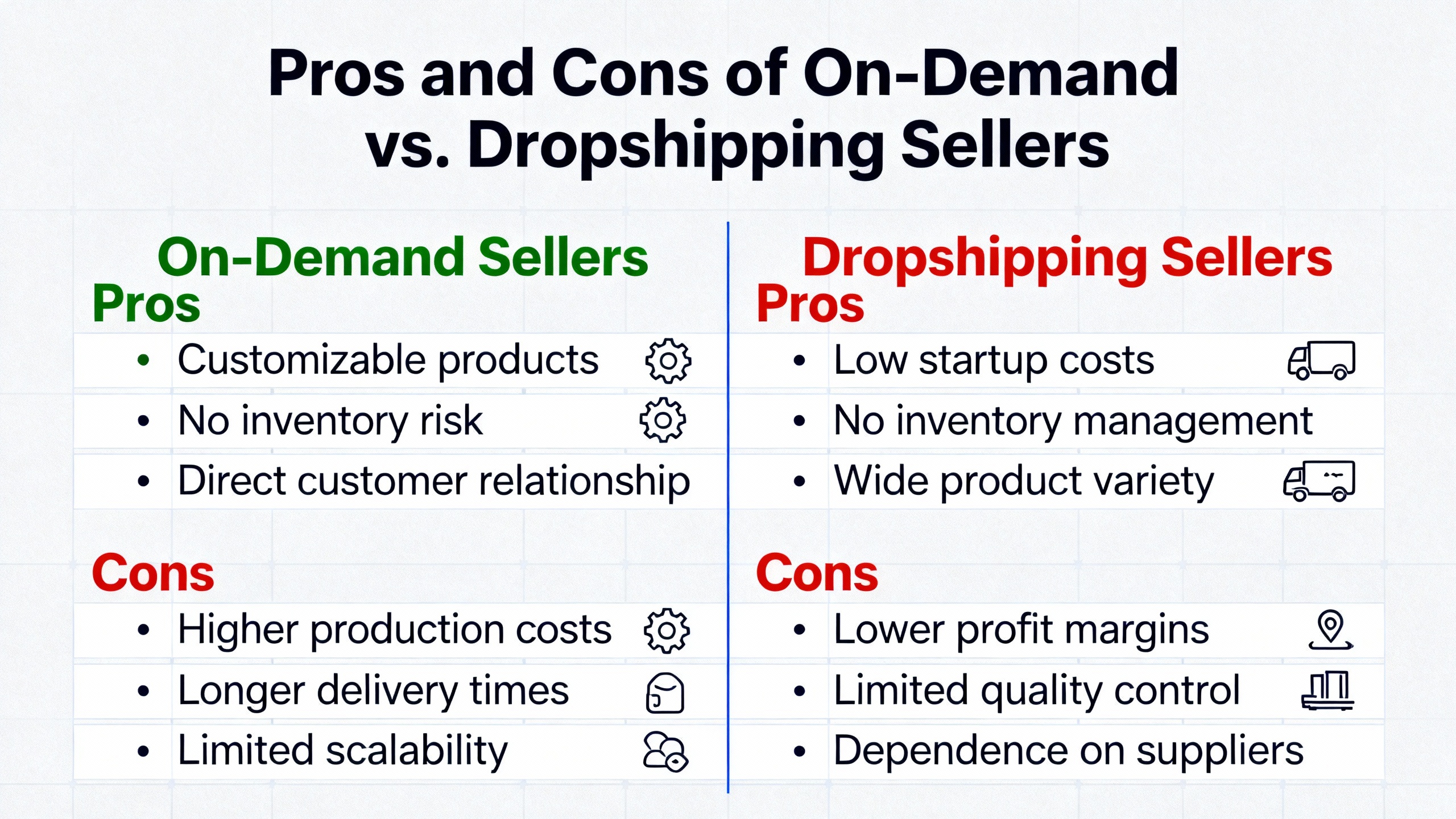
On the opportunity side, the differentiation is obvious. Holiday catalogs are saturated with conventional Christmas imagery. A line that openly centers singles and leans into smart, self-aware messaging will stand out in almost any marketplace grid. Because personalization is baked in, it is harder for generic competitors to undercut you purely on price. Guides from CNN Underscored, Wirecutter, and TODAY repeatedly emphasize that custom details reduce the chance of regifting and make gifts feel more meaningful. Customers who feel that way are more tolerant of price premiums, within reason.

Another upside is content and word-of-mouth potential. Anti-Christmas gifts are, by definition, commentary. They invite screenshots, social posts, and conversation. The Skimm’s guide for “the friend who has everything,” as well as Strategist’s and Cosmopolitan’s roundups of unique gifts, shows that editorial outlets are hungry for atypical, story-driven presents. If your designs are clever and well targeted, you have a built-in angle for pitches and user-generated content.

The generosity research summarized by the Greater Good Science Center adds a final benefit. When people use your products to enact new forms of giving—whether that is gifting a memory jar, a service-based coupon, or a self-care experience—they are not just buying a thing. They are buying a small upgrade to their own sense of meaning. Those customers are more likely to become repeat buyers across other occasions.

On the risk side, personalization increases operational complexity. Many of the guides in your notes warn readers to shop early for personalized items because production and shipping take longer. CNN Underscored and Wirecutter both stress that custom gifts are often made-to-order and final sale. For you, that means longer lead times, a higher bar for proofing, and tougher conversations about returns. Uncommon Goods manages that with its “forever returns” promise, but not every young brand can afford that posture.

There is also an audience-fit risk. “Anti-Christmas” is a playful label, but some designs can cross into bitterness or offense quickly. You need a clear brand line that distinguishes light-hearted rebellion and affirmation from pure negativity. In my experience working with founders on edgy product lines, the brands that succeed are the ones that center their customer’s well-being first and the joke second. The product can be subversive, but it still has to make the buyer feel better, not worse.

Finally, singles are a heterogeneous group. Not every single person is anti-Christmas, and not every anti-Christmas buyer is single. Your creative and ad targeting need to respect that nuance. This is not about mocking families or relationships; it is about carving out space for people whose lives do not match the default script.
Growth trends in customized gifts for singles

Execution Roadmap For POD And Dropshipping Brands

Translating this opportunity into revenue requires more than a few clever slogans. You need a structured approach that moves from insight to SKU to campaign, while staying lean.

First, mine the research you already have for language and proof points. Sherry’s work gives you a vocabulary around ritual and social roles. Chan and Mogilner’s findings on experiential gifts give you a rationale for emphasizing experiences in your copy. The Greater Good Science Center’s summary of generosity research lets you frame your line as a healthier, more authentic way to give. Consumer-facing sources like Real Simple, TODAY, Wirecutter, and Uncommon Goods show you the product formats and personalization methods that shoppers already understand.

Second, define two or three micro-segments within singles. For example, you might serve urban professionals who travel back to complicated family environments, late-twenties roommates building their own “Friendsgiving” style traditions, or divorced parents for whom the holiday calendar no longer matches the old pattern. Even without demographic statistics, you can infer these scenarios from the kinds of gifts Real Simple and TODAY recommend: home-based experiences, acts of service, and memory-keeping tools work well for people building new routines. Map each micro-segment to a small initial collection of five to ten POD designs that can be produced across multiple surfaces.

Third, choose your fulfillment stack to match your personalization depth. Basic name and date fields are trivial for most POD platforms. More complex options, such as pet portraits, stylized silhouettes, or custom-assembled phrases, require either integration with a specialized provider or clear production SOPs with your dropshipping partner. The TODAY and CNN Underscored guides you summarized showcase many such offerings—custom bobbleheads, pet paint-by-number kits, boarding-pass charms—which are proof that these workflows are manageable when scoped correctly. Use those as benchmarks when you scope your own SKUs.

Fourth, build merchandising and content that teach the customer how to use the products emotionally, not just technically. Real Simple’s article on nearly free gifts spends more time explaining the meaning of a “Jar of Awesome” or a service coupon than discussing materials. Wirecutter’s coverage of the New York Times birthday edition book explains why it suits people who “have lived long, interesting lives.” You should do the same. For each anti-Christmas item, spell out who it is for, what emotional job it does, and how to present it. That kind of copy can live on product pages, social posts, and email flows.

Finally, think beyond December. A strong anti-Christmas collection generates off-season opportunities because it is really about reframing rituals, not about one date on the calendar. Many of the ideas in the Real Simple piece—skill-sharing, homemade food gifts, acts of service, collaborative videos—are applicable to birthdays, breakups, promotions, and personal milestones. If you design your anti-Christmas catalog with these broader use cases in mind, you can re-skin successful products for Valentine’s Day, “Singles Day,” or even generic self-care campaigns without reinventing the wheel.

Brief FAQ

Will anti-Christmas products alienate mainstream customers?

Handled recklessly, yes. Handled thoughtfully, not necessarily. The brands and guides in your notes show that shoppers are comfortable with playful, irreverent gifts as long as they feel affectionate and specific. Anchor your line in empathy for singles and in the broader research on generosity and experiences. You are not attacking Christmas; you are giving people more ways to participate honestly.

Can a small POD brand handle the complexity of personalization?

Many already do. TODAY, CNN Underscored, and Wirecutter showcase entrepreneurs offering custom bobbleheads, pet portraits, embossed stationery, and engraved jewelry. Start with a narrow set of options that your production partner can fulfill reliably, then layer complexity once you have proof of demand. Reliable fulfillment beats maximal customization in the early stages.

How do I validate demand before committing to a full collection?

Use low-risk tests. Launch a handful of designs on high-traffic marketplaces where personalization is already common. Frame your products clearly for singles and watch whether the message resonates. Look at save-to-wish-list and engagement rates, not only sales, in the first season. Combine that with small social or email campaigns that narrate the anti-Christmas story and invite people to reply with their own experiences. Treat the first holiday as research and iteration, not as a make-or-break profit window.

Closing

If you strip away the tinsel, Christmas gifting is a ritual system. Research from anthropology, psychology, and marketing all point to the same conclusion: when people are allowed to express who they really are and to give in ways that align with their lives, both well-being and relationships improve. Singles have been operating at the edges of that system for a long time. Customized anti-Christmas gifts, built on the proven engines of personalization and experience, are a practical way to invite them into the center—and to build a defensible, forward-looking revenue stream for your on-demand or dropshipping business in the process.

References

  1. https://ggsc.berkeley.edu/images/uploads/GGSC-JTF_White_Paper-Generosity-FINAL.pdf
  2. https://www3.nd.edu/~jsherry/pdf/1983/Gift%20Giving.pdf
  3. https://www.anderson.ucla.edu/sites/default/files/documents/areas/fac/marketing/mogilner/Chan%20Mogilner%20JCR%202016%20Experiential%20Gifts.pdf
  4. https://www.apartmenttherapy.com/most-practical-gifts-36976637
  5. https://www.personalcreations.com/?srsltid=AfmBOoo7ZQln7j0oXKZ83Y1z-r2R6W49e8jIGIqR1fQFoHgIWRHFT6Im
  6. https://www.thingsremembered.com/
  7. https://www.vistaprint.com/personalized-christmas-gifts?srsltid=AfmBOop3apivXOku1gJJyuevl_dRYvD4uUMoTPMrzeUdhN0hnUr_WQSA
  8. https://www.etsy.com/market/holiday_gifts_personalised
  9. https://www.neimanmarcus.com/c/gifts-all-gifts-cat80110753?srsltid=AfmBOooUmdKWxt126cT0zJvCLqIE4K3TQakaJkqotLsUtQo1RMgpzbKG
  10. https://www.shutterfly.com/personalized-gifts/

Like the article

0
Customized Anti-Christmas Gifts: A New Growth Lane For Serving Singles

Customized Anti-Christmas Gifts: A New Growth Lane For Serving Singles

The Gift Ritual, And Who It Really Serves

If you study holiday merchandising long enough, you see the same pattern every year. Gift guides from places like The Strategist, Wirecutter, TODAY, and Real Simple slice the world into grandparents, couples, kids, hosts, coworkers, and “people who have everything.” Sherry’s classic 1983 work in Journal of Consumer Research frames gift giving as a social ritual that reinforces roles and obligations: parent, partner, grandchild, spouse. Singles seldom show up as a primary role in that picture.

Sherry described gift giving as a “ritual process” with three phases: you choose the gift, you present it, and then the relationship is subtly redefined. That lens is useful for founders. The mainstream holiday ritual still assumes a household built around couples and families. Singles are often forced into side roles: the flexible friend, the good aunt or uncle, the standby host.

At the same time, the broader gift market has been shifting decisively toward uniqueness and personalization. New York Magazine’s Strategist curates over a hundred gift ideas by identity and lifestyle. Wirecutter and TODAY devote entire guides to personalized gifts and custom experiences. Uncommon Goods lists hundreds of personalized SKUs and frames them as ways to express individuality, while Shutterfly builds an entire business around turning personal photos and names into physical keepsakes.

The opportunity is hiding in the gap between those two realities. On one side, consumer research says gifts are powerful tools for expressing identity and reshaping relationships. On the other, the commercial holiday script still largely ignores singles as a central audience. Customized anti-Christmas gifts for singles sit exactly in that gap: they use proven personalization mechanics, but rewire the ritual away from obligation and toward autonomy, humor, and chosen community.

From an e-commerce mentor’s perspective, that is the definition of a promising niche: emotionally loaded, structurally underserved, and operationally compatible with on-demand printing and dropshipping.

Personalized holiday gifts for single people strategy

What Are “Customized Anti-Christmas” Gifts?

Before you build a catalog around this idea, it needs a clear working definition. In a commercial context, “anti-Christmas” does not mean anti-community or anti-generosity. It means consciously stepping away from the sentimental, family-centric, picture-perfect imagery that dominates holiday merch.

A customized anti-Christmas gift for singles typically does three things. It acknowledges that the recipient may not resonate with traditional family or couple narratives. It replaces generic “joy and togetherness” messaging with humor, honesty, or self-directed care. And it uses personalization—names, dates, inside jokes, locations, or even life stories—to make that stance feel intentional rather than purely cynical.

The research summaries you have show how powerful that personalization layer is. Shutterfly positions personalized Christmas ornaments, blankets, and photo books as “one-of-a-kind” gifts that will be cherished over multiple seasons. CNN Underscored and TODAY highlight custom jewelry, pet portraits, nameplate accessories, and monogrammed home goods because they make people feel uniquely seen. Uncommon Goods offers hundreds of personalized gifts from independent makers and backs them with “forever returns” and a long-standing animal-friendly materials policy, signaling confidence that customers value these tailored items enough to justify the operational complexity.

An anti-Christmas product line for singles simply applies the same personalization toolbox to a different emotional script. Instead of yet another monogrammed family ornament, think of a print-on-demand poster that celebrates surviving another year solo on your own terms. Instead of matching family pajamas, think of intentionally non-matching, self-expressive loungewear that is made to be worn alone or with a chosen crew.

You can also combine the “anti” stance with the experiential dimension that Cassie Mogilner Holmes and Cindy Chan documented in their Journal of Consumer Research work. They showed that experiential gifts deepen relationships more than material ones, even when the giver does not participate. Translating that for singles might mean custom vouchers for a solo retreat day, a “do nothing” evening, or a tongue-in-cheek “cancel plans” pass that is printed to look like an event ticket. The object is material, but what is really being gifted is permission and experience.

A Simple Positioning Map

You can think of customized anti-Christmas gifts as a shift along two axes: from generic to personalized, and from traditional to subversive.

Axis

Traditional Christmas Gifts

Customized Anti-Christmas Gifts For Singles

Emotional narrative

Family unity, romance, nostalgia, obligation

Autonomy, humor, boundaries, chosen relationships

Personalization level

Name or monogram layered onto generic templates

Deep personalization: inside jokes, life stage, values

Social role assumption

Parent, partner, child, grandparent, host

Single individual, friend group, “found family,” self

Consumption style

Shared in family settings, on public holidays

Used alone, with friends, or in alternative gatherings

The table shows why this segment is natural for print-on-demand and dropshipping. You already know how to produce personalized designs at scale. You are simply reframing who they are for and what story they tell.

Why Singles Are An Underserved Customer In Holiday Gifting

Look at the research notes you already have. Strategist gift guides organize by relatives and hosts. Wirecutter reviews gifts for people “who have everything,” but the hero example is a personalized history book that celebrates decades of birthdays, implicitly for someone who already had a conventional life story. The Skimm curates “unique gifts for the friend who has everything,” again defining the recipient relationally. TODAY’s long list of personalized gifts includes clogs, tote bags, charms, fanny packs, and bookmarks with initials or names, and then segments them “for her” and “for him.”

Across all of that content, singles exist, but mostly as an afterthought: the cool aunt, the office Secret Santa, the difficult-to-buy-for friend. There is almost no mainstream editorial that says, explicitly, “You are single; here is how to design a holiday on your own terms.”

From Sherry’s anthropological perspective, that matters. Rituals tell people who they are and where they belong. When singles can only participate in Christmas as auxiliary characters in other people’s stories, the ritual reinforces a sense of marginality. Anti-Christmas gifting turns that dynamic on its head by making the single person’s own experience the main storyline.

There is also a well-being argument here, and it matters commercially. A white paper from the Greater Good Science Center synthesizes research showing that generosity and prosocial behavior are linked to higher happiness and life satisfaction, with effects that are small but consistent. The problem for many singles at the holidays is not that they do not want to give; it is that the only scripts they are offered feel misaligned with their reality.

A thoughtfully designed anti-Christmas line can invite singles back into the generous gift economy on new terms. It can validate solo life or nontraditional living arrangements while still encouraging gifts to friends, coworkers, neighbors, or even oneself. That is good for your customers and, if you structure it well, good for your business.

Niche e-commerce opportunities for anti-Christmas products

The Proof: Personalization And Experiences Already Sell

You do not have to guess whether personalized, off-template gifts convert. The research and market scans in your notes already answer that.

Uncommon Goods presents a 2025 collection of 386 personalized gifts and emphasizes independent makers and a generous returns policy. Nobody dedicates that much catalog space and margin structure to a product type unless it is working. Shutterfly has built a large franchise on personalized photo blankets, mugs, puzzles, and ornaments that turn everyday photos into emotional keepsakes.

Wirecutter’s personalized gift guide highlights custom Converse sneakers that allow buyers to configure almost every visual element, then add embroidered initials. TODAY’s coverage of personalized gifts features everything from custom bobbleheads to engraved cutting boards and monogrammed winter hats, often with multiple color, size, and font variables. Etsy leans heavily on personalization and uses deep discounts—up to seventy-five percent off some listings in the notes you have—to pull volume through that category.

The pattern is consistent. Retailers and reviewers stress three benefits of personalization. The gift feels more thoughtful and less likely to be regifted. It tells a story—about a relationship, a pet, a shared memory, or a milestone. And it justifies a premium because the item is perceived as one-of-a-kind.

Chan and Mogilner’s work on experiential gifts adds another layer. Experiences produce richer emotions and stronger relational gains than material goods, even controlling for effort and price. Real Simple’s coverage of low-cost gifts echoes that insight in a practical way by recommending experience-based presents, home-made consumables, acts of service, and creative digital tributes. In other words, you can create disproportionate emotional impact with relatively modest tangible inputs, as long as they are personalized and experiential.

Customized anti-Christmas gifts for singles combine these proven levers: personalization, story, and experience. A print-on-demand store can host a design that looks like a travel boarding pass but actually grants the recipient a self-curated “solo adventure day.” A dropshipped journal can include a custom cover phrase that captures the recipient’s private narrative about the holidays. The marginal cost of custom printing is small, but the perceived difference from a generic notebook is significant.

When I look at a niche, I ask whether it rides on established demand or tries to create entirely new behavior. Anti-Christmas singles gifting sits firmly on the existing rails of personalization and experiential value. That lowers your demand risk; the customer already understands the basic value proposition.

Product Strategy: Designing Anti-Christmas SKUs For Singles

To turn this into a real line, you need to map the concept onto printable surfaces and fulfillment logic. On-demand and dropshipping are strong fits because they let you test edgy creative without inventory risk, then double down on winners.

Start by defining the core occasions and use cases. For singles, the “holiday” is not just Christmas Day. It includes office gift exchanges, Friendsgiving-style gatherings, end-of-year self-reflection, apartment decorating, and trips home that may be ambivalent at best. Each of those occasions can anchor its own micro collection: work-adjacent humor, cozy-at-home self-care, “found family” celebrations with friends, or tongue-in-cheek gifts for relatives.

In practical terms, apparel is often the easiest entry point. Print-on-demand hoodies, T-shirts, and sweatshirts give you large design real estate and predictable sizing grids. Instead of leaning on family puns, design around individual identity and autonomy. A hoodie could integrate the year, the city, and a short custom phrase that the buyer enters at checkout. The experience for the customer mirrors what TODAY and Shutterfly already promote with initial necklaces and photo blankets, but the message is reframed from “we” to “I.”

Home and décor items are the next obvious category. Personalized ornaments, wall art, throw pillows with hidden photo reveals, monogrammed enamel canisters, and marble-and-wood coasters already feature heavily in mainstream guides. For singles, you can pivot the designs toward small apartments, roommate dynamics, or pet-centric households. A pet portrait canvas like the ones TODAY highlights becomes the emotional center of a solo tree or a studio wall. A custom floor mat with interchangeable tiles, similar to the highly customizable mats discussed in TODAY’s coverage, can be used to express changing moods throughout the season.

Do not ignore paper and stationery. Real Simple and TODAY both call out personalized notebooks, notepads, and book embossers as memorable, low-cost gifts. For singles, a year-long planner that incorporates custom prompts about personal goals, travel, or creative projects can function as both a gift and a self-development tool. Hardback notebooks from providers like Papier are already designed for name embossing; your edge is the framing and copy that speak directly to a single person’s brainspace in December.

Finally, use the experiential insight deliberately. That might mean designing physical vouchers—printed “tickets” to a self-curated day off, a quiet night in, or a no-social-media weekend. Chan and Mogilner’s evidence suggests that the emotional impact of the experience will deepen the association with the giver, even if they are not present. That is important when singles are buying anti-Christmas gifts for other singles in their circle; you are helping them co-create new rituals.

Pros And Cons For On-Demand And Dropshipping Sellers

From a business standpoint, this niche has very real upsides, but it is not free of friction.

On the opportunity side, the differentiation is obvious. Holiday catalogs are saturated with conventional Christmas imagery. A line that openly centers singles and leans into smart, self-aware messaging will stand out in almost any marketplace grid. Because personalization is baked in, it is harder for generic competitors to undercut you purely on price. Guides from CNN Underscored, Wirecutter, and TODAY repeatedly emphasize that custom details reduce the chance of regifting and make gifts feel more meaningful. Customers who feel that way are more tolerant of price premiums, within reason.

Another upside is content and word-of-mouth potential. Anti-Christmas gifts are, by definition, commentary. They invite screenshots, social posts, and conversation. The Skimm’s guide for “the friend who has everything,” as well as Strategist’s and Cosmopolitan’s roundups of unique gifts, shows that editorial outlets are hungry for atypical, story-driven presents. If your designs are clever and well targeted, you have a built-in angle for pitches and user-generated content.

The generosity research summarized by the Greater Good Science Center adds a final benefit. When people use your products to enact new forms of giving—whether that is gifting a memory jar, a service-based coupon, or a self-care experience—they are not just buying a thing. They are buying a small upgrade to their own sense of meaning. Those customers are more likely to become repeat buyers across other occasions.

On the risk side, personalization increases operational complexity. Many of the guides in your notes warn readers to shop early for personalized items because production and shipping take longer. CNN Underscored and Wirecutter both stress that custom gifts are often made-to-order and final sale. For you, that means longer lead times, a higher bar for proofing, and tougher conversations about returns. Uncommon Goods manages that with its “forever returns” promise, but not every young brand can afford that posture.

There is also an audience-fit risk. “Anti-Christmas” is a playful label, but some designs can cross into bitterness or offense quickly. You need a clear brand line that distinguishes light-hearted rebellion and affirmation from pure negativity. In my experience working with founders on edgy product lines, the brands that succeed are the ones that center their customer’s well-being first and the joke second. The product can be subversive, but it still has to make the buyer feel better, not worse.

Finally, singles are a heterogeneous group. Not every single person is anti-Christmas, and not every anti-Christmas buyer is single. Your creative and ad targeting need to respect that nuance. This is not about mocking families or relationships; it is about carving out space for people whose lives do not match the default script.

Growth trends in customized gifts for singles

Execution Roadmap For POD And Dropshipping Brands

Translating this opportunity into revenue requires more than a few clever slogans. You need a structured approach that moves from insight to SKU to campaign, while staying lean.

First, mine the research you already have for language and proof points. Sherry’s work gives you a vocabulary around ritual and social roles. Chan and Mogilner’s findings on experiential gifts give you a rationale for emphasizing experiences in your copy. The Greater Good Science Center’s summary of generosity research lets you frame your line as a healthier, more authentic way to give. Consumer-facing sources like Real Simple, TODAY, Wirecutter, and Uncommon Goods show you the product formats and personalization methods that shoppers already understand.

Second, define two or three micro-segments within singles. For example, you might serve urban professionals who travel back to complicated family environments, late-twenties roommates building their own “Friendsgiving” style traditions, or divorced parents for whom the holiday calendar no longer matches the old pattern. Even without demographic statistics, you can infer these scenarios from the kinds of gifts Real Simple and TODAY recommend: home-based experiences, acts of service, and memory-keeping tools work well for people building new routines. Map each micro-segment to a small initial collection of five to ten POD designs that can be produced across multiple surfaces.

Third, choose your fulfillment stack to match your personalization depth. Basic name and date fields are trivial for most POD platforms. More complex options, such as pet portraits, stylized silhouettes, or custom-assembled phrases, require either integration with a specialized provider or clear production SOPs with your dropshipping partner. The TODAY and CNN Underscored guides you summarized showcase many such offerings—custom bobbleheads, pet paint-by-number kits, boarding-pass charms—which are proof that these workflows are manageable when scoped correctly. Use those as benchmarks when you scope your own SKUs.

Fourth, build merchandising and content that teach the customer how to use the products emotionally, not just technically. Real Simple’s article on nearly free gifts spends more time explaining the meaning of a “Jar of Awesome” or a service coupon than discussing materials. Wirecutter’s coverage of the New York Times birthday edition book explains why it suits people who “have lived long, interesting lives.” You should do the same. For each anti-Christmas item, spell out who it is for, what emotional job it does, and how to present it. That kind of copy can live on product pages, social posts, and email flows.

Finally, think beyond December. A strong anti-Christmas collection generates off-season opportunities because it is really about reframing rituals, not about one date on the calendar. Many of the ideas in the Real Simple piece—skill-sharing, homemade food gifts, acts of service, collaborative videos—are applicable to birthdays, breakups, promotions, and personal milestones. If you design your anti-Christmas catalog with these broader use cases in mind, you can re-skin successful products for Valentine’s Day, “Singles Day,” or even generic self-care campaigns without reinventing the wheel.

Brief FAQ

Will anti-Christmas products alienate mainstream customers?

Handled recklessly, yes. Handled thoughtfully, not necessarily. The brands and guides in your notes show that shoppers are comfortable with playful, irreverent gifts as long as they feel affectionate and specific. Anchor your line in empathy for singles and in the broader research on generosity and experiences. You are not attacking Christmas; you are giving people more ways to participate honestly.

Can a small POD brand handle the complexity of personalization?

Many already do. TODAY, CNN Underscored, and Wirecutter showcase entrepreneurs offering custom bobbleheads, pet portraits, embossed stationery, and engraved jewelry. Start with a narrow set of options that your production partner can fulfill reliably, then layer complexity once you have proof of demand. Reliable fulfillment beats maximal customization in the early stages.

How do I validate demand before committing to a full collection?

Use low-risk tests. Launch a handful of designs on high-traffic marketplaces where personalization is already common. Frame your products clearly for singles and watch whether the message resonates. Look at save-to-wish-list and engagement rates, not only sales, in the first season. Combine that with small social or email campaigns that narrate the anti-Christmas story and invite people to reply with their own experiences. Treat the first holiday as research and iteration, not as a make-or-break profit window.

Closing

If you strip away the tinsel, Christmas gifting is a ritual system. Research from anthropology, psychology, and marketing all point to the same conclusion: when people are allowed to express who they really are and to give in ways that align with their lives, both well-being and relationships improve. Singles have been operating at the edges of that system for a long time. Customized anti-Christmas gifts, built on the proven engines of personalization and experience, are a practical way to invite them into the center—and to build a defensible, forward-looking revenue stream for your on-demand or dropshipping business in the process.

References

  1. https://ggsc.berkeley.edu/images/uploads/GGSC-JTF_White_Paper-Generosity-FINAL.pdf
  2. https://www3.nd.edu/~jsherry/pdf/1983/Gift%20Giving.pdf
  3. https://www.anderson.ucla.edu/sites/default/files/documents/areas/fac/marketing/mogilner/Chan%20Mogilner%20JCR%202016%20Experiential%20Gifts.pdf
  4. https://www.apartmenttherapy.com/most-practical-gifts-36976637
  5. https://www.personalcreations.com/?srsltid=AfmBOoo7ZQln7j0oXKZ83Y1z-r2R6W49e8jIGIqR1fQFoHgIWRHFT6Im
  6. https://www.thingsremembered.com/
  7. https://www.vistaprint.com/personalized-christmas-gifts?srsltid=AfmBOop3apivXOku1gJJyuevl_dRYvD4uUMoTPMrzeUdhN0hnUr_WQSA
  8. https://www.etsy.com/market/holiday_gifts_personalised
  9. https://www.neimanmarcus.com/c/gifts-all-gifts-cat80110753?srsltid=AfmBOooUmdKWxt126cT0zJvCLqIE4K3TQakaJkqotLsUtQo1RMgpzbKG
  10. https://www.shutterfly.com/personalized-gifts/
Like the article

0