

How Long Does it Take to Print a Shirt?
Key Takeaways
- Total fulfillment time for a POD shirt typically spans 2 to 5 business days from order to shipment.
- DTG and DTF offer the best balance of speed and flexibility for single-item on-demand orders.
- Raw print time is only seconds to minutes — total lead time includes processing, queuing, and quality checks.
- Inkedjoy optimizes turnaround with automated routing, deep blank inventory, and rigorous quality control.
- Fast, reliable fulfillment is a key competitive advantage for customer satisfaction and repeat sales.
Table of Contents
In the hyper-competitive era of micro-ecommerce, fast delivery is no longer a luxury—it is a baseline consumer expectation. For Print-on-Demand (POD) sellers, printing and fulfillment speed directly impact your bottom line, dictating customer satisfaction, repeat purchase rates, and store health metrics on platforms like Etsy and Shopify.
Quick Answer: While physically printing a single shirt takes only 30 seconds to a few minutes, the total fulfillment time—from order placement to shipping out—typically spans 2 to 5 business days. This duration fluctuates based on printing methods, order queues, and supply chain efficiency.
This guide breaks down the production timeline to help you optimize your supply chain and accelerate your store's delivery speed.
Printing Time vs. Fulfillment Lead Time
To master print-on-demand logistics, sellers must understand a critical distinction: Raw Print Time is not Total Fulfillment Lead Time.
- Raw Print Time is the literal duration the machine takes to apply a design to a blank garment (often just seconds or minutes).
- Total Fulfillment Lead Time is the entire window from the moment a customer clicks "buy" to the moment the shipping label is scanned. This includes order processing, automated syncing, artwork validation, batching, garment picking, pre-treatment, printing, curing, quality control, and packaging.
While a printing machine might finish its job in 30 seconds, your order is rarely first in line. Print-on-demand fulfillment centers operate on complex production schedules, handling thousands of orders daily. Your shirt must wait its turn in the vendor's digital queue and physical batching lines.
To help you choose the right method for your business model, here is how different printing technologies compare in production speed and application:
| Printing Method | Raw Print Time (Per Shirt) | Minimum Order Quantity (MOQ) | Best POD Scenario |
|---|---|---|---|
| DTG (Direct-to-Garment) | 30 – 120 seconds | 1 Piece | Standard POD; highly detailed, colorful designs on single cotton tees. |
| DTF (Direct-to-Film) | 45 – 90 seconds (plus heat press) | 1 Piece | Complex graphics on polyester, nylon, or dark/heavy fabrics. |
| Heat Transfer Vinyl (HTV) | 1 – 3 minutes (cutting + weeding + pressing) | 1 Piece | Simple text, custom names/numbers, or basic athleisure logos. |
| Sublimation | 1 – 2 minutes (plus gas infusion press) | 1 Piece | All-over-print (AOP) shirts, polyester activewear, and mugs. |
| Screen Printing | 5 – 15 seconds (after setup) | Usually 24+ pieces | Bulk inventory for top-selling designs; not ideal for true single-piece POD. |
Deep Dive into Shirt Printing Methods
Selecting the right printing method is a make-or-break decision for apparel e-commerce entrepreneurs. In the print-on-demand and custom apparel space, fulfillment speed directly impacts customer satisfaction, while technical compatibility dictates design quality. Understanding the delicate balance between production timelines and order volumes is essential for optimizing your supply chain and maximizing profit margins.
Direct-to-Garment (DTG): The Gold Standard for On-Demand
Direct-to-Garment (DTG) printing operates much like an office inkjet printer, but engineered specifically for textiles. It excels at rendering highly detailed, multi-colored designs and photographic prints directly onto fabric fibers. Because it requires zero setup or plate creation, it remains the undisputed gold standard for true on-demand, single-item fulfillment.
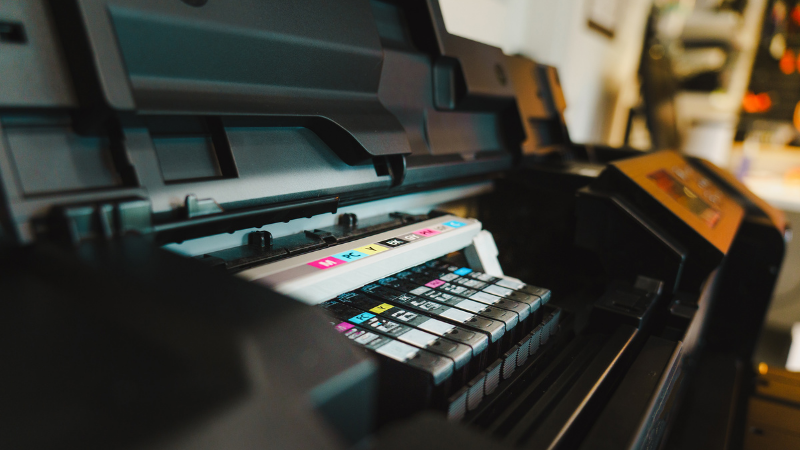
- Production Timeline: While the actual printing process is exceptionally swift—taking just 1 to 3 minutes per garment—the overall timeline is heavily dependent on preparation. To ensure the ink properly bonds with the fabric and yields vibrant colors, the garment must undergo a pre-treatment process. Applying and heat-drying this pre-treatment solution adds approximately 15 minutes to the total production time per shirt.
- Seller Value: For POD sellers, DTG offers the ultimate flexibility of no Minimum Order Quantities (MOQs). You can sell a single, hyper-customized shirt without worrying about leftover inventory. It is the absolute backbone of modern POD storefronts looking to offer unlimited design options with minimal upfront risk.
Direct-to-Film (DTF): The Rising Star for Dark and Mixed Fabrics
Direct-to-Film (DTF) has rapidly emerged as a powerful challenger in the garment decoration industry. Instead of printing directly onto the cloth, the design is printed onto a special clear film, coated with an adhesive powder, cured, and then transferred to the apparel.
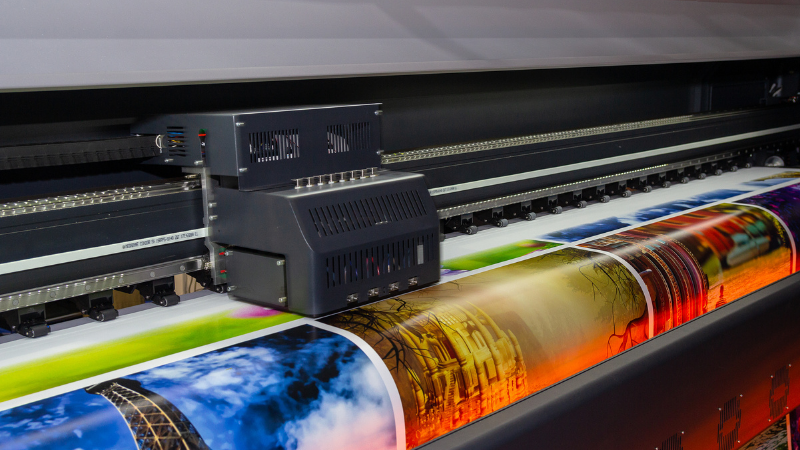
- Production Timeline: The initial stage—printing onto the film, applying the adhesive powder, and heat-curing it—takes roughly 10 to 15 minutes. However, the final application is incredibly efficient: heat-pressing the cured film onto the actual shirt takes a mere 15 to 30 seconds.
- Seller Value: DTF shines where DTG occasionally struggles, delivering unmatched color vibrancy on dark fabrics and seamless adhesion to cotton-polyester blends, nylon, and synthetic materials. Because the films can be printed in advance and pressed in seconds, DTF provides blazing-fast fulfillment speeds for small-batch orders.
Screen Printing: Fast in Bulk, Slow for On-Demand
Screen printing is a traditional method where thick ink is pushed through mesh stencils (screens) directly onto the garment. It represents the polar opposite of the on-demand philosophy, trading upfront agility for massive volume efficiency.
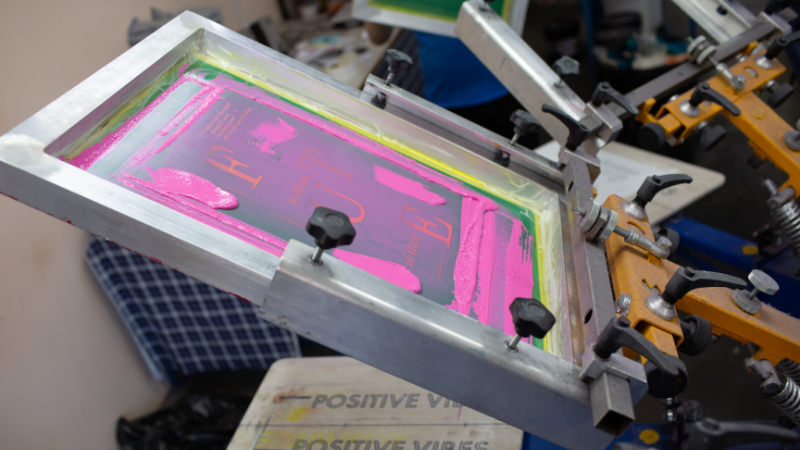
- Production Timeline: Once the machinery is running, screen printing is lightning fast, taking a mere 10 seconds per shirt and easily producing hundreds of garments per hour. However, the bottleneck lies entirely in the preparation. Creating the stencils, burning the screens for each individual color layer, and aligning the press requires a heavy investment of 2 to 5 hours of setup time.
- Seller Value: Due to the extensive setup time and labor costs, screen printing is completely unviable for single-item dropshipping. However, it is unmatched in cost-efficiency for bulk orders. This method is ideal for established sellers preparing for major holiday promotions, inventory replenishment, or stocking up overseas warehouses.
Heat Press & Sublimation: Niche Speeds for Specific Apparel
Dye sublimation and vinyl heat pressing serve highly specific niches within the apparel industry, utilizing heat to bond synthetic inks directly into polyester fibers.
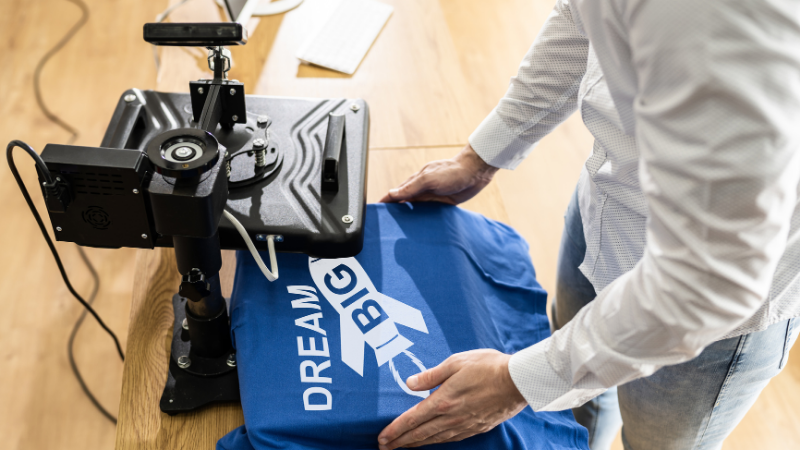
- Production Timeline: The transfer process is incredibly streamlined. Heat-pressing a sublimation design takes only 45 to 60 seconds per garment. Because the ink converts into a gas and permanently infuses into the fabric threads, there is zero drying or curing time required post-press.
- Seller Value: Sublimation is the premier choice for All-Over Print (AOP) designs and athletic sportswear. Because it requires polyester fabrics to function properly, it isn't meant for standard cotton tees, but it provides a premium, fade-resistant finish for moisture-wicking activewear and custom-patterned apparel.
Key Factors That Delay or Speed Up Your Shirt Production
In the print-on-demand world, raw printing machine speed is only one part of the equation. Multiple upstream and downstream variables dictate exactly when a package leaves the facility. Understanding these four critical factors allows you to optimize your pipeline and keep your customers happy.
- Artwork File Compliance: Submitting subpar design files is the leading cause of unexpected production bottlenecks. When a seller uploads a low-resolution image or a non-transparent PNG, the order automatically flags for manual review.
- Blank Stock Availability: Print providers do not carry infinite quantities of every single garment variation. Specialty items often require pulling inventory from regional distributors, adding 1 to 2 business days.
- Seasonal Demand and Peak Fluctuations: During the high-volume Q4 holiday rush, order queues swell. A production run that typically clears in 2 to 3 days can stretch to 5 or 7 days in November and December.
- Quality Assurance (QA) and Finishing Touches: Rigorous post-print inspections and premium finishing services (custom labeling, folding, poly-bagging) add necessary handling time but elevate the customer experience.
How Inkedjoy Optimizes Turnaround Time for Print on Demand Sellers
For print-on-demand entrepreneurs, choosing the right fulfillment partner is the ultimate leverage to compress timelines and scale efficiently. Inkedjoy directly addresses traditional industry bottlenecks by engineering a streamlined, high-velocity production pipeline. Here is how we keep your storefront ahead of the competition:

Intelligent Routing and API Automation
The fulfillment journey begins the exact millisecond an end-consumer clicks "buy." Inkedjoy's robust API seamlessly integrates with leading e-commerce platforms like Shopify and Etsy.
Instead of relying on manual order batches that waste valuable hours, our system instantly synchronizes, captures, and validates order details. Once synced, intelligent routing algorithms automatically direct the artwork file to the next available, highly efficient industrial DTG or DTF printing press.
This automated workflow slashes administrative delays and eliminates internal queuing, transitioning your orders from digital data to physical production in record time.
Proactive Blank Apparel Inventory Management
A common frustration for scaling print on demand brands is encountering unexpected stockouts at the factory level. Inkedjoy mitigates this supply chain vulnerability by maintaining deep, permanent stock across a massive on-site network of premium blank apparel warehouses.
We house a continuous supply of top-selling unisex t-shirts, comprehensively covering mainstream colorways and the full spectrum of sizing. By eliminating the industry-standard delay of waiting on regional wholesale deliveries, printing can commence immediately upon order routing.
Rigorous Quality Control and Unified Fulfillment
Speed without accuracy only results in costly returns and compromised store ratings. Inkedjoy enforces strict quality assurance protocols alongside high-speed fulfillment.
Even while pushing boundaries on rapid processing, every item undergoes rigorous checks to guarantee flawless 300+ DPI color replication and vibrant ink adhesion. Once cleared, the product immediately transfers to on-site packaging and sorting.
By unifying automated prepress, optimized blank inventory, and strict quality checks under a single operational roof, Inkedjoy consistently maintains an average production-to-shipment (Ready-to-Ship) cycle of just 48 to 72 hours. This predictable agility empowers your store to proudly offer fast shipping times, maximizing customer satisfaction and driving recurring revenue.
Conclusion
In the competitive print-on-demand landscape, fulfillment speed is undeniably a core driver of customer loyalty and store growth. However, sacrificing print quality or product durability for faster shipping will only trigger a wave of negative reviews and costly returns. True success lies in finding the perfect equilibrium.
By partnering with an agile, reliable provider like Inkedjoy, you gain access to automated order routing, premium on-site blank apparel inventory, and rigorous quality control. Turn your supply chain into your ultimate competitive edge—sign up with Inkedjoy today and deliver perfection to your customers, every single time.
FAQ
How quickly can I get a shirt printed?
For e-commerce POD, it takes 2 to 3 days to ship. This leaves time to check files, treat the fabric, and dry the ink so it will not fade.
How long does it take to print one T-shirt?
The actual machine time is incredibly fast. A DTG printer takes 1 to 3 minutes, while a heat press takes 15 to 30 seconds.
What color shirt is sold the most?
Black and white remain the undisputed global bestsellers, followed closely by sporty heather grey and navy.
Written By Carry
Carry is a content creator at Inkedjoy, specializing in SEO strategies and print on demand business insights. She writes practical guides to help business owners grow their online stores and build successful POD brands.