

How to Measure a T-Shirt: The Ultimate Guide for Print on Demand Sellers

How to Measure a T-Shirt: The Ultimate Guide for Print on Demand Sellers

May 22, 2026 by Carry POD e-Commerce 101

Key Takeaways

  • Sizing issues are a top cause of returns and lost profits for print-on-demand sellers.
  • The flat lay measurement method is the gold standard for e-commerce t-shirt size charts.
  • Clear, accurate size guides reduce buyer hesitation and boost conversion rates.
  • Providing both inches and centimeters, plus visual diagrams, builds customer trust.
  • Proper sizing information protects margins while enhancing SEO and brand credibility.

As a print-on-demand (POD) seller, you know that nothing kills your profit margins faster than the silent killer of ecommerce: sizing issues. In the print-on-demand world, returns and negative reviews often stem from a single, preventable point of friction—customers ordering the wrong fit.

While you can't personally oversee the factory floor or control the hands-on manufacturing of every garment, you have complete control over customer expectations. By providing a crystal-clear, accurate size guide, you bridge the gap between digital mockups and physical reality.

Why Accurate T-Shirt Measurements Matter for Print on Demand Businesses

Minimize Returns and Protect Profit Margins In the print-on-demand ecosystem, accuracy isn't just about quality control—it is a core pillar of your store's profitability. Because print on demand items are custom-printed to order, most suppliers will not absorb the cost of returns due to buyer remorse or incorrect sizing.

When a customer orders the wrong size, you are often left covering the retail loss, shipping fees, or the cost of a replacement garment. Precise t-shirt measurements serve as your first line of defense, slash return rates, and safeguard your hard-earned profit margins.

Eliminate Buyer Hesitation Clear sizing data works as a powerful tool to maximize your conversion rate (CR). "Sizing anxiety" remains one of the leading causes of cart abandonment in online apparel shopping. When shoppers cannot physically try on a shirt, they hesitate. Comprehensive sizing instructions eliminate this friction, which instills the confidence customers need to hit the "Add to Cart" button without hesitation.

how to measure t-shirt

Enhance SEO Rankings Detailed sizing guides directly influence your search engine rankings and brand equity from an SEO perspective. Google's search algorithms increasingly prioritize long-form, highly useful content that aligns with its E-E-A-T (Experience, Expertise, Authoritativeness, and Trustworthiness) guidelines.

When your site features an exhaustive guide on how to measure a t-shirt, visitors stay on your page longer to review the details. This increased dwell time and lowered bounce rate signal to Google that your website provides high-value solutions, which naturally lifts your organic search visibility over competitors with generic descriptions.

Thorough measurement standards transform a simple logistics page into a high-performing asset that builds customer trust and drives sustainable organic growth.

Essential Approaches: Flat Lay vs. Body Measurements

When you set up a size chart for your print-on-demand store, you must choose how to present your garment dimensions. The apparel industry relies on two primary methodologies: flat lay measurements and body measurements. Understanding the distinction between these two approaches allows you to communicate more effectively with your customers and reduce sizing confusion.

The Flat Lay Method: The Gold Standard for Print-on-Demand The flat lay method is the undisputed industry standard for e-commerce apparel. To use this approach, a garment is spread completely flat on a hard surface and measured from specific point to point. Print on demand sellers should always prioritize this method because it provides an actionable blueprint for the buyer.

Instead of guessing their own physical dimensions, customers can simply grab a favorite, well-fitting t-shirt from their own closet, lay it flat, and compare those exact numbers to your size chart. This eliminates human error and guarantees a fit they already know they enjoy.

The Body Method The body method measures the actual physical dimensions of the human form using a flexible tape measure wrapped around the chest, waist, and hips. While less common for casual streetwear, body measurements are crucial for form-fitting garments, athletic wear, or targeted women's cut apparel where fabric stretch drastically alters how the shirt sits on the skin.

To optimize your store for maximum clarity, explicitly state which method your size chart uses. A great practice for print-on-demand stores is to feature a flat lay chart as the primary graphic, accompanied by a secondary tab or note for body measurement conversions to capture both shopping preferences perfectly.

Step-by-Step Guide: How to Measure a T-Shirt (Flat Lay Method)

Accurate product dimensions are the secret to reducing e-commerce returns. This step-by-step guide explains exactly how to measure a t-shirt using the industry-standard flat lay method. Follow these precise steps to create a flawless size chart for your print-on-demand store or to instruct your customers on how to find their perfect fit.

Preparation: Prepare the Garment Before grabbing your measuring tape, place the t-shirt completely flat on a hard, level surface such as a clean table or uncarpeted floor. Smooth out all fabric wrinkles, folds, and air pockets with your hands. Do not stretch or pull the fabric abnormally, as this will distort the final numbers. Ensure the shirt naturally rests in its true shape before taking any dimensions.
how to measure t-shirt

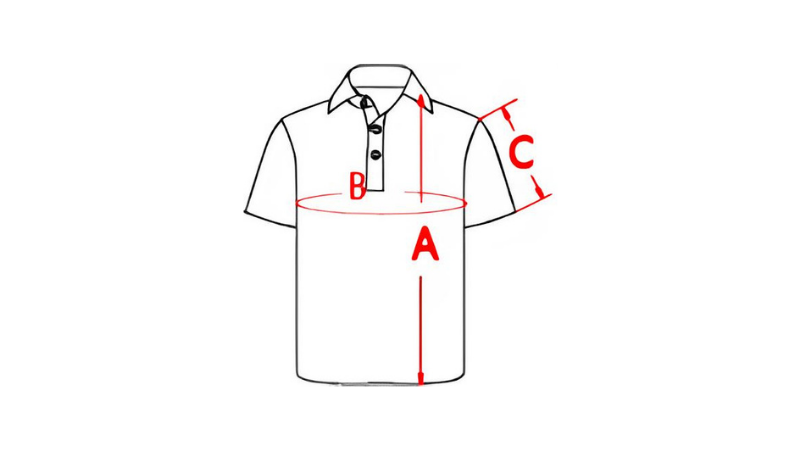
Step 1: Measure the Chest / Width The chest width is the most critical metric for determining how a shirt fits across the torso.

How to measure: Locate the armpit seams where the sleeves meet the main body of the shirt. Position your measuring tape exactly 1 inch below the armpit seam on one side. Measure horizontally straight across the chest to the exact same point 1 inch below the armpit seam on the opposite side.

SEO Note: This is often listed simply as "Width" or "Pit-to-Pit" on apparel size charts.

Step 2: Measure the Total Length The length determines how far down the shirt hangs on the body, which is vital for customers tracking specific styling preferences like cropped or oversized fits.

How to measure: Find the highest point of the shoulder, right where the collar seam meets the shoulder seam. Drop the tape measure vertically straight down from that exact high point all the way to the very bottom edge of the shirt's front hem.

Step 3: Measure the Sleeve Length Sleeve dimensions prevent customers from receiving shirts with sleeves that are unexpectedly short or excessively baggy. The apparel industry utilizes two distinct standards for this measurement:

Standard Sleeve Length: Place the tape measure at the top shoulder seam (where the sleeve fabric joins the shoulder) and extend it straight down the outer edge to the tip of the sleeve cuff.

Center Back (CB) Sleeve Length: Start at the exact center point of the back collar seam. Run the tape measure along the top of the shoulder, and then continue straight down the arm to the edge of the sleeve cuff. This method is the preferred standard for premium streetwear brands and raglan-style shirts.

Step 4: Measure the Shoulder Width (Optional) While optional, shoulder width helps shoppers judge whether the structured silhouette of a standard tee will align cleanly with their natural frame.

How to measure: Locate the outer shoulder seam on the left side of the shirt. Stretch the tape measure horizontally across the upper back of the garment directly to the outer shoulder seam on the right side.

By consistently applying these four steps, you ensure highly repeatable, standardized measurements that build consumer trust and protect your print-on-demand margins.

How to Measure a T-Shirt for Different Styles

Not all t-shirts share the same silhouette, meaning a single sizing framework cannot fit every product in your print-on-demand product catalog. To prevent customer confusion and ensure accurate expectations, you must adapt your measurement guidelines to match specific garment styles.

Unisex vs. Men's vs. Women's Fit Understanding the structural differences between cuts prevents unexpected fit issues. A unisex or men's standard tee features a straight silhouette, meaning the width remains identical from the chest down to the bottom hem.

Conversely, a women's slim-fit t-shirt incorporates a contoured shape. When measuring a women's contoured tee, you must provide both the traditional underarm chest width and a secondary waist width—taken at the narrowest point of the hourglass curve—since the fabric tapers significantly inward before flaring slightly back out at the hem.
how to measure t-shirt

Oversized and Streetwear T-Shirts The rise of streetwear has made oversized, heavy-blend tees incredibly popular. These garments almost always utilize a drop-shoulder design, where the shoulder seam sits low on the upper arm rather than on the natural shoulder bone.

For drop-shoulder styles, your shoulder width measurement will be exceptionally wide, while the standard sleeve length (measured from the dropped seam to the cuff) will appear unusually short. To provide an accurate picture for your customers, always pair these dimensions with clear visual layout graphics.

Raglan Sleeves Raglan t-shirts, often used for baseball-style tees, completely lack a traditional, vertical shoulder seam. Instead, the sleeve fabric extends in one continuous piece all the way to the collar line.

Because there is no shoulder junction to serve as a starting point, you cannot use a standard sleeve measurement. You must utilize the Center Back (CB) method: place the tape measure at the exact center of the back collar seam, run it straight across the shoulder angle, and follow it all the way down to the sleeve cuff.

Best Practices for Creating a High-Converting Size Chart

Building an accurate size chart is only half the battle; presenting that data in a user-friendly format is what drives sales. To transform your print-on-demand store's sizing page into a high-converting asset, implement these essential industry best practices.

Provide Dual Measurement Units E-commerce has made retail entirely global, which means your target audience spans different regions with varying measurement preferences. To cater to both domestic and international shoppers seamlessly, your size charts must display dimensions in both inches and centimeters.

Providing a simple toggle button or a clean side-by-side table allows cross-border buyers to find their fit instantly, removing a massive barrier to checkout.

how to measure t-shirt

Disclose Manufacturing Sizing Tolerance In apparel manufacturing, physical garments rarely match tech-pack specifications down to the exact millimeter. Fabric stretching, cutting variations, and sewing mechanics introduce minor discrepancies.

It is standard industry practice to experience a sizing tolerance or variance of approximately ±1 inch (±2.5 cm). Clearly noting this acceptable variance directly on your size chart page manages customer expectations and acts as a vital legal shield against post-purchase disputes or chargebacks over minor fit discrepancies.

Leverage Visual Diagrams Text-heavy tables can overwhelm mobile shoppers. Mirroring the optimization logic of advanced sizing applications like Sizely or Kiwi Sizing, you should always anchor your charts with clean, high-contrast visual diagrams.

Use simple line illustrations of a t-shirt featuring clear arrows indicating exactly where the "width" and "length" lines are drawn. Visual graphics drastically cut down cognitive friction, allowing buyers to understand your instructions in fractions of a second.

Integrate Smart Size Predictors Take your user experience a step further by utilizing modern, AI-driven size recommendation tools. Interactive size predictors ask shoppers for basic inputs—such as their height, weight, and preferred fit style (e.g., tight, regular, loose)—and instantly calculate their ideal size based on your product data. By automating the calculation process, you remove human error entirely, build immense buyer confidence, and maximize your print-on-demand conversion rates.

Conclusion

Providing accurate t-shirt measurements is far more than just creating a basic logistics page on your website; it is a high-impact operational strategy that directly protects and boosts your net profit margins. By eliminating sizing anxiety, minimizing costly returns, and enhancing your store's SEO ranking, a well-optimized size chart builds lasting customer trust and driving sustainable e-commerce growth.

Do not let preventable sizing confusion eat away at your hard-earned print-on-demand revenue. Take action today: audit your best-selling custom t-shirts on platforms like Shopify or Etsy, update your sizing dimensions with clear visual diagrams, and leverage our advanced print-on-demand automation tools at Inkedjoy to streamline your fulfillment and scale your apparel business seamlessly.


FAQs

What's the difference between men's and women's t-shirt measurements?

Men's (and unisex) shirts feature a straight cut where the width remains uniform from the chest down to the hem. Women's shirts are contoured, featuring narrower shoulders, shorter sleeves, and a tapered waistline that curves inward before widening slightly at the hip.

How to measure t-shirt size at home?

Take a well-fitting t-shirt from your closet, spread it completely flat on a hard table, and use a flexible measuring tape to find the width (1 inch below the armpit) and the length (from the highest point of the shoulder down to the hem).

How do I measure the length of a tee shirt?

Anchor your measuring tape at the highest point of the shoulder seam right where it connects to the collar. Run the tape measure straight down the front of the fabric to the very bottom edge of the hem.

C

Written By Carry

Carry is a content creator at Inkedjoy, specializing in SEO strategies and print on demand business insights. She writes practical guides to help business owners grow their online stores and build successful POD brands.


Like the article

0
How to Measure a T-Shirt: The Ultimate Guide for Print on Demand Sellers

How to Measure a T-Shirt: The Ultimate Guide for Print on Demand Sellers

Key Takeaways

  • Sizing issues are a top cause of returns and lost profits for print-on-demand sellers.
  • The flat lay measurement method is the gold standard for e-commerce t-shirt size charts.
  • Clear, accurate size guides reduce buyer hesitation and boost conversion rates.
  • Providing both inches and centimeters, plus visual diagrams, builds customer trust.
  • Proper sizing information protects margins while enhancing SEO and brand credibility.

As a print-on-demand (POD) seller, you know that nothing kills your profit margins faster than the silent killer of ecommerce: sizing issues. In the print-on-demand world, returns and negative reviews often stem from a single, preventable point of friction—customers ordering the wrong fit.

While you can't personally oversee the factory floor or control the hands-on manufacturing of every garment, you have complete control over customer expectations. By providing a crystal-clear, accurate size guide, you bridge the gap between digital mockups and physical reality.

Why Accurate T-Shirt Measurements Matter for Print on Demand Businesses

Minimize Returns and Protect Profit Margins In the print-on-demand ecosystem, accuracy isn't just about quality control—it is a core pillar of your store's profitability. Because print on demand items are custom-printed to order, most suppliers will not absorb the cost of returns due to buyer remorse or incorrect sizing.

When a customer orders the wrong size, you are often left covering the retail loss, shipping fees, or the cost of a replacement garment. Precise t-shirt measurements serve as your first line of defense, slash return rates, and safeguard your hard-earned profit margins.

Eliminate Buyer Hesitation Clear sizing data works as a powerful tool to maximize your conversion rate (CR). "Sizing anxiety" remains one of the leading causes of cart abandonment in online apparel shopping. When shoppers cannot physically try on a shirt, they hesitate. Comprehensive sizing instructions eliminate this friction, which instills the confidence customers need to hit the "Add to Cart" button without hesitation.

how to measure t-shirt

Enhance SEO Rankings Detailed sizing guides directly influence your search engine rankings and brand equity from an SEO perspective. Google's search algorithms increasingly prioritize long-form, highly useful content that aligns with its E-E-A-T (Experience, Expertise, Authoritativeness, and Trustworthiness) guidelines.

When your site features an exhaustive guide on how to measure a t-shirt, visitors stay on your page longer to review the details. This increased dwell time and lowered bounce rate signal to Google that your website provides high-value solutions, which naturally lifts your organic search visibility over competitors with generic descriptions.

Thorough measurement standards transform a simple logistics page into a high-performing asset that builds customer trust and drives sustainable organic growth.

Essential Approaches: Flat Lay vs. Body Measurements

When you set up a size chart for your print-on-demand store, you must choose how to present your garment dimensions. The apparel industry relies on two primary methodologies: flat lay measurements and body measurements. Understanding the distinction between these two approaches allows you to communicate more effectively with your customers and reduce sizing confusion.

The Flat Lay Method: The Gold Standard for Print-on-Demand The flat lay method is the undisputed industry standard for e-commerce apparel. To use this approach, a garment is spread completely flat on a hard surface and measured from specific point to point. Print on demand sellers should always prioritize this method because it provides an actionable blueprint for the buyer.

Instead of guessing their own physical dimensions, customers can simply grab a favorite, well-fitting t-shirt from their own closet, lay it flat, and compare those exact numbers to your size chart. This eliminates human error and guarantees a fit they already know they enjoy.

The Body Method The body method measures the actual physical dimensions of the human form using a flexible tape measure wrapped around the chest, waist, and hips. While less common for casual streetwear, body measurements are crucial for form-fitting garments, athletic wear, or targeted women's cut apparel where fabric stretch drastically alters how the shirt sits on the skin.

To optimize your store for maximum clarity, explicitly state which method your size chart uses. A great practice for print-on-demand stores is to feature a flat lay chart as the primary graphic, accompanied by a secondary tab or note for body measurement conversions to capture both shopping preferences perfectly.

Step-by-Step Guide: How to Measure a T-Shirt (Flat Lay Method)

Accurate product dimensions are the secret to reducing e-commerce returns. This step-by-step guide explains exactly how to measure a t-shirt using the industry-standard flat lay method. Follow these precise steps to create a flawless size chart for your print-on-demand store or to instruct your customers on how to find their perfect fit.

Preparation: Prepare the Garment Before grabbing your measuring tape, place the t-shirt completely flat on a hard, level surface such as a clean table or uncarpeted floor. Smooth out all fabric wrinkles, folds, and air pockets with your hands. Do not stretch or pull the fabric abnormally, as this will distort the final numbers. Ensure the shirt naturally rests in its true shape before taking any dimensions.

how to measure t-shirt

Step 1: Measure the Chest / Width The chest width is the most critical metric for determining how a shirt fits across the torso.

How to measure: Locate the armpit seams where the sleeves meet the main body of the shirt. Position your measuring tape exactly 1 inch below the armpit seam on one side. Measure horizontally straight across the chest to the exact same point 1 inch below the armpit seam on the opposite side.

SEO Note: This is often listed simply as "Width" or "Pit-to-Pit" on apparel size charts.

Step 2: Measure the Total Length The length determines how far down the shirt hangs on the body, which is vital for customers tracking specific styling preferences like cropped or oversized fits.

How to measure: Find the highest point of the shoulder, right where the collar seam meets the shoulder seam. Drop the tape measure vertically straight down from that exact high point all the way to the very bottom edge of the shirt's front hem.

Step 3: Measure the Sleeve Length Sleeve dimensions prevent customers from receiving shirts with sleeves that are unexpectedly short or excessively baggy. The apparel industry utilizes two distinct standards for this measurement:

Standard Sleeve Length: Place the tape measure at the top shoulder seam (where the sleeve fabric joins the shoulder) and extend it straight down the outer edge to the tip of the sleeve cuff.

Center Back (CB) Sleeve Length: Start at the exact center point of the back collar seam. Run the tape measure along the top of the shoulder, and then continue straight down the arm to the edge of the sleeve cuff. This method is the preferred standard for premium streetwear brands and raglan-style shirts.

Step 4: Measure the Shoulder Width (Optional) While optional, shoulder width helps shoppers judge whether the structured silhouette of a standard tee will align cleanly with their natural frame.

How to measure: Locate the outer shoulder seam on the left side of the shirt. Stretch the tape measure horizontally across the upper back of the garment directly to the outer shoulder seam on the right side.

By consistently applying these four steps, you ensure highly repeatable, standardized measurements that build consumer trust and protect your print-on-demand margins.

How to Measure a T-Shirt for Different Styles

Not all t-shirts share the same silhouette, meaning a single sizing framework cannot fit every product in your print-on-demand product catalog. To prevent customer confusion and ensure accurate expectations, you must adapt your measurement guidelines to match specific garment styles.

Unisex vs. Men's vs. Women's Fit Understanding the structural differences between cuts prevents unexpected fit issues. A unisex or men's standard tee features a straight silhouette, meaning the width remains identical from the chest down to the bottom hem.

Conversely, a women's slim-fit t-shirt incorporates a contoured shape. When measuring a women's contoured tee, you must provide both the traditional underarm chest width and a secondary waist width—taken at the narrowest point of the hourglass curve—since the fabric tapers significantly inward before flaring slightly back out at the hem.

how to measure t-shirt

Oversized and Streetwear T-Shirts The rise of streetwear has made oversized, heavy-blend tees incredibly popular. These garments almost always utilize a drop-shoulder design, where the shoulder seam sits low on the upper arm rather than on the natural shoulder bone.

For drop-shoulder styles, your shoulder width measurement will be exceptionally wide, while the standard sleeve length (measured from the dropped seam to the cuff) will appear unusually short. To provide an accurate picture for your customers, always pair these dimensions with clear visual layout graphics.

Raglan Sleeves Raglan t-shirts, often used for baseball-style tees, completely lack a traditional, vertical shoulder seam. Instead, the sleeve fabric extends in one continuous piece all the way to the collar line.

Because there is no shoulder junction to serve as a starting point, you cannot use a standard sleeve measurement. You must utilize the Center Back (CB) method: place the tape measure at the exact center of the back collar seam, run it straight across the shoulder angle, and follow it all the way down to the sleeve cuff.

Best Practices for Creating a High-Converting Size Chart

Building an accurate size chart is only half the battle; presenting that data in a user-friendly format is what drives sales. To transform your print-on-demand store's sizing page into a high-converting asset, implement these essential industry best practices.

Provide Dual Measurement Units E-commerce has made retail entirely global, which means your target audience spans different regions with varying measurement preferences. To cater to both domestic and international shoppers seamlessly, your size charts must display dimensions in both inches and centimeters.

Providing a simple toggle button or a clean side-by-side table allows cross-border buyers to find their fit instantly, removing a massive barrier to checkout.

how to measure t-shirt

Disclose Manufacturing Sizing Tolerance In apparel manufacturing, physical garments rarely match tech-pack specifications down to the exact millimeter. Fabric stretching, cutting variations, and sewing mechanics introduce minor discrepancies.

It is standard industry practice to experience a sizing tolerance or variance of approximately ±1 inch (±2.5 cm). Clearly noting this acceptable variance directly on your size chart page manages customer expectations and acts as a vital legal shield against post-purchase disputes or chargebacks over minor fit discrepancies.

Leverage Visual Diagrams Text-heavy tables can overwhelm mobile shoppers. Mirroring the optimization logic of advanced sizing applications like Sizely or Kiwi Sizing, you should always anchor your charts with clean, high-contrast visual diagrams.

Use simple line illustrations of a t-shirt featuring clear arrows indicating exactly where the "width" and "length" lines are drawn. Visual graphics drastically cut down cognitive friction, allowing buyers to understand your instructions in fractions of a second.

Integrate Smart Size Predictors Take your user experience a step further by utilizing modern, AI-driven size recommendation tools. Interactive size predictors ask shoppers for basic inputs—such as their height, weight, and preferred fit style (e.g., tight, regular, loose)—and instantly calculate their ideal size based on your product data. By automating the calculation process, you remove human error entirely, build immense buyer confidence, and maximize your print-on-demand conversion rates.

Conclusion

Providing accurate t-shirt measurements is far more than just creating a basic logistics page on your website; it is a high-impact operational strategy that directly protects and boosts your net profit margins. By eliminating sizing anxiety, minimizing costly returns, and enhancing your store's SEO ranking, a well-optimized size chart builds lasting customer trust and driving sustainable e-commerce growth.

Do not let preventable sizing confusion eat away at your hard-earned print-on-demand revenue. Take action today: audit your best-selling custom t-shirts on platforms like Shopify or Etsy, update your sizing dimensions with clear visual diagrams, and leverage our advanced print-on-demand automation tools at Inkedjoy to streamline your fulfillment and scale your apparel business seamlessly.


FAQs

What's the difference between men's and women's t-shirt measurements?

Men's (and unisex) shirts feature a straight cut where the width remains uniform from the chest down to the hem. Women's shirts are contoured, featuring narrower shoulders, shorter sleeves, and a tapered waistline that curves inward before widening slightly at the hip.

How to measure t-shirt size at home?

Take a well-fitting t-shirt from your closet, spread it completely flat on a hard table, and use a flexible measuring tape to find the width (1 inch below the armpit) and the length (from the highest point of the shoulder down to the hem).

How do I measure the length of a tee shirt?

Anchor your measuring tape at the highest point of the shoulder seam right where it connects to the collar. Run the tape measure straight down the front of the fabric to the very bottom edge of the hem.

C

Written By Carry

Carry is a content creator at Inkedjoy, specializing in SEO strategies and print on demand business insights. She writes practical guides to help business owners grow their online stores and build successful POD brands.

Like the article

0