

How Personalized Christmas Gifts Can Mend Family Relationships

How Personalized Christmas Gifts Can Mend Family Relationships

Dec 25, 2025 by Iris POD e-Commerce 101

Christmas sits at the intersection of high expectations and old emotions. As a mentor to e-commerce founders in the personalized gift space, I see the same pattern every year: shoppers arrive at online stores with much more than a shopping list. They come with unsaid apologies, unresolved conflicts, and a quiet hope that the right gift might reopen a door with someone they love.

Thoughtful, customized gifts cannot magically erase years of hurt. But when they are designed and given with intention, the evidence from psychology and family research is clear: they can soften defenses, rebuild trust, and become steady reminders that a relationship is worth repairing. For founders in on-demand printing and dropshipping, understanding this is not just good ethics; it is a powerful way to design products that genuinely change lives, not just fill carts.

Why Christmas Gifts Carry So Much Emotional Weight

Gift-giving has always been one of the core ways families say “I love you,” especially during Christmas. The American Psychological Association has highlighted that giving to people we care about activates the brain’s reward pathways and releases oxytocin, the neurochemical linked with trust and connection. In one study described by researchers at the University of Zurich, people who spent $100 on others over several weeks reported more happiness and behaved more generously than those who spent it on themselves. The “warm glow” they experienced was not about the object, but the act of caring.

Around Christmas, this effect is amplified. We see relatives we may not meet all year, revisit childhood homes, and relive old arguments as easily as old traditions. A generic, last-minute sweater often lands as a reminder that someone was an obligation. A carefully chosen, personalized gift, on the other hand, can communicate something much deeper: I remember our story. I see who you are now. I still care enough to try.

That emotional difference is not theoretical. Research referenced by Nottingham Trent University and the University of Bath shows that personalized gifts create deeper emotional bonds than standard ones and are kept and cherished for longer. They act as communication tools, silently saying, “You matter enough for something made just for you.”

The Psychology Behind Personalized Gifts

From Objects to Emotional Bridges

Several independent lines of research converge on a simple truth: personalization is powerful because it ties an object to a specific person, story, or moment.

Personalized gifts are typically defined as items customized to a recipient’s identity, such as names, dates, photos, favorite symbols, or shared memories. Studies summarized by the Family Portrait Company point out that this tailoring increases emotional relevance, attachment, and even self-esteem. Instead of being “a mug,” it becomes “the mug from the first Christmas after we made up.”

Other work, including research highlighted by Psychology & Marketing and discussed by brands like Cloncaia, shows that personalized gifts trigger what scholars call “vicarious pride.” When someone receives a customized gift, they do not just feel grateful; they also feel proud that another person put in the thought, creativity, and design effort on their behalf. That pride enhances their self-worth and the way they see the relationship.

BeaRegards and similar sources distinguish between thoughtful, sentimental, and personalized gifts in useful ways. Thoughtful gifts are chosen for current needs, such as a cozy item for a stressed sibling this year. Sentimental gifts are anchored in meaningful past moments, like a framed childhood photo. Personalization often overlays both categories, turning either type into a unique keepsake with a name, date, or message. Together, these dimensions explain why a personalized Christmas gift can feel like both a hug in the present and a bridge to the past.

What Happens in the Brain When We Give

The neuroscience is important because it explains why gift-giving can support emotional repair, not just celebration. Work highlighted by the American Psychological Association notes that giving to close others lights up brain regions involved in reward and social processing. Because gift-giving is social, it also involves oxytocin, often nicknamed the “cuddle hormone” for its role in bonding and feeling safe.

Crucially, this reward response does not just occur when the gift is opened. The process of choosing, designing, and even wrapping the gift activates similar circuits. For a parent planning a personalized Christmas gift for an estranged adult child, those hours spent selecting photos for a custom album or typing a short engraving are not trivial. They are a form of emotional rehearsal: the giver is mentally revisiting the relationship, remembering what they love about that person, and preparing for a moment of vulnerability.

From a family-systems perspective, that preparation matters. It makes the giver more likely to approach the interaction with warmth rather than defensiveness, which increases the chance that the recipient will receive the gift as intended.

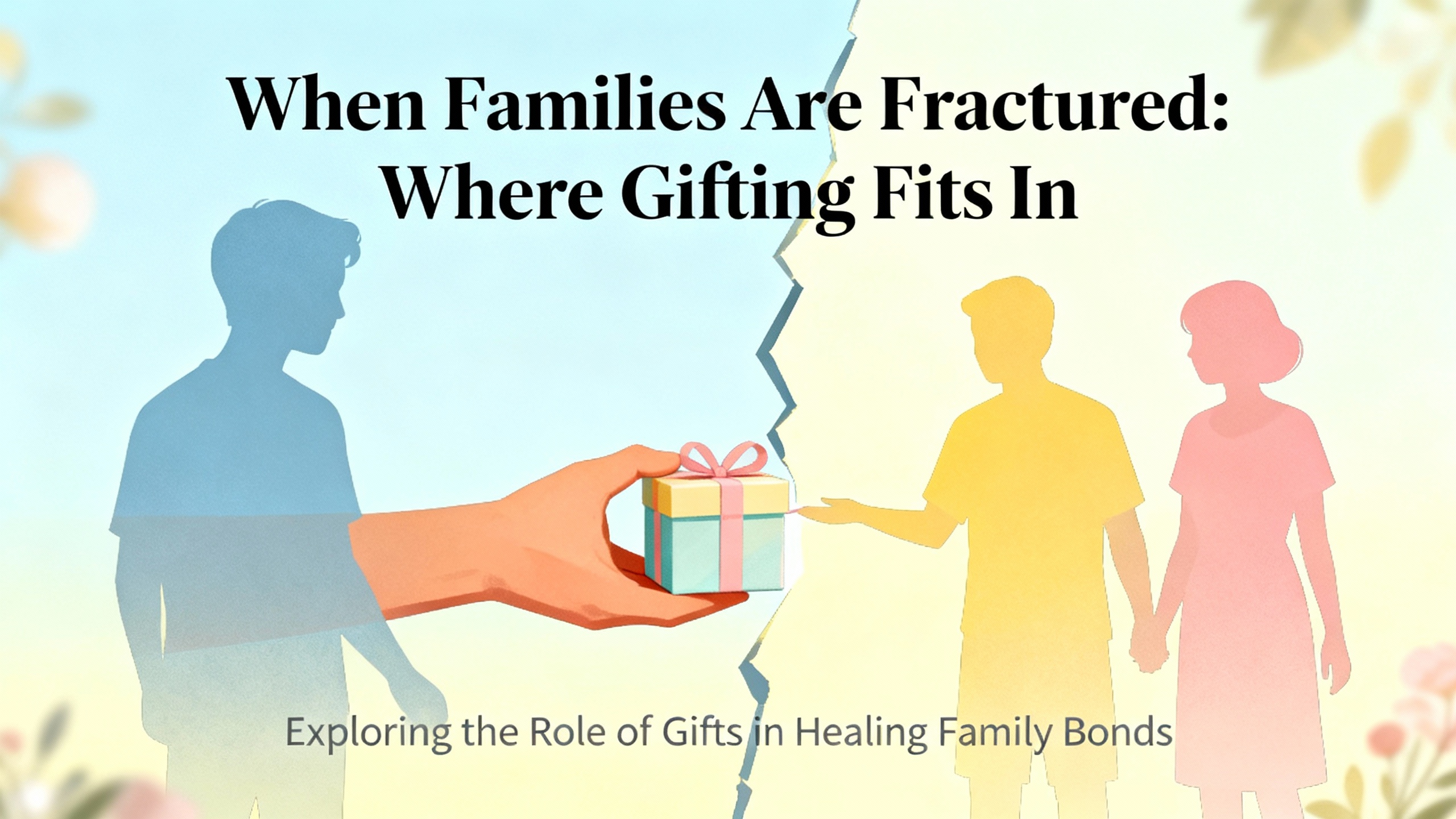
When Families Are Fractured: Where Gifting Fits In

It is important to be honest: a Christmas gift cannot replace apology, therapy, or hard conversations. But it can be an effective first move, especially when words are hard to find.

Research summarized by Create Gift Love and others shows that people who receive personalized gifts report feeling specifically “seen” and valued. In difficult seasons—illness, divorce, financial strain—that feeling of being noticed can be the difference between staying closed off and cautiously reopening dialogue.

Within adoptive families, personalized gifts play a particularly clear role. Articles from Bunnies By The Bay describe how items embroidered with a child’s name or adoption date, personalized storybooks about their adoption journey, and custom ornaments for “Gotcha Day” reinforce belonging and identity. These are not random trinkets; they are tangible proofs that “you are permanently part of this family and your story matters.”

Similar logic applies in blended families, long-distance families, and relationships that have been strained by conflict. A well-chosen personalized Christmas gift can do several things at once. It acknowledges shared history, affirms the other person’s identity, and signals commitment to a future together, even if that future will require difficult conversations.
How custom presents help heal family rifts

Types of Personalized Christmas Gifts That Help Heal

To move from theory to practice, it helps to connect specific relationship situations with specific types of gifts. As someone who works with print-on-demand and dropshipping founders, I encourage them to think in terms of emotional use cases, not just product categories. The same principle applies if you are choosing a gift for your own family.

Here is a practical way to link relationship needs with personalized Christmas ideas.

Family situation

Emotional need at Christmas

Personalized gift example

How it can support repair

Estranged parent and adult child

Acknowledgment of hurt and shared past without pressure

Custom photo book with carefully chosen, positive memories and a short printed note on the first page

Shows you remember the good times and are willing to start with common ground, not the conflict

Siblings after a year of conflict

Reframing identity from “opponents” to “team”

Personalized jigsaw puzzle or board game featuring a family photo or private joke

Creates low-stakes, shared fun and a physical reminder that you are on the same side

Adoptive family navigating identity questions

Reassurance of belonging and respect for heritage

Personalized adoption storybook, name-embroidered Christmas stockings, or ornaments with both birth country and family name

Affirms permanent place in the family while honoring origin story, which supports emotional security

Blended family with new stepchildren

Inclusion in traditions that predate them

Matching personalized ornaments, pajamas, or stockings with each person’s name and role

Signals that everyone has an equal, named place in the family’s Christmas story

Long-distance grandparent and grandchild

Ongoing connection across miles and years

Digital photo frame preloaded with family photos and short video messages, updated remotely throughout the year

Turns everyday moments into touchpoints of connection, reducing the emotional distance

Parent and teen in a tense season

Respect for emerging identity and autonomy

Customized jewelry, phone case, or wall art that reflects the teen’s interests, name, and a short affirmation

Says “I see who you are becoming” without a lecture, which can soften a defensive stance

These are examples, not prescriptions. The underlying pattern is more important than any particular product: identify the emotional wound, then choose or create a personalized item that speaks directly to it without demanding an immediate verbal response.

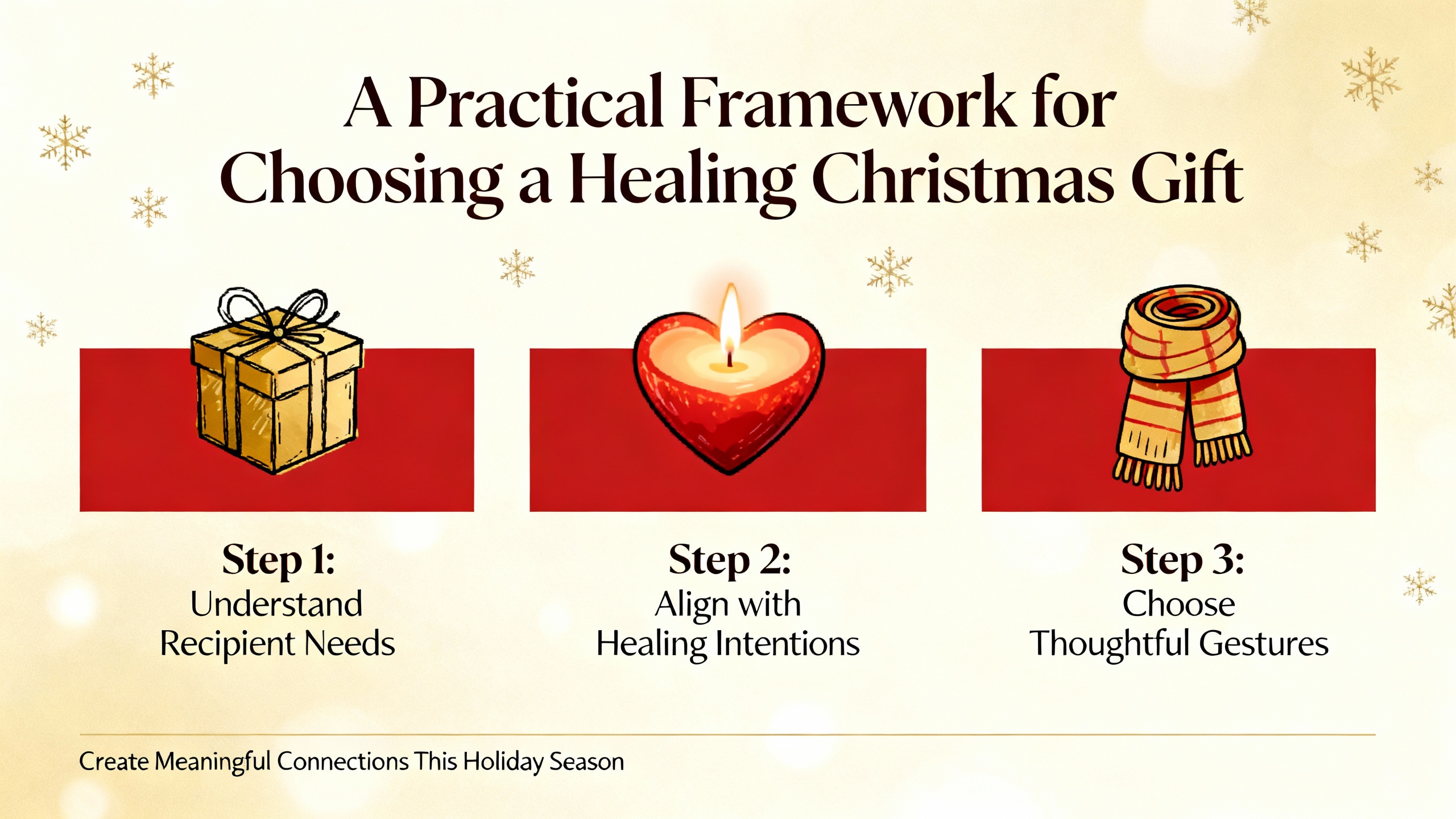
A Practical Framework for Choosing a Healing Christmas Gift

Whether you are a parent trying to reach a child, a sibling wanting to repair a rift, or an entrepreneur designing a Christmas gifting catalog, a simple framework grounded in the research can help.

First, clarify the story you want the gift to tell. Research highlighted by Renew Psychology emphasizes that the most meaningful gifts reflect the recipient’s interests, hobbies, and personality. When a relationship is strained, that reflection becomes a way of saying, “I still pay attention to who you are.” Pause and write down a sentence that captures the message you want to send, such as “I remember our history and I’m open to a new chapter” or “You belong in this family, exactly as you are.”

Second, decide whether the relationship calls for a present-focused, sentimental, or blended gift. Sources like BeaRegards define thoughtful gifts as those tuned to current needs—for example, a personalized weighted blanket for an anxious relative this year—while sentimental gifts are anchored in past memories, such as framed childhood letters. In many mending situations, blended gifts work best: a functional object for today that carries a symbolic reminder of yesterday. A personalized journal, for instance, can be both practical and a place to write new stories together.

Third, anchor the gift in a specific moment or identity marker. Research from Nottingham Trent University and the University of Bath suggests that including names, dates, and meaningful images increases attachment and perceived value. For Christmas, that might mean engraving the year you reconciled, incorporating the name of a shared vacation spot, or using a photo from a day you both treasure. In adoptive and blended families, Bunnies By The Bay and Maison Memoire emphasize using cultural symbols, dual-language text, or mixed heritage imagery to help children integrate their identities rather than feeling forced to choose one.

Fourth, tailor the level of personalization to the relationship’s current intimacy. Work on personalized gifts from sources like Wisholize notes that very intimate personalization can feel intrusive in fragile or early-stage relationships. For an estranged sibling you have not spoken to in years, a subtle piece of personalized wall art with a shared quote may be safer than a deeply detailed photo collage. For a partner or child in an already close relationship, a heavily customized item full of private references can deepen connection.

Finally, pair the gift with words, even if they are brief. Multiple sources, including Talented Ladies Club and Wallpics, stress the power of context and storytelling. A handwritten note or a printed card explaining why you chose a particular photo, date, or symbol can completely change how the gift is interpreted. The note does not need to be long. A simple line like “I chose these pictures because they remind me of some of our best days, and I’d love to create more like them” can soften long-held defenses.

From a business perspective, this is where on-demand printing and dropshipping entrepreneurs can add real value. Pre-written but editable card templates, guided personalization prompts, and example messages rooted in empathy can help customers articulate what they feel but struggle to say.
The psychology behind personalized gift giving

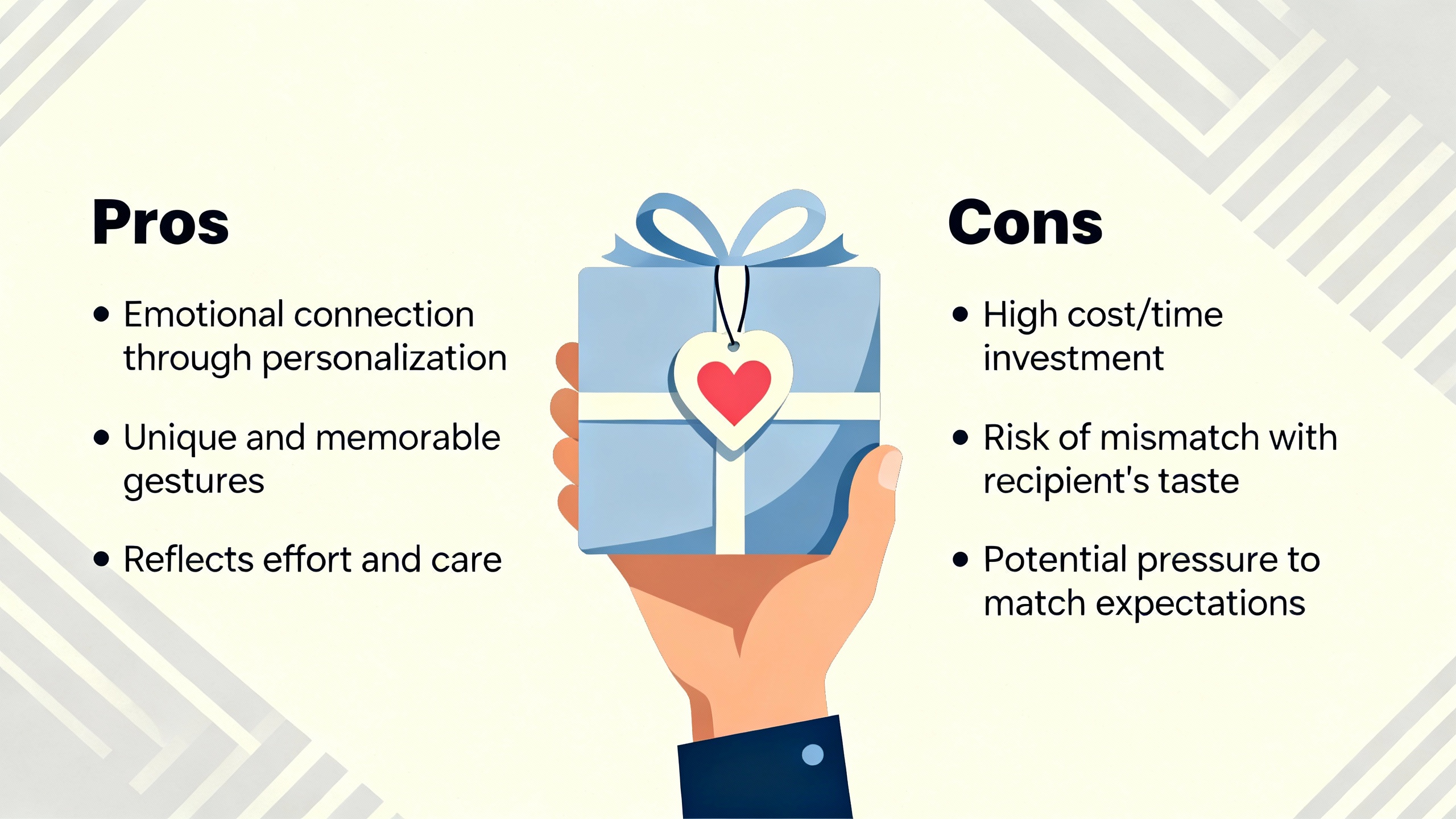
Pros and Cons of Using Personalized Gifts to Mend Relationships

Like any powerful tool, personalized Christmas gifting has both advantages and risks.

On the positive side, research synthesized by the Family Portrait Company, Create Gift Love, and others consistently shows that personalized gifts are perceived as more meaningful, strengthen feelings of being valued, and are kept longer than generic items. Studies cited in the personalized gifting space report that a clear majority of people prefer gifts with a personal touch, and many recipients keep such gifts for five years or more. Work in child development from Budsies and parenting sources indicates that personalized items can boost children’s self-esteem, sense of belonging, and emotional security.

Personalized gifts can also serve as “anchors” for new traditions. Personalized ornaments, annual photo calendars, or engraved keepsakes mark each Christmas not just as a shopping event but as a chapter in an ongoing family narrative. Over time, these items become intergenerational touchstones that support identity and continuity.

However, there are important limitations and potential downsides. If a gift is used as a substitute for apology, it can feel manipulative. A personalized item that romanticizes the past without acknowledging very real hurt may land as erasure rather than reconciliation. For some recipients, especially those processing fresh trauma, a memory-laden gift might trigger pain instead of healing.

There are also practical considerations. Personalized items often require more lead time and carry higher perceived stakes. If a dropshipped, customized product arrives late, damaged, or with a misspelled name, the emotional fallout can be larger than with a generic item because it undermines the sense of care. For entrepreneurs, this means quality control, realistic cutoffs, and clear communication are non-negotiable.

Finally, personalization can cross boundaries if it reveals information a recipient is not ready to share publicly. For example, a highly conspicuous gift celebrating a sensitive life event might embarrass a teenager or a private adult. That is why context awareness and recipient-centered thinking are as crucial as the engraving itself.
Thoughtful Christmas gifts to rebuild trust

What This Means for On-Demand Printing and Dropshipping Brands

From the outside, a custom ornament and a printed mug might look like simple seasonal products. From the inside of a family trying to mend, they can be instruments of emotional repair. As a senior mentor in e-commerce, I encourage founders to see their catalog through that lens.

First, design for stories, not just slogans. Gift research from sources such as the University of Northampton and Warwick Business School suggests that personalized items influence how people see themselves. Products that allow customers to embed real milestones—adoption dates, blended family names, first Christmas after sobriety, first holiday in a new country—carry far more emotional weight than generic “Merry Christmas” designs. On-demand printing makes it practical to offer customizable templates for specific family scenarios: adoption-day ornaments, “first Christmas as a stepfamily” photo frames, or heritage-inspired designs that combine cultural motifs.

Second, give customers emotional structure. Articles from Renew Psychology, Talented Ladies Club, and Wallpics all emphasize narrative and tradition. E-commerce brands can translate this into guided flows: wizards that ask, “Is this gift for reconnecting with someone?” or “Are you celebrating a new family chapter?” and then suggest suitable products and message prompts. This not only increases conversion but helps shoppers make choices that genuinely fit their emotional goals.

Third, highlight the science ethically in your marketing. Research discussed by the American Psychological Association, the University of Bath, Nottingham Trent University, and Psychology & Marketing offers a strong evidence base: giving to others boosts happiness, personalized gifts increase attachment and self-esteem, and customization triggers vicarious pride. You do not need to overwhelm shoppers with academic detail. Short, human translations like “Personalized gifts are more likely to be cherished for years, according to university research” can reassure buyers that what they feel intuitively is backed by data.

Fourth, treat quality and timing as part of the emotional promise. When you market a personalized Christmas product as a symbol of reconciliation or a permanent keepsake, you are implicitly promising reliability. That means choosing fulfillment partners carefully, building in holiday cutoffs that you actually can meet, and investing in packaging that matches the sentiment. Brands highlighted in philanthropic and gifting research, such as Foundation Source’s work on family giving, show that small signals of care in execution reinforce the emotional message of generosity.

Finally, remember that some customers are buying from challenging circumstances. Research on under-resourced communities and child development notes that even small personalized gifts can make children feel seen and supported. Offering lower-priced personalization options, simple name-based designs, or installment-friendly pricing is not just good business; it aligns your store with the deeper social role of gifting.

Frequently Asked Questions

Can a personalized Christmas gift really fix a broken relationship?

On its own, rarely. The research on gift-giving and family happiness suggests that giving increases positive feelings and can open the door to better communication, but it does not replace accountability or honest conversation. Think of a personalized gift as a bridge or an invitation. It signals willingness to reconnect and creates a softer emotional climate in which apologies and new agreements can happen.

Does the gift need to be expensive to have this effect?

The evidence says no. Studies summarized by universities such as Bath and Nottingham Trent emphasize that recipients value the thoughtfulness and personal relevance of a gift far more than its price. Simple items—a framed photo, a customized ornament, a small piece of engraved jewelry—can carry tremendous weight when they clearly reflect the recipient’s identity and your shared story.

As a brand owner, how do I market healing-focused gifts without exploiting family pain?

The key is to center empowerment rather than pressure. Use language that frames your products as tools for expressing care, not as guarantees of forgiveness. Offer educational content about thoughtful gifting, share research in plain language, and provide message prompts that encourage sincerity. Avoid implying that buying from you can “solve” complex family trauma. Your role is to support meaningful gestures, not to promise outcomes you cannot control.

In the end, whether you are designing a catalog or choosing a single gift, personalized Christmas gifting is about more than names and dates. It is about giving people a concrete way to say, “You matter to me, and I am willing to invest in our story.” When that intention is genuine, the science and the lived experience both point in the same direction: small, personalized objects can become turning points in family relationships that last long after the tree is packed away.

References

  1. https://podcast.borntobewealthyfoundation.org/episode-30
  2. https://www.apa.org/topics/mental-health/brain-gift-giving
  3. https://theconversation.com/personalised-gifts-really-do-mean-that-little-bit-more-to-your-loved-ones-says-research-245507
  4. https://www.lemon8-app.com/@creativefactorypaintings/7490914480744137234?region=sg
  5. https://www.renewpsychology.com/post/science-of-gift-giving-how-to-choose-meaningful-presents-for-family-members
  6. https://thecoffiecutters.com/blog/power-of-personalized-gifts?srsltid=AfmBOoqost1BTLozIXEZNJzVjn_EJV3nTSKNaJo7tLBclFEeULw_h_ad
  7. https://bearegards.com/blogs/news/the-psychology-of-thoughtful-gifting-why-it-matters-more-than-ever?srsltid=AfmBOorVgoqwgjDIpbJTqi6-1svQi7bYY98ZlLOcuHZ85NJ2evc-U_Dm
  8. https://www.bloomsybox.com/blog/posts/the-psychology-behind-gifting-why-thoughtful-corporate-gifts-make-a-difference
  9. https://bunniesbythebay.com/blogs/how-to-delight/the-psychology-behind-personalized-gifts-why-they-matter?srsltid=AfmBOopirhLUiybez8VeqDrWw_cFWpeny9co9ZaScwwvB3KEk12gLDgH
  10. https://www.cloncaia.com/blogs/news/%F0%9F%8E%81-the-emotional-effect-of-personalized-gifts-on-gift-recipients

Like the article

0
How Personalized Christmas Gifts Can Mend Family Relationships

How Personalized Christmas Gifts Can Mend Family Relationships

Christmas sits at the intersection of high expectations and old emotions. As a mentor to e-commerce founders in the personalized gift space, I see the same pattern every year: shoppers arrive at online stores with much more than a shopping list. They come with unsaid apologies, unresolved conflicts, and a quiet hope that the right gift might reopen a door with someone they love.

Thoughtful, customized gifts cannot magically erase years of hurt. But when they are designed and given with intention, the evidence from psychology and family research is clear: they can soften defenses, rebuild trust, and become steady reminders that a relationship is worth repairing. For founders in on-demand printing and dropshipping, understanding this is not just good ethics; it is a powerful way to design products that genuinely change lives, not just fill carts.

Why Christmas Gifts Carry So Much Emotional Weight

Gift-giving has always been one of the core ways families say “I love you,” especially during Christmas. The American Psychological Association has highlighted that giving to people we care about activates the brain’s reward pathways and releases oxytocin, the neurochemical linked with trust and connection. In one study described by researchers at the University of Zurich, people who spent $100 on others over several weeks reported more happiness and behaved more generously than those who spent it on themselves. The “warm glow” they experienced was not about the object, but the act of caring.

Around Christmas, this effect is amplified. We see relatives we may not meet all year, revisit childhood homes, and relive old arguments as easily as old traditions. A generic, last-minute sweater often lands as a reminder that someone was an obligation. A carefully chosen, personalized gift, on the other hand, can communicate something much deeper: I remember our story. I see who you are now. I still care enough to try.

That emotional difference is not theoretical. Research referenced by Nottingham Trent University and the University of Bath shows that personalized gifts create deeper emotional bonds than standard ones and are kept and cherished for longer. They act as communication tools, silently saying, “You matter enough for something made just for you.”

The Psychology Behind Personalized Gifts

From Objects to Emotional Bridges

Several independent lines of research converge on a simple truth: personalization is powerful because it ties an object to a specific person, story, or moment.

Personalized gifts are typically defined as items customized to a recipient’s identity, such as names, dates, photos, favorite symbols, or shared memories. Studies summarized by the Family Portrait Company point out that this tailoring increases emotional relevance, attachment, and even self-esteem. Instead of being “a mug,” it becomes “the mug from the first Christmas after we made up.”

Other work, including research highlighted by Psychology & Marketing and discussed by brands like Cloncaia, shows that personalized gifts trigger what scholars call “vicarious pride.” When someone receives a customized gift, they do not just feel grateful; they also feel proud that another person put in the thought, creativity, and design effort on their behalf. That pride enhances their self-worth and the way they see the relationship.

BeaRegards and similar sources distinguish between thoughtful, sentimental, and personalized gifts in useful ways. Thoughtful gifts are chosen for current needs, such as a cozy item for a stressed sibling this year. Sentimental gifts are anchored in meaningful past moments, like a framed childhood photo. Personalization often overlays both categories, turning either type into a unique keepsake with a name, date, or message. Together, these dimensions explain why a personalized Christmas gift can feel like both a hug in the present and a bridge to the past.

What Happens in the Brain When We Give

The neuroscience is important because it explains why gift-giving can support emotional repair, not just celebration. Work highlighted by the American Psychological Association notes that giving to close others lights up brain regions involved in reward and social processing. Because gift-giving is social, it also involves oxytocin, often nicknamed the “cuddle hormone” for its role in bonding and feeling safe.

Crucially, this reward response does not just occur when the gift is opened. The process of choosing, designing, and even wrapping the gift activates similar circuits. For a parent planning a personalized Christmas gift for an estranged adult child, those hours spent selecting photos for a custom album or typing a short engraving are not trivial. They are a form of emotional rehearsal: the giver is mentally revisiting the relationship, remembering what they love about that person, and preparing for a moment of vulnerability.

From a family-systems perspective, that preparation matters. It makes the giver more likely to approach the interaction with warmth rather than defensiveness, which increases the chance that the recipient will receive the gift as intended.

When Families Are Fractured: Where Gifting Fits In

It is important to be honest: a Christmas gift cannot replace apology, therapy, or hard conversations. But it can be an effective first move, especially when words are hard to find.

Research summarized by Create Gift Love and others shows that people who receive personalized gifts report feeling specifically “seen” and valued. In difficult seasons—illness, divorce, financial strain—that feeling of being noticed can be the difference between staying closed off and cautiously reopening dialogue.

Within adoptive families, personalized gifts play a particularly clear role. Articles from Bunnies By The Bay describe how items embroidered with a child’s name or adoption date, personalized storybooks about their adoption journey, and custom ornaments for “Gotcha Day” reinforce belonging and identity. These are not random trinkets; they are tangible proofs that “you are permanently part of this family and your story matters.”

Similar logic applies in blended families, long-distance families, and relationships that have been strained by conflict. A well-chosen personalized Christmas gift can do several things at once. It acknowledges shared history, affirms the other person’s identity, and signals commitment to a future together, even if that future will require difficult conversations.

How custom presents help heal family rifts

Types of Personalized Christmas Gifts That Help Heal

To move from theory to practice, it helps to connect specific relationship situations with specific types of gifts. As someone who works with print-on-demand and dropshipping founders, I encourage them to think in terms of emotional use cases, not just product categories. The same principle applies if you are choosing a gift for your own family.

Here is a practical way to link relationship needs with personalized Christmas ideas.

Family situation

Emotional need at Christmas

Personalized gift example

How it can support repair

Estranged parent and adult child

Acknowledgment of hurt and shared past without pressure

Custom photo book with carefully chosen, positive memories and a short printed note on the first page

Shows you remember the good times and are willing to start with common ground, not the conflict

Siblings after a year of conflict

Reframing identity from “opponents” to “team”

Personalized jigsaw puzzle or board game featuring a family photo or private joke

Creates low-stakes, shared fun and a physical reminder that you are on the same side

Adoptive family navigating identity questions

Reassurance of belonging and respect for heritage

Personalized adoption storybook, name-embroidered Christmas stockings, or ornaments with both birth country and family name

Affirms permanent place in the family while honoring origin story, which supports emotional security

Blended family with new stepchildren

Inclusion in traditions that predate them

Matching personalized ornaments, pajamas, or stockings with each person’s name and role

Signals that everyone has an equal, named place in the family’s Christmas story

Long-distance grandparent and grandchild

Ongoing connection across miles and years

Digital photo frame preloaded with family photos and short video messages, updated remotely throughout the year

Turns everyday moments into touchpoints of connection, reducing the emotional distance

Parent and teen in a tense season

Respect for emerging identity and autonomy

Customized jewelry, phone case, or wall art that reflects the teen’s interests, name, and a short affirmation

Says “I see who you are becoming” without a lecture, which can soften a defensive stance

These are examples, not prescriptions. The underlying pattern is more important than any particular product: identify the emotional wound, then choose or create a personalized item that speaks directly to it without demanding an immediate verbal response.

A Practical Framework for Choosing a Healing Christmas Gift

Whether you are a parent trying to reach a child, a sibling wanting to repair a rift, or an entrepreneur designing a Christmas gifting catalog, a simple framework grounded in the research can help.

First, clarify the story you want the gift to tell. Research highlighted by Renew Psychology emphasizes that the most meaningful gifts reflect the recipient’s interests, hobbies, and personality. When a relationship is strained, that reflection becomes a way of saying, “I still pay attention to who you are.” Pause and write down a sentence that captures the message you want to send, such as “I remember our history and I’m open to a new chapter” or “You belong in this family, exactly as you are.”

Second, decide whether the relationship calls for a present-focused, sentimental, or blended gift. Sources like BeaRegards define thoughtful gifts as those tuned to current needs—for example, a personalized weighted blanket for an anxious relative this year—while sentimental gifts are anchored in past memories, such as framed childhood letters. In many mending situations, blended gifts work best: a functional object for today that carries a symbolic reminder of yesterday. A personalized journal, for instance, can be both practical and a place to write new stories together.

Third, anchor the gift in a specific moment or identity marker. Research from Nottingham Trent University and the University of Bath suggests that including names, dates, and meaningful images increases attachment and perceived value. For Christmas, that might mean engraving the year you reconciled, incorporating the name of a shared vacation spot, or using a photo from a day you both treasure. In adoptive and blended families, Bunnies By The Bay and Maison Memoire emphasize using cultural symbols, dual-language text, or mixed heritage imagery to help children integrate their identities rather than feeling forced to choose one.

Fourth, tailor the level of personalization to the relationship’s current intimacy. Work on personalized gifts from sources like Wisholize notes that very intimate personalization can feel intrusive in fragile or early-stage relationships. For an estranged sibling you have not spoken to in years, a subtle piece of personalized wall art with a shared quote may be safer than a deeply detailed photo collage. For a partner or child in an already close relationship, a heavily customized item full of private references can deepen connection.

Finally, pair the gift with words, even if they are brief. Multiple sources, including Talented Ladies Club and Wallpics, stress the power of context and storytelling. A handwritten note or a printed card explaining why you chose a particular photo, date, or symbol can completely change how the gift is interpreted. The note does not need to be long. A simple line like “I chose these pictures because they remind me of some of our best days, and I’d love to create more like them” can soften long-held defenses.

From a business perspective, this is where on-demand printing and dropshipping entrepreneurs can add real value. Pre-written but editable card templates, guided personalization prompts, and example messages rooted in empathy can help customers articulate what they feel but struggle to say.

The psychology behind personalized gift giving

Pros and Cons of Using Personalized Gifts to Mend Relationships

Like any powerful tool, personalized Christmas gifting has both advantages and risks.

On the positive side, research synthesized by the Family Portrait Company, Create Gift Love, and others consistently shows that personalized gifts are perceived as more meaningful, strengthen feelings of being valued, and are kept longer than generic items. Studies cited in the personalized gifting space report that a clear majority of people prefer gifts with a personal touch, and many recipients keep such gifts for five years or more. Work in child development from Budsies and parenting sources indicates that personalized items can boost children’s self-esteem, sense of belonging, and emotional security.

Personalized gifts can also serve as “anchors” for new traditions. Personalized ornaments, annual photo calendars, or engraved keepsakes mark each Christmas not just as a shopping event but as a chapter in an ongoing family narrative. Over time, these items become intergenerational touchstones that support identity and continuity.

However, there are important limitations and potential downsides. If a gift is used as a substitute for apology, it can feel manipulative. A personalized item that romanticizes the past without acknowledging very real hurt may land as erasure rather than reconciliation. For some recipients, especially those processing fresh trauma, a memory-laden gift might trigger pain instead of healing.

There are also practical considerations. Personalized items often require more lead time and carry higher perceived stakes. If a dropshipped, customized product arrives late, damaged, or with a misspelled name, the emotional fallout can be larger than with a generic item because it undermines the sense of care. For entrepreneurs, this means quality control, realistic cutoffs, and clear communication are non-negotiable.

Finally, personalization can cross boundaries if it reveals information a recipient is not ready to share publicly. For example, a highly conspicuous gift celebrating a sensitive life event might embarrass a teenager or a private adult. That is why context awareness and recipient-centered thinking are as crucial as the engraving itself.

Thoughtful Christmas gifts to rebuild trust

What This Means for On-Demand Printing and Dropshipping Brands

From the outside, a custom ornament and a printed mug might look like simple seasonal products. From the inside of a family trying to mend, they can be instruments of emotional repair. As a senior mentor in e-commerce, I encourage founders to see their catalog through that lens.

First, design for stories, not just slogans. Gift research from sources such as the University of Northampton and Warwick Business School suggests that personalized items influence how people see themselves. Products that allow customers to embed real milestones—adoption dates, blended family names, first Christmas after sobriety, first holiday in a new country—carry far more emotional weight than generic “Merry Christmas” designs. On-demand printing makes it practical to offer customizable templates for specific family scenarios: adoption-day ornaments, “first Christmas as a stepfamily” photo frames, or heritage-inspired designs that combine cultural motifs.

Second, give customers emotional structure. Articles from Renew Psychology, Talented Ladies Club, and Wallpics all emphasize narrative and tradition. E-commerce brands can translate this into guided flows: wizards that ask, “Is this gift for reconnecting with someone?” or “Are you celebrating a new family chapter?” and then suggest suitable products and message prompts. This not only increases conversion but helps shoppers make choices that genuinely fit their emotional goals.

Third, highlight the science ethically in your marketing. Research discussed by the American Psychological Association, the University of Bath, Nottingham Trent University, and Psychology & Marketing offers a strong evidence base: giving to others boosts happiness, personalized gifts increase attachment and self-esteem, and customization triggers vicarious pride. You do not need to overwhelm shoppers with academic detail. Short, human translations like “Personalized gifts are more likely to be cherished for years, according to university research” can reassure buyers that what they feel intuitively is backed by data.

Fourth, treat quality and timing as part of the emotional promise. When you market a personalized Christmas product as a symbol of reconciliation or a permanent keepsake, you are implicitly promising reliability. That means choosing fulfillment partners carefully, building in holiday cutoffs that you actually can meet, and investing in packaging that matches the sentiment. Brands highlighted in philanthropic and gifting research, such as Foundation Source’s work on family giving, show that small signals of care in execution reinforce the emotional message of generosity.

Finally, remember that some customers are buying from challenging circumstances. Research on under-resourced communities and child development notes that even small personalized gifts can make children feel seen and supported. Offering lower-priced personalization options, simple name-based designs, or installment-friendly pricing is not just good business; it aligns your store with the deeper social role of gifting.

Frequently Asked Questions

Can a personalized Christmas gift really fix a broken relationship?

On its own, rarely. The research on gift-giving and family happiness suggests that giving increases positive feelings and can open the door to better communication, but it does not replace accountability or honest conversation. Think of a personalized gift as a bridge or an invitation. It signals willingness to reconnect and creates a softer emotional climate in which apologies and new agreements can happen.

Does the gift need to be expensive to have this effect?

The evidence says no. Studies summarized by universities such as Bath and Nottingham Trent emphasize that recipients value the thoughtfulness and personal relevance of a gift far more than its price. Simple items—a framed photo, a customized ornament, a small piece of engraved jewelry—can carry tremendous weight when they clearly reflect the recipient’s identity and your shared story.

As a brand owner, how do I market healing-focused gifts without exploiting family pain?

The key is to center empowerment rather than pressure. Use language that frames your products as tools for expressing care, not as guarantees of forgiveness. Offer educational content about thoughtful gifting, share research in plain language, and provide message prompts that encourage sincerity. Avoid implying that buying from you can “solve” complex family trauma. Your role is to support meaningful gestures, not to promise outcomes you cannot control.

In the end, whether you are designing a catalog or choosing a single gift, personalized Christmas gifting is about more than names and dates. It is about giving people a concrete way to say, “You matter to me, and I am willing to invest in our story.” When that intention is genuine, the science and the lived experience both point in the same direction: small, personalized objects can become turning points in family relationships that last long after the tree is packed away.

References

  1. https://podcast.borntobewealthyfoundation.org/episode-30
  2. https://www.apa.org/topics/mental-health/brain-gift-giving
  3. https://theconversation.com/personalised-gifts-really-do-mean-that-little-bit-more-to-your-loved-ones-says-research-245507
  4. https://www.lemon8-app.com/@creativefactorypaintings/7490914480744137234?region=sg
  5. https://www.renewpsychology.com/post/science-of-gift-giving-how-to-choose-meaningful-presents-for-family-members
  6. https://thecoffiecutters.com/blog/power-of-personalized-gifts?srsltid=AfmBOoqost1BTLozIXEZNJzVjn_EJV3nTSKNaJo7tLBclFEeULw_h_ad
  7. https://bearegards.com/blogs/news/the-psychology-of-thoughtful-gifting-why-it-matters-more-than-ever?srsltid=AfmBOorVgoqwgjDIpbJTqi6-1svQi7bYY98ZlLOcuHZ85NJ2evc-U_Dm
  8. https://www.bloomsybox.com/blog/posts/the-psychology-behind-gifting-why-thoughtful-corporate-gifts-make-a-difference
  9. https://bunniesbythebay.com/blogs/how-to-delight/the-psychology-behind-personalized-gifts-why-they-matter?srsltid=AfmBOopirhLUiybez8VeqDrWw_cFWpeny9co9ZaScwwvB3KEk12gLDgH
  10. https://www.cloncaia.com/blogs/news/%F0%9F%8E%81-the-emotional-effect-of-personalized-gifts-on-gift-recipients

Like the article

0