
Top 15 Print on Demand Sites to Sell Custom Products in 2026
Print on Demand Guide
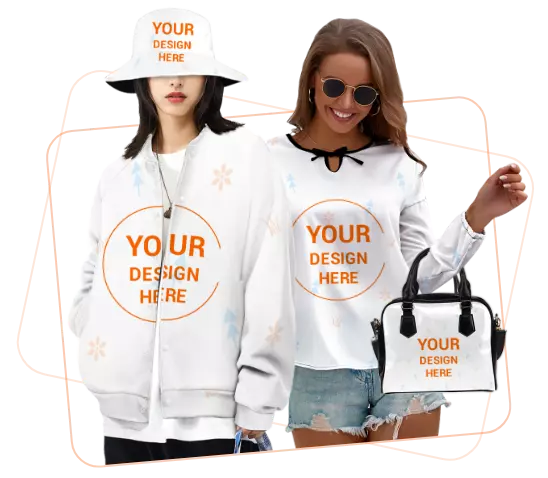
Print on demand makes it possible to sell custom products online without buying inventory upfront. You create the design, list the product in your store or marketplace, and your POD partner prints, packs, and ships each order after a customer buys.
In this guide
- Is print on demand worth starting?
- How print on demand works
- Best print-on-demand sites
- Why use a POD platform?
- How to choose the right provider
Is It Still a Good Time to Start a Print-on-Demand Business?
Yes, print on demand can still be a strong business model, especially for creators, niche brands, influencers, artists, and ecommerce sellers who want to test products without holding inventory. The global print-on-demand market was estimated at about USD 10.78 billion in 2025 and is projected to reach USD 57.49 billion by 2033, with forecast CAGR of 23.6% from 2026 to 2033.
That said, POD is not a guaranteed passive-income shortcut. Competition is higher than it used to be, so success usually depends on strong design, a focused niche, good product photography, reliable fulfillment, and consistent marketing.
Key growth drivers
- Personalization: Customers increasingly want products that feel unique, giftable, or identity-driven.
- Low startup risk: Sellers can launch products without buying bulk stock or renting warehouse space.
- Creator commerce: Influencers, artists, and community-led brands can turn audience demand into merchandise quickly.
- Better fulfillment networks: Many POD platforms now support automated order routing, global production partners, and ecommerce integrations.
How Does Print on Demand Work?
Print on demand is a made-to-order fulfillment model. Instead of producing products in bulk, your supplier prints and ships an item only after a customer places an order.
- Choose a product: Select items such as t-shirts, hoodies, mugs, tote bags, posters, phone cases, or home decor.
- Upload your design: Add artwork, text, patterns, or branding using the platform’s design tool.
- Publish the listing: Push the product to your ecommerce store or marketplace.
- Customer places an order: The order is automatically sent to your POD provider.
- Supplier fulfills it: The provider prints, quality-checks, packs, and ships the order directly to the customer.
For example, if a t-shirt costs you $15 to produce and ship, and you sell it for $25, your gross margin before platform fees, payment processing, ads, taxes, and returns is $10. Always calculate the full landed cost before setting prices.
15 Best Print-on-Demand Sites for Custom Products
1. Inkedjoy
Inkedjoy is a print-on-demand dropshipping platform with a large catalog, all-over-print products, and branding services such as labels, packaging, hangtags, and gift cards.
- Best for: Sellers who want all-over-print apparel and custom branding options.
- Products: Apparel, accessories, shoes, bags, home goods, and white-label products.
- Integrations: Shopify, Etsy, WooCommerce, and other ecommerce workflows.
- Watch out for: Always order samples to confirm sizing, fabric, print quality, and shipping speed for your target market.

2. Printful
Printful is one of the most established POD platforms, known for strong integrations, branding options, mockup tools, and consistent fulfillment.
- Best for: Brands that prioritize reliability, ecommerce integrations, and premium presentation.
- Products: Apparel, accessories, home decor, wall art, drinkware, and more.
- Printing options: Direct-to-garment, embroidery, sublimation, posters, canvas, and select specialty options.
- Pricing note: Printful has a free plan, and its Growth plan is currently listed at $24.99/month with product discounts and additional benefits.
3. SPOD
SPOD, from the Spreadshirt family, focuses on fast production and a straightforward product customization experience.
- Best for: Sellers who want a simple POD setup and fast production for common products.
- Products: Apparel, drinkware, accessories, and home items.
- Printing options: Digital direct, thermal sublimation, laser transfer, and other methods depending on the product.
- Integrations: Commonly used with Shopify and WooCommerce; availability can vary by region and sales channel.
4. Printify
Printify connects merchants with a network of print providers, giving sellers more choice over production location, pricing, and product range.
- Best for: Sellers who want flexible supplier choice and competitive product costs.
- Products: Apparel, accessories, home decor, pet products, drinkware, stationery, and more.
- Printing options: Vary by provider and product, including DTG, sublimation, embroidery, and cut-and-sew.
- Pricing note: Printify’s Premium plan is promoted as offering up to 20% discounts on products.
5. Gooten
Gooten is a print-on-demand fulfillment network for ecommerce brands, with routing across production partners and a focus on scalable operations.
- Best for: Growing stores that want operational support and multiple ecommerce integrations.
- Products: Apparel, home decor, wall art, drinkware, accessories, baby products, and pet products.
- Integrations: Shopify, Etsy, TikTok Shop, WooCommerce, BigCommerce, and API options.
- Watch out for: Because production may be routed across partners, order samples for each important product.
6. Teelaunch
Teelaunch is a POD app commonly used by Shopify sellers. It offers standard apparel plus specialty items that can help stores stand out.
- Best for: Shopify-first stores looking for both classic and unique POD products.
- Products: Apparel, accessories, home goods, drinkware, wall art, and specialty gifts.
- Printing options: Product-dependent printing and personalization options.
- Watch out for: Production times can vary by product and season.
7. CustomCat
CustomCat is known for competitive pricing, a large catalog, and US-based fulfillment options.
- Best for: Sellers focused on margins and high-volume apparel products.
- Products: Apparel, hats, bags, drinkware, home goods, and accessories.
- Printing options: Direct-to-garment, embroidery, sublimation, and other methods depending on the product.
- Integrations: Shopify, WooCommerce, Etsy, BigCommerce, and API workflows.
8. Sellfy
Sellfy is an ecommerce platform with built-in print-on-demand features, making it different from supplier-only POD tools.
- Best for: Creators who want one platform for selling digital products, physical products, and merch.
- Products: Apparel, mugs, phone cases, bags, and other creator-focused merchandise.
- Strength: Built-in storefront, digital product selling, and marketing tools.
- Watch out for: It may not be ideal if you already run a large Shopify, WooCommerce, or marketplace operation.
9. Zazzle
Zazzle is a marketplace where designers can sell customizable products without managing a separate ecommerce store.
- Best for: Designers who want marketplace exposure and highly customizable gift products.
- Products: Invitations, stationery, apparel, home decor, accessories, gifts, and event products.
- Strength: Strong customer-facing customization features.
- Watch out for: It functions more like a marketplace than a backend supplier for your own store.
10. Spring
Spring, formerly Teespring, is built around creator commerce and social selling.
- Best for: Creators, influencers, streamers, and community-led brands.
- Products: Physical merch and digital products, with more than 180 physical products promoted by Spring.
- Integrations: Social and creator platforms such as YouTube, Instagram, Twitch, Discord, and Streamlabs.
- Strength: Easy store launch and creator-friendly selling flow.
11. Gelato
Gelato uses a global production network to print products closer to customers where possible.
- Best for: International sellers who want localized production and potentially faster regional delivery.
- Products: Apparel, wall art, cards, calendars, books, mugs, and business print products.
- Network: Gelato states that it has more than 140 production hubs across 32 countries.
- Integrations: Shopify, Etsy, WooCommerce, Wix, Squarespace, and API options.
12. Subliminator
Subliminator specializes in all-over-print and sublimation products, especially apparel.
- Best for: Sellers creating bold pattern-based products and all-over-print designs.
- Products: Hoodies, leggings, swimwear, shirts, and other sublimated apparel.
- Strength: Strong fit for niche fashion brands with repeating patterns or full-garment artwork.
- Watch out for: Shipping times can be longer for some destinations, so check current delivery estimates before scaling.
13. Pillow Profits
Pillow Profits focuses on specialty print-on-demand products, including footwear and home goods.
- Best for: Shopify sellers looking for unique items beyond basic t-shirts and mugs.
- Products: Shoes, bedding, seat covers, bags, apparel, home decor, and accessories.
- Strength: Specialty product range.
- Watch out for: Production and delivery times may be longer than domestic POD providers.
14. CafePress
CafePress is a long-running POD marketplace for custom gifts, apparel, and novelty products.
- Best for: Sellers and designers who prefer a marketplace-style model.
- Products: T-shirts, mugs, drinkware, stickers, home products, stationery, and gifts.
- Strength: Broad gift-oriented product catalog.
- Watch out for: It is not usually used as a full ecommerce backend integration for independent stores.
15. Redbubble
Redbubble is a major artist marketplace where independent creatives can upload designs and sell products without managing fulfillment.
- Best for: Artists who want marketplace discovery rather than running their own store.
- Products: Stickers, shirts, phone cases, wall art, pillows, apparel, and accessories.
- Strength: Built-in marketplace traffic and simple artist setup.
- Watch out for: Redbubble does not work like a native Shopify or WooCommerce POD supplier.
Why Use a Print-on-Demand Platform?
A POD platform helps you turn designs into sellable products without handling inventory, production equipment, or shipping operations yourself.
- Lower upfront cost: You pay for production after a customer orders.
- Faster product testing: Launch new designs quickly and remove poor performers without leftover stock.
- Automated fulfillment: Many platforms sync orders, tracking, and shipping updates with your store.
- Brand flexibility: Some providers offer packaging inserts, neck labels, custom labels, and white-label options.
- Global selling potential: Many POD providers can ship internationally or route orders through regional production partners.

Tips for Choosing the Right Print-on-Demand Company
The best POD company depends on your products, audience, budget, and sales channel. Use these criteria before choosing a supplier:
- Product range: Make sure the provider supports the items your audience actually wants.
- Print quality: Order samples before launching paid ads or promoting to a large audience.
- Shipping speed: Check delivery estimates for your main customer locations.
- Integrations: Confirm that the platform works with your store, marketplace, or creator channels.
- Real costs: Compare product cost, shipping, tax handling, subscription fees, branding fees, and transaction fees.
- Return policy: Understand who pays for misprints, damaged goods, sizing issues, and customer remorse returns.
- Scalability: Choose a provider that can support your order volume during holidays and product launches.
Conclusion
Print on demand is a practical way to test custom products, launch branded merch, and build an ecommerce business with lower inventory risk. For beginners, marketplace-style platforms like Redbubble, Zazzle, Spring, and CafePress can be easier to start with. For store owners who want more control, platforms like Inkedjoy, Printful, Printify, Gooten, Gelato, CustomCat, and Teelaunch may be better fits.
The smartest approach is to pick two or three providers, order samples, compare product quality and shipping times, and then build your store around the supplier that best matches your niche and customer expectations.