
Best Custom Gifts for Hard-to-Shop-for People: Unique Solutions
Every e-commerce founder eventually meets the same customer: the panicked buyer who says, “This person has everything. Help.” As someone who mentors store owners in on-demand printing and dropshipping, I see this segment not as a problem but as one of the most profitable opportunities in gifting.
Hard-to-shop-for recipients force us to move past generic candles and one-size-fits-all gadgets. They push your brand toward experiences, personalization, and thoughtful utility. Fortunately, consumer psychology and years of gift-guide data point to clear patterns you can build into your product catalog and marketing.
This article will unpack those patterns, show what actually makes a gift land for “impossible” people, and translate it into practical custom-product strategies for your on-demand or dropshipping business.
Why Some People Are So Hard to Shop For
Retailers often talk about “the friend who has everything,” but the research shows there are several distinct types hiding inside that label.
Gift experts interviewed by Cheryl’s and other retailers describe a few core archetypes. One group genuinely owns a lot of things; another is minimalist and actively avoids clutter; a third has narrow and unpredictable preferences that make most standard gifts feel risky. Marketing researcher Evan Polman, for example, defines a “picky person” as someone with narrow and unpredictable tastes, which nudges givers to abandon their usual gifting rules and second-guess themselves.
In neurodivergent communities you see another angle: people who care deeply about others but find it difficult to predict preferences and navigate unwritten social rules around gifts. When you combine that uncertainty with limited budgets, gift-giving becomes a source of real anxiety rather than joy.
On the other side, research from Wharton marketing scholars explores what happens when a decision feels this hard. In a series of experiments on delegation, they show that when choices involve tough trade-offs, risk, or emotional stakes, people often prefer to hand the decision off to someone else or to a recommendation system. The driver is not just mental effort; it is a desire to avoid personal responsibility and regret if the choice turns out badly.
For your store, that is a signal. If you position your brand, your gift guides, and your personalization tools as “trusted deciders” for hard-to-shop-for people, many buyers will gladly let you lead. The key is to build that guidance on what actually makes recipients happy, not just on what looks clever on a product page.
What Actually Makes a Gift Land Well
A lot of gift-giving goes wrong for the same reason product design goes wrong: givers optimize for how smart they will look instead of how useful or meaningful the gift will be.
Marketing professor Mary Steffel at Northeastern University has shown this clearly. In her work on holiday gifting, she finds that when people shop for multiple recipients, they often avoid giving the same great gift twice. Instead, they overthink things and choose different, more “unique” but less-preferred items for each person. Ironically, people who simply go with their gut and repeat a winning gift tend to make recipients happier.
Steffel’s research on gift cards shows another mismatch. Givers love highly personalized store-specific cards because they feel thoughtful and targeted. Recipients, however, prefer versatile options that can be used in many places. When givers are unsure what someone wants, recipients are better off with a flexible Visa- or Mastercard-style card than with a tightly constrained store card.
In parallel, work by Cindy Chan and Cassie Mogilner in the Journal of Consumer Research compared experiential gifts with material ones. They define experiential gifts as those where the core of the gift is an activity or event, like a concert, a special dinner, or a trip, while material gifts are tangible items meant for ongoing use. Across multiple studies, recipients of experiential gifts felt closer to their gift givers than recipients of material gifts, and that effect held even when the experiences and items were equally liked and similarly priced. The mechanism was emotional intensity: thinking about the experience created stronger positive feelings, which in turn strengthened the relationship.
Other experts, such as Sam Maglio in guidance for Cheryl’s, emphasize “vanishing” or consumable gifts like desserts, flowers, or special dinners. For minimalists or people who already own a lot, adding more objects can feel like an imposition. Experiences and consumables are enjoyed and then disappear, leaving memories instead of clutter.
If you zoom out across guides from ABC News, SELF, Swift Wellness, Yahoo, Del Monte Center, and others, the same pattern appears again and again. Successful gifts tend to do at least one of three things: they create a memorable experience, they express personalization and sentiment, or they plug directly into a cherished hobby or daily ritual. That is exactly where custom, on-demand products can shine.
Core Strategies For Custom Gifts That Actually Work
At a high level, you can think about three levers when designing gifts for hard-to-shop-for people: experiences, personalization, and hobbies. Most winning ideas combine at least two.
Design Around Experiences, Not Just Objects
Experiential gifts are remarkably powerful. Chan and Mogilner’s research shows they strengthen the bond between giver and receiver more reliably than material items, even if the giver is not physically present during the experience. The positive emotions from the event are mentally linked to the person who made it possible.
Many mainstream guides now lean heavily into this. Cheryl’s recommends experiences like classes, concerts, hikes, or cooking workshops as a “magic bullet” for difficult recipients. Smart.DHgate highlights experience-forward products such as creative mosaic art kits, escape-room games, and even telescopes that turn a clear night sky into an event. Swift Wellness and SELF emphasize memory-making gifts, from at-home tasting sessions to activity kits that create shared moments.
For store owners, this is an invitation to bundle. If you sell print-on-demand products, think beyond the object. A custom-printed “Star Party” poster paired with instructions and a stargazing app recommendation turns a telescope into a curated experience. A personalized recipe journal plus access to an online cooking class transforms a kitchen tool into a culinary journey.
You do not have to deliver the entire experience; you just have to frame your product as the key that unlocks it.
Use Personalization To Turn Basics Into Heirlooms
Personalized gifts are the second major lever. Sockrates, a custom-sock brand that works with thousands of companies, defines personalized gifts as one-of-a-kind items tailored to the recipient’s personality, lifestyle, and interests. They cite a Harvard study showing that customized gifts in corporate settings can boost satisfaction and retention, which underlines how powerful this kind of attention can be.
Personalization shows up across consumer guides as one of the most reliable solutions for hard-to-shop-for people. ABC News highlights monogrammed luggage, customizable drinkware with team logos or initials, embroidered photo sweatshirts, and pillowcases that can be ordered with personalized designs. TODAY’s editorial team goes even deeper, featuring custom bobbleheads, age-silhouette artwork, engraved cutting boards with family recipes, monogrammed coasters, personalized tumblers, and custom children’s storybooks that cast the child as the main character.
Sockrates focuses on high-quality, durable base products, noting that their premium socks are designed to last roughly five to six years. That detail matters. A monogrammed mug that chips in a month feels cheap; a personalized item that blends into everyday life for years becomes a quiet, daily reminder of the relationship.
The trade-offs are real. Many personalized products, such as the New York Times Premium Birthday Edition book that compiles front pages from each of a person’s birthdays, are made to order and final sale. That means no returns, and it demands clear communication and careful proofreading from both buyer and seller. As a store owner, you must treat correctness, readability, and design quality as part of the product, not as afterthoughts.
Anchor Gifts In Hobbies And Daily Rituals
The third lever is aligning gifts with what someone already loves to do.
Smart.DHgate’s guide divides ideas into experience gifts, personalized gifts, and hobby-related gifts. Hobby gifts include calligraphy pen sets, garden tool kits, versatile paintbrush collections, and portable music players. JumpingJackRabbit’s creative gift guide features design-forward notebooks, DIY hot sauce kits, lettering workbooks, and cutting machines for serious crafters. Other sources recommend category-specific staples: high-quality kitchen tools for food lovers, tech organizers for gadget fans, or lush blankets and sleep aids for comfort seekers.
These gifts work because they do not try to guess a new interest. They deepen an existing one. From an e-commerce standpoint, this is often easier to execute: your product imagery can show the item in context, your copy can use insider language, and your personalization can reference niche details that only hobbyists appreciate.
To pull these ideas together, it helps to map the main gift types and their strengths.
Gift type | Best for | Key strengths | Watch-outs |
|---|---|---|---|
Experiential gifts | Minimalists, memory seekers, close bonds | Strong emotional impact and relationship strengthening | Requires scheduling and sometimes in-person logistics |
Personalized everyday items | Family, partners, colleagues, kids | Turns practical objects into sentimental keepsakes | Customization errors, longer lead times, often no returns |
Hobby upgrades and tools | Passionate hobbyists, creatives, foodies | Signals deep understanding of the recipient’s interests | Easy to misjudge skill level or duplicate something they already own |
Consumable or “vanishing” gifts | Minimalists, people with small spaces | Enjoyed fully and then gone, so they do not add long-term clutter | Impact can feel short-lived if not paired with sentiment or experience |
Subscription gifts | Curious experimenters, busy professionals | Ongoing touchpoints and variety, curated discovery over time | Needs clear cancellation terms and thoughtful curation to avoid fatigue |
Charitable gifts | Value-driven recipients, those who dislike “stuff” | Aligns gift with causes they care about and expresses shared values | Can feel impersonal if the cause is chosen poorly or explained vaguely |
Hard-to-shop-for people usually respond best when you mix at least two of these dimensions, for example a personalized item that unlocks an experience, or a consumable gift packaged as a subscription around a hobby.
Concrete Custom Gift Ideas For “Impossible” People
Theories are useful, but shoppers and store owners need concrete directions. The research-backed guides in your notes point to clear plays for each challenge type.
The Minimalist Or Declutterer
Minimalists, or anyone who has recently downsized, often dread more “stuff.” Sam Maglio, quoted in gifting advice, warns that material gifts can feel like an imposition because they demand space, maintenance, and emotional labor. For these recipients, vanishing gifts shine.
Dessert assortments, charcuterie boards, or high-quality flower kits from brands highlighted by Cheryl’s and similar guides are good examples. They bring joy in the moment and then quietly exit. Subscription cookie boxes or tasting kits, which Smart.DHgate and other guides praise, can be another option if they are easy to pause or cancel.
Experiential gifts are especially effective here. A cooking class, a day pass to a spa, tickets to a concert, or a guided hike follow the same logic as the experiential gifts studied by Chan and Mogilner: they deliver strong emotions and memories without adding clutter.
As a store owner, you can meet this segment by building “experience-forward” gift sets. For instance, a print-on-demand notebook with a customized cover titled “Our Next Adventures” paired with a curated list of local experiences, or a digital course plus a small physical tool. The product is technically tangible, but psychologically the gift is the future experience it represents.
The Person Who Already Owns Everything
This person is not anti-stuff; they simply seem to have all the obvious items. Gift guides from ABC News, Yahoo, Swift Wellness, and SELF converge on one strategy: upgrades.
Instead of another generic kitchen gadget, consider the upgraded accessory. ABC News spotlights items like a premium apron with thoughtful pockets and loops, a candle warmer lamp that melts candles without a flame while adding ambiance, or specialized tools like DIY hot sauce kits and roasted-garlic makers. These are not kitchen basics; they are enhancements that take familiar rituals up a notch.
Tech upgrades play the same role. Noise-canceling headphones, compact e-readers for travel, temperature-controlled mugs, self-cleaning water bottles, and smart robot vacuums all show up across multiple guides. They aim at pain points in everyday routines rather than adding a new category of device.
From an on-demand angle, you can personalize the upgrade rather than invent a brand-new gadget. For example, a high-quality insulated bottle with custom engraving inspired by the personalized drinkware in ABC News and TODAY guides, or protective cases and charging docks with printed initials, travel icons, or inside jokes. The function is familiar; the personalization makes it unique.
The Traveler Or Remote Worker
Travelers and remote workers rarely need extra random objects, but they rely heavily on a few core tools.
ABC News points to monogrammed carry-ons, personalized passport covers and luggage tags, and custom water bottles as winning choices for frequent travelers. Plan-with-purpose guides recommend leather passport holders with personalized messages that age nicely over time, and tablet docks that hold recipes or streaming shows while cooking, which pull double duty both at home and on the road. The Skimm highlights handmade covers for e-readers, which protect devices and add personality.
For your store, this is a textbook print-on-demand category. You can offer custom travel sets that bundle a passport cover, luggage tag, and bottle in a cohesive design language. You can print names, coordinates of a favorite city, or minimal icons representing travel hobbies. For remote workers, pair personalized mugs or tumblers with planners or desk pads similar to the customizable paper planners described by Papier, turning a home office into a branded, intentional space.
The Comfort And Self-Care Enthusiast
Many gift guides note that people often neglect self-care until someone else gives them permission. Yahoo, ABC News, Swift Wellness, and SELF all feature self-care gifts prominently, framing them as a solution for hard-to-shop-for people who “need nothing” but are quietly exhausted.
Common themes include cozy textiles such as ultra-soft blankets and wearable hoodies, skincare and beauty sets like collagen masks and lip balms, and devices like heated foot massagers, LED light-therapy masks, sunrise alarm clocks, and weighted sleep masks. Journals and guided planners are also recommended as tools for mental health and reflection.
Curated self-care boxes that align with a recipient’s birth month or personality, as seen in some small-business guides, bundle mini items into an easy routine. For a print-on-demand venture, you can lean into the container: a personalized journal, a printed affirmation card set, or custom socks from a provider like Sockrates, which emphasizes durability and premium materials. The box becomes a ritual in a package.
The Creative Or Hobby-Driven Friend
Creatives and hobbyists are often perceived as hard to shop for because their tastes are specific. In practice, they can be among the easiest recipients if you respect their interests.
Smart.DHgate recommends calligraphy sets, paintbrush kits, garden tools, and portable music players as hobby-aligned gifts. JumpingJackRabbit’s guide for creative people talks about limited-edition notebooks, design-forward desk accessories, DIY kits for hot sauce or hand lettering, and cutting machines for crafters. Many of these are not expensive; they are simply thoughtful extensions of what the recipient already does.
Print-on-demand products map naturally onto this space. Artists appreciate blank but well-designed notebooks and sketchbooks with customized covers that reflect their style. Writers appreciate personalized journals and engraved bookmarks. Musicians might enjoy custom-printed practice logs or wall art inspired by soundwave prints, similar to the custom soundwave art suggested in home gift guides. Gardeners can receive engraved garden markers or personalized tool rolls.
Working with niche communities also makes your marketing easier. Messages like “for calligraphy beginners” or “for the home-mixologist who already owns a shaker” provide the kind of specificity hard-to-shop-for gift buyers crave.
The Sentimental Storyteller
Some recipients value emotional storytelling over utility. For them, the most powerful gifts are personalized keepsakes that encode family history or shared experiences.
The New York Times Premium Birthday Edition book is a strong example. Wirecutter describes it as a hardbound coffee-table volume with front pages from each of the recipient’s birthdays, printed on premium paper with their name and date on the cover. It is expensive, made to order, and final sale, but for older recipients or those with rich life stories it can be deeply moving.
Other sentimental options from your research include custom star maps commemorating a specific date, cutting boards engraved with a loved one’s handwritten recipe, ornaments that recreate family photos, age-silhouette art of children, and soundwave prints of favorite songs. These gifts are less about function and more about freezing a meaningful moment in physical form.
In an on-demand printing context, these are core products. Star maps, recipe boards, and family-illustration prints can all be produced through a mix of digital design and dropship fulfillment. What matters most is accuracy and design sensitivity. A misspelled name or badly rendered handwriting will do more harm than good, so invest in proofing workflows and perhaps human review for higher-ticket items.
Building A Custom-Gift Offer In Your On-Demand Or Dropshipping Store
Turning these insights into revenue requires structure, not just inspiration. In mentoring founders, I usually suggest starting with one clearly defined recipient and problem.
Think in terms of a headline your ideal buyer might type into a search box: “unique gifts for my minimalist sister,” “personalized gifts for my team,” or “experience gifts for grandparents who do not want more stuff.” Many of the guides you have seen, from SELF’s sixty unique gifts to Swift Wellness’s forty-six ideas and Yahoo’s forty-three picks, are organized exactly this way. Treat those editorial patterns as market research.
Once you have a target, select a small set of products that can be both customized and reliably fulfilled. Sockrates stresses the importance of high-quality base items and ethical, sustainable production. That logic generalizes. Whether you sell socks, mugs, cutting boards, or planners, durability and feel are part of your brand promise. Order samples of your own stock, test how print or engraving wears over time, and tweak your catalog before heavy promotion.
Then design personalization options that feel rich to the buyer but are operationally simple. Research from TODAY and Wirecutter on personalized sneakers and other products suggests that even small customizations like initials, short names, or a six-letter monogram on a heel stripe can push an item from generic to beloved. Sockrates and other personalization experts recommend keeping inputs focused: names, initials, short messages, dates, and a tightly curated palette of colors or motifs. Overly complex forms increase error rates and customer support overhead.
Next, use what Wharton research tells us about delegation. When a decision feels hard, people prefer to hand it off. You can implement this by offering guided quizzes, pre-curated bundles, or “done-for-you” gift boxes tailored to simple buyer inputs. For example, you might ask three quick questions about the recipient’s personality and budget, then recommend one of three bundles you have already tested. From the buyer’s perspective, they delegated the hard choice to you and reduced their responsibility if the gift misses; from your perspective, you nudged them into a smaller set of operationally efficient SKUs.
Finally, communicate lead times, return policies, and constraints clearly. Personalized gifts like the Premium Birthday Edition book are often final sale because they cannot be resold. Sockrates advises planning ahead for customization lead times, and several guides note that pricing and availability can change over time. Your product pages should set last-order dates for major holidays, explain that custom items may not be returnable except for defects, and set realistic expectations about shipping. Customers are far more forgiving of limitations when they are transparent.
Pros And Cons Of Going Custom And Experiential
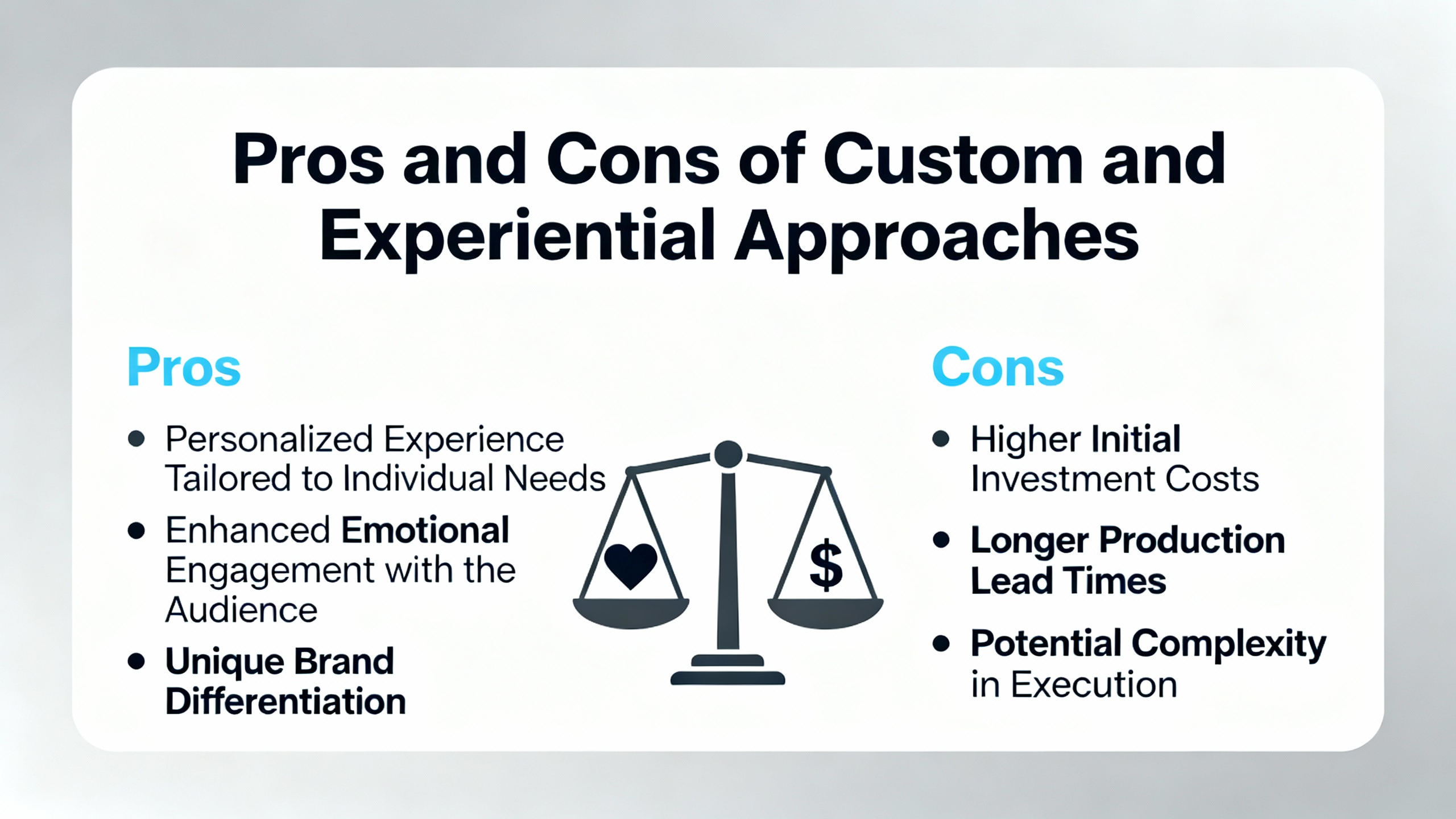
From the buyer’s perspective, custom and experiential gifts have clear benefits. Research on experiential gifting shows that experiences generate stronger emotions and closer relationships than material objects. Personalized gifts, according to sources like Sockrates and TODAY, help recipients feel seen and valued because the giver evidently took the time to understand their preferences. Consumables and experiences also reduce clutter, a point emphasized in Cheryl’s and Del Monte Center’s tips for people who already have everything.
The downsides include timing risk, the possibility of getting personalization wrong, and less flexibility for returns or exchanges. For new relationships where you know very little about the other person, an aggressively customized gift may backfire. In those cases, versatile gift cards, as Mary Steffel’s work suggests, or lightly personalized basics may be safer.
For store owners, the upside of custom and experiential positioning is differentiation. Generic mugs and T-shirts compete on price with global marketplaces. Thoughtfully designed, personalized products built around experiences or hobbies compete on meaning. Sockrates’ corporate work shows that organizations are willing to invest more in custom pieces that support employee recognition and retention, and the same logic applies to consumer gifting.
The trade-offs for your business are operational complexity and quality control. Personalization requires robust order handling, proofing, and fulfillment coordination. Experience-oriented bundles may involve partners whose reliability you must vet. You take on more responsibility, but if you execute well, you also capture more loyalty and margin.
Brief FAQ
Question: Are gift cards acceptable for hard-to-shop-for people, or do they feel lazy? Answer: Research summarized by Mary Steffel indicates that recipients often prefer more versatile gift cards than givers expect. A highly personalized card to one specific store can backfire if you misjudge the recipient’s tastes. If you are unsure, a flexible open-loop card plus a handwritten note explaining how you imagine them using it can feel more thoughtful than a guess at a very specific item.
Question: What if I cannot get a personalized or experiential gift produced in time? Answer: Several guides note that customization requires lead time, and even brands like Sockrates emphasize planning ahead. When you are short on time, consider vanishing gifts such as high-quality food or flowers, or digital experiences like online classes. You can still add a print-on-demand element by giving a nicely designed “ticket” or card that previews the experience, even if the main event happens later.
Question: How many personal details should I ask customers to provide for a custom product? Answer: Personalization experts usually recommend starting lean. Sockrates and TODAY’s featured makers focus on short names, initials, silhouettes, or one meaningful recipe or message. The goal is to collect just enough information to make the item feel tailored without overwhelming the buyer or increasing error rates. As your operations mature, you can experiment with more complex options, but the baseline should be simple, reliable customization.
When you treat hard-to-shop-for people as a design constraint rather than a dead end, you build better products and better businesses. The brands and researchers cited here point to the same conclusion: experiences, personalization, and hobby-centered utility consistently beat random cleverness. For an on-demand or dropshipping entrepreneur, that is your blueprint to turn “I have no idea what to get them” into a confident, high-value sale.
References
- https://news.northeastern.edu/2016/12/16/three-simple-tips-for-giving-awesome-holiday-gifts-this-year/
- https://www.anderson.ucla.edu/sites/default/files/documents/areas/fac/marketing/mogilner/Chan%20Mogilner%20JCR%202016%20Experiential%20Gifts.pdf
- https://marketing.wharton.upenn.edu/wp-content/uploads/2016/10/Steffel-Williams-LeBoeuf-April-2015.pdf
- https://www.personalcreations.com/?srsltid=AfmBOoo9OjPMQ3MB7QxbFWWZH3QT81WbxhS-gZhkS1CqLy2-TZ6fhtAC
- https://www.allure.com/gallery/gift-ideas-for-people-who-have-everything
- https://www.delmontecenter.com/article/85596-5-tips-for-selecting-a-gift-for-someone-who-already-has-everything
- https://smart.dhgate.com/unique-gift-ideas-for-the-hard-to-buy-for-loved-ones/
- https://www.planwithlaur.com/blog/gift-guide-intentional-personalized-gifts
- https://www.rollingoaksmall.com/article/6500-5-tips-for-selecting-a-gift-for-someone-who-already-has-everything
- https://www.self.com/gallery/thoughtful-gifts-friend-has-everything