
Geometric Custom Products: Modern Pattern Personalized Gifts That Actually Sell
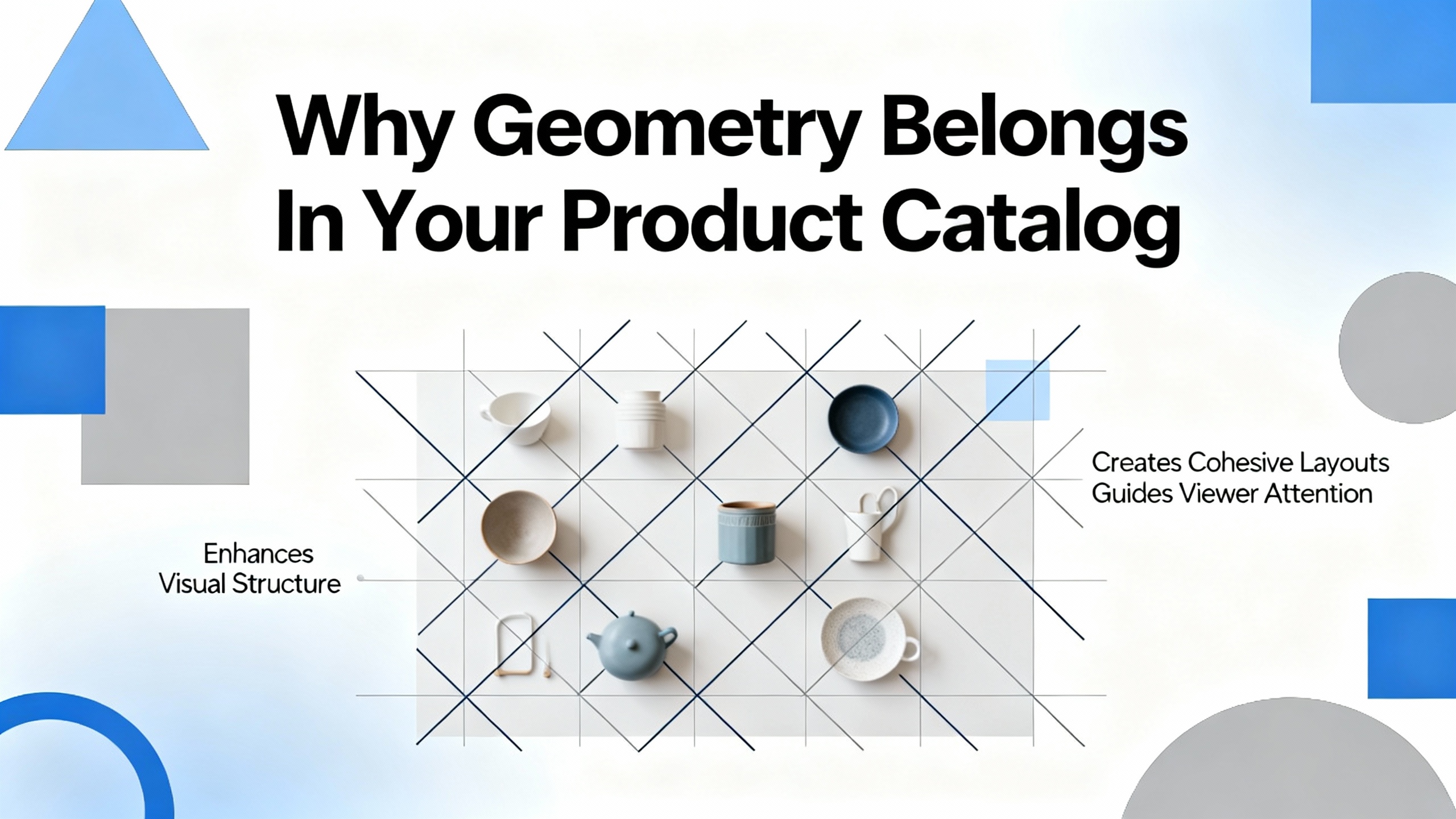
Why Geometry Belongs In Your Product Catalog
When you look at the most resilient visual trends in e‑commerce, geometric patterns keep resurfacing. Design researchers at platforms like Dochipo and Shutterstock describe geometric patterns as layouts built from repeated shapes and lines, organized with grids, symmetry, and tessellation. They feel precise and ordered, yet people perceive them as fluid and dynamic. That combination gives you a rare advantage as a seller: products that look both modern and timeless.
In branding and graphic design, sources like Simplified and The Brief AI show how geometric patterns power everything from logos to social media campaigns. Brands routinely lean on circles, triangles, squares, and polygons to create clean, minimal, and flexible visuals that can stretch from business cards to billboards. The same logic applies to print‑on‑demand products. A single well‑designed pattern can be reused across T‑shirts, hoodies, phone cases, wall art, cushions, and mugs while still feeling fresh because you can change colors, scale, and personalization.
Digital Silk notes that the brain processes visuals in around 13 milliseconds and that logos can lift brand recognition dramatically. Shape is part of what makes that recognition possible. When your catalog is built around a coherent geometric language, customers do not just see random products; they recognize a system. That recognition is where repeat sales and word‑of‑mouth start.
Marketplaces reflect this demand. Etsy maintains search pages for terms such as “geometric gift idea” and “home decor geometric,” which aggregate geometric jewelry, art, textiles, and decor from independent sellers. Specialist shops like ARTFULANE build entire collections of custom geometric art across apparel, accessories, home decor, wall art, stationery, and drinkware. These are not niche experiments; they are full product lines powered by geometry and personalization.
From a print‑on‑demand and dropshipping perspective, geometry is also operationally friendly. Most geometric artwork is vector based, so it scales cleanly from a 3 in sticker to a 36 in wall print without redrawing. This matters when you are running lean and want designs that can stretch across dozens of SKUs with minimal extra work.
The Psychology Of Shapes And How It Drives Gift Purchases
Cieden, Spacejoy, and Digital Silk all converge on the same point: shapes are not just decoration. They shape how people feel about a space, a product, and a brand. For personalized gifts, that emotional layer is often the difference between “nice” and “this is perfect for them.”
Here is a concise overview of what the research highlights and how that can translate into custom products.
Shape | Emotional signal (from design and interior research) | Gift and product use cases |
|---|---|---|
Square / Rectangle | Stability, reliability, order, tradition, structure | Grid‑based wall art, planners and journals, packaging frames, classic jewelry pendants |
Circle / Oval | Unity, harmony, inclusiveness, community, creativity, protection | Circular monogram art, coasters, round mirrors, logo‑style prints, medallion pendants |
Triangle | Movement, progress, energy, power, direction; can feel unstable if inverted | Dynamic sportswear prints, adventure travel posters, bold phone cases |
Hexagon | Harmony, balance, efficiency; echoes honeycombs and snowflakes | Tile‑inspired coasters, modular wall decor, efficient shelving and table tops |
Rhombus / Diamond | Contemporary, vibrant, active feel | Fashion‑forward apparel prints, modern stationery, edgy jewelry |
Spirals, Waves, Curves | Growth, transformation, calm, fluidity, creativity | Yoga accessories, wellness gifts, soothing nursery decor, abstract art prints |
Spacejoy’s work on interior shape psychology shows how these decisions play out in real rooms. Squares in tiles and wallpaper help a room feel grounded and orderly. Circles in rugs, mirrors, and light fixtures add cohesion and a sense of connection. Triangles wake up a space; hexagons create harmonious, efficient patterns; spirals introduce motion and creativity.
In digital branding, Cieden and Digital Silk describe similar effects. Circles and soft curves feel approachable and community‑oriented, which is why so many social and tech brands lean on them. Squares and rectangles communicate reliability and professionalism. Triangles and sharp angles send signals of innovation and forward motion, but overuse can feel aggressive.
As a store owner, the practical move is to connect these shape meanings to specific audiences. Minimalist buyers often gravitate to simple bars, circles, and fine lines. Creative or fashion‑forward customers welcome asymmetry, layered shapes, and mixed metals. Spacejoy’s advice for interiors holds for gifts too: combine shapes strategically to match the emotional tone you want, rather than throwing every shape into one design.
Where Geometric Personalization Works Best In Print‑On‑Demand
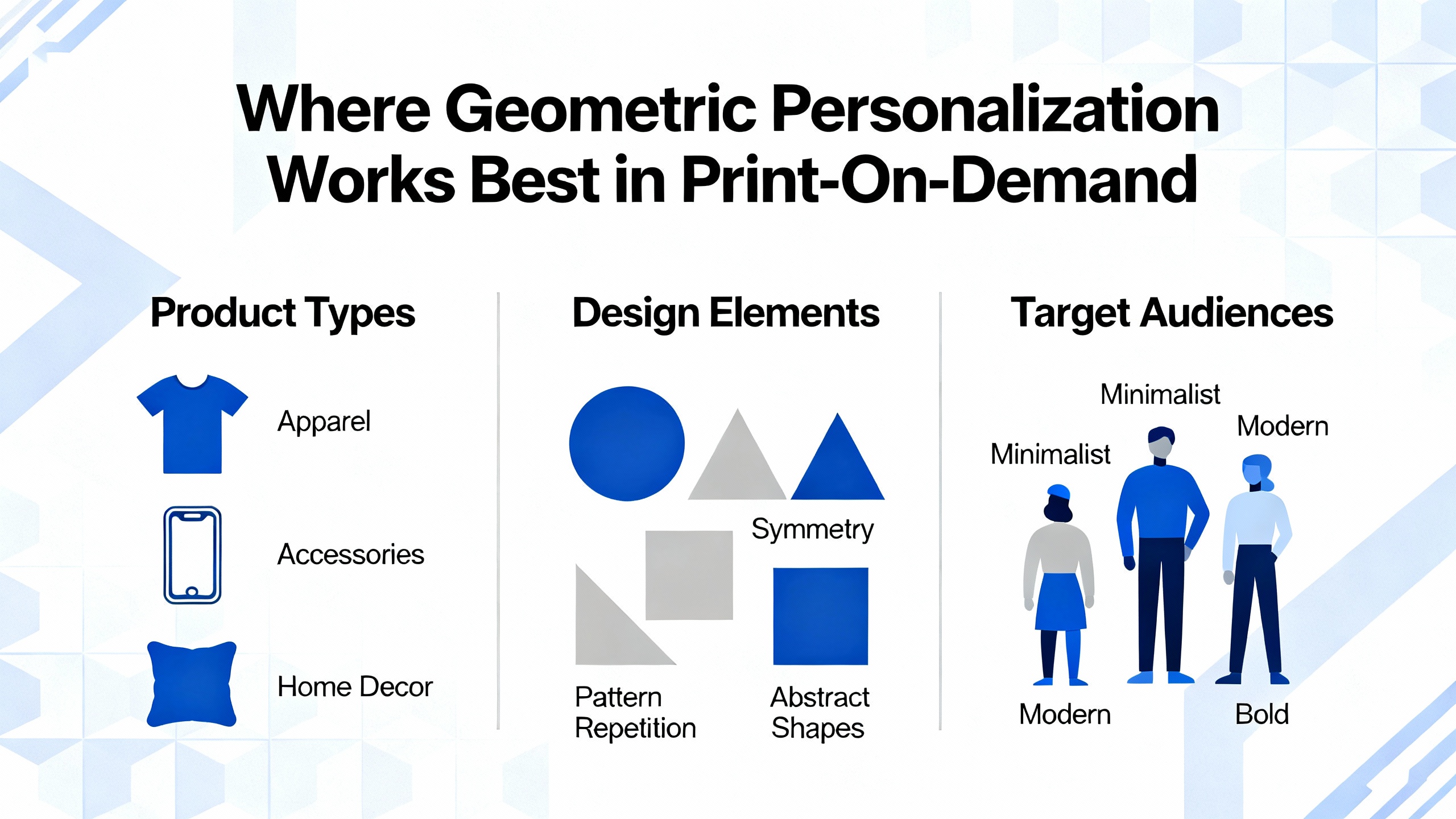
Geometric customization is not tied to a single product. The research from ARTFULANE, DHgate’s gifting guides, Kirei, DwellBeautiful, and others shows that it translates across wardrobe, home, and lifestyle categories. The opportunity for you is to choose a few hero categories, then expand methodically.
Apparel And Wearables
ARTFULANE positions its geometric apparel as modern fashion statements, using either sharp, high‑contrast patterns or softer, flowing motifs. T‑shirts, hoodies, long‑sleeve tees, and jackets are natural canvases for:
Text‑driven personalization inside geometry, such as a name or phrase framed by circles or nestled in a triangular grid.
Location‑driven gifts, such as coordinates mapped into a subtle geometric pattern for travel or engagement memories.
Subtle monograms where a minimalist geometric logo encodes initials with squares, circles, or triangles.
Because these pieces are printed on demand, you can combine a base pattern with options for color schemes and text, without holding inventory for each variation.
Jewelry And Small Accessories
DHgate’s overview of modern geometric jewelry frames this category as clean circles, triangles, squares, hexagons, and bars in sleek metals like silver, gold, and rose gold. It emphasizes personality‑based styling. Minimalist recipients prefer subtle, small‑scale shapes in soft metals; creative personalities lean toward chunkier, layered geometric pieces.
They also highlight price bands from roughly fifteen dollars into the several hundred dollar range, depending on materials and customization. This range makes geometric jewelry valuable for your assortment in two ways. It is accessible enough for everyday gifting and premium enough for upsells when you introduce engraving, birthstones, or mixed metals.
The same principles extend to accessories like phone cases, hats, and bags. ARTFULANE’s catalog uses geometric designs on phone cases and bags as a way to extend a customer’s chosen pattern from clothing to their daily carry. When you coordinate these items, you stop selling isolated SKUs and start building a recognizable aesthetic.
Home Decor And Wall Art
For home decor, the research is unusually rich. DwellBeautiful describes geometric decor as a major contemporary trend, especially suited to mid‑century, modern, and quirky interiors. The guidance is clear: patterns are bold and often bright, so they work best as accents or focal points rather than covering an entire room. That aligns perfectly with wall art, pillows, blankets, rugs, and small furniture pieces.
Kirei focuses on geometric walls, rugs, and tiles. Large‑scale, low‑line patterns in soft colors can create calm spaces such as nurseries. Complex line work and dense patterns inject energy into feature walls or statement panels. They also highlight that depth matters. Wall products with varied cube sizes and depths add both pattern and physical texture, producing sophisticated contrast even in restrained color palettes.
From an e‑commerce angle, that suggests a strategy where you offer both bold geometric wall art and softer “background” patterns for textiles. Big wall art pieces featuring triangles, circles, and polygons become the hero shots in your store; coordinated cushions, throws, and rugs carry simplified versions of the same geometry into the rest of the room.
ARTFULANE’s wall art range demonstrates how this translates into real products: canvas prints, framed art, and posters covering bold geometric, soft geometric, and Islamic geometric substyles. That spread lets buyers self‑select into sharp symmetry, flowing shapes, or intricate mosaic‑style repeats.
Stationery And Desk Gear
Geometric design is a natural fit for stationery, planners, and desk accessories. Dochipo and The Brief AI both stress how shapes define structure and rhythm in a layout. Rectangles and grids make information feel organized; circles and color blocks highlight focal points; lines and arrows guide the eye.
When you apply this thinking to notebooks, calendars, mouse pads, and desk mats, you get functional products that look like intentionally designed tools rather than generic blanks with a pattern thrown on top. ARTFULANE’s customizable journals and notebooks use geometric covers plus personalized text, turning what could be a commodity product into a gift that signals both taste and thoughtfulness.
Drinkware And Everyday Objects
Drinkware is often where customers “test” a new style. Geometric mugs, tumblers, and water bottles bring the pattern into daily life with low risk and high visibility. ARTFULANE’s drinkware shows how simple polygons, waves, and circular motifs can wrap around cylindrical surfaces without distorting the visual message.
Because many geometric motifs tile seamlessly, they adapt well to curved surfaces that would distort photographic prints. That gives you greater control over print quality and consistency, especially with dropshipping providers that may use different machines and substrates.
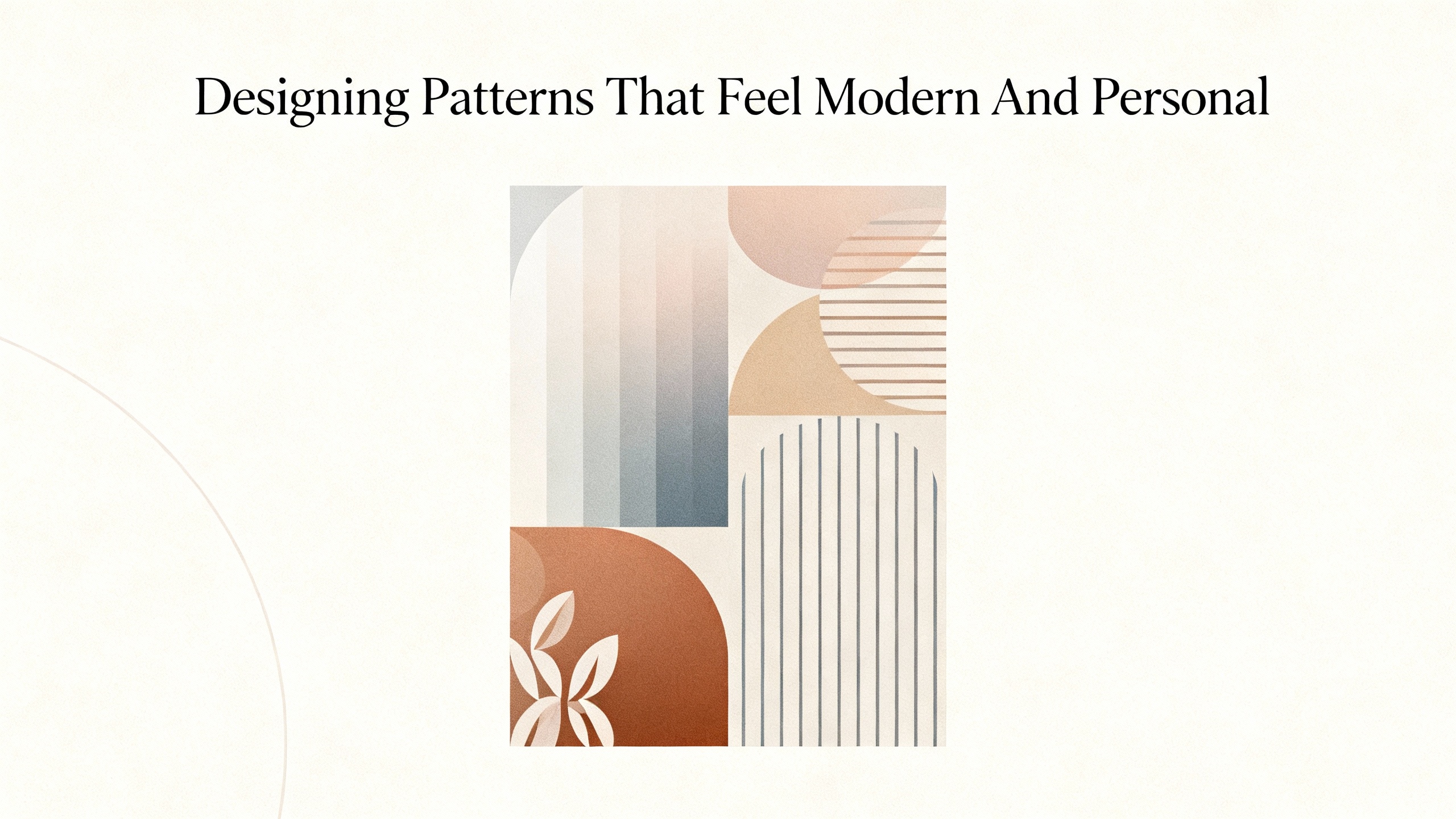
Designing Patterns That Feel Modern And Personal
If you want geometric products that command real margin, you cannot treat patterns as random decoration. The most useful advice in the design research can be distilled into four disciplines.
Start With Purpose, Audience, And Culture
Cieden and SingleGrain both insist on starting with purpose. Before you open your design tool, ask what the product must achieve. Is this mug meant to feel calming on a work desk, or bold and energetic in a gaming setup. Is this wall print a neutral housewarming gift or a personal piece for a child’s room.
Audience and culture matter just as much. Cieden uses the example of shapes that carry very different meanings across cultures, such as symbols that are considered auspicious in some contexts and deeply negative in others. As a global seller, you may be targeting buyers in multiple regions. That should inform the motifs you choose and the stories you tell in your product descriptions.
Choose The Right Shapes And Composition
Dochipo and Linearity both underline that geometric shapes shape hierarchy and flow. Larger shapes create focal points; grouping related content inside rectangles or grids makes information easier to parse; overlapping shapes adds depth. Linearity also calls out the rule of thirds as a practical tool. If you divide a rectangular canvas into a three‑by‑three grid, the eye naturally moves through the corners of the central rectangle. Placing your main symbol or personalization near those points helps the design feel intentional.
Cieden’s guidance on composition is equally applicable to products. Use size, contrast, and orientation to guide attention toward the key value on a product, whether that is a name, a date, or a central illustration. Leaning shapes forward can suggest progress, while more grounded shapes send a stable, reassuring message.
Color, Contrast, And Pattern Density
Shutterstock, The Brief AI, and Simplified all advocate for limited color palettes and conscious control of pattern density. A pattern built from simple shapes becomes overwhelming if every tile uses a different hue and detail level.
The Brief AI shows that black‑and‑white geometric patterns can look sophisticated even without color, as long as shape variety and composition are strong. Geometric swirls built from overlapping circles create motion and balance. Mixed but carefully arranged shapes produce abstract posters that feel deliberate rather than chaotic.
Colorful geometric patterns require more discipline, not less. The Brief AI uses examples like Portuguese azulejos to illustrate how unusual shapes, repeated with consistent color logic, create memorable designs. Their advice is to pick a palette and commit to it, rather than bolting on additional colors that do not belong. Shutterstock makes a similar point: start from a simple modular unit or tile, then rotate, mirror, and layer that tile while keeping the palette and contrast under control.
Kirei adds a useful note on intensity. You can use a single favorite hue in an intricate tile pattern to keep geometry from feeling overwhelming while still delivering texture and contemporary character. Translating that to print‑on‑demand, a monochrome geometric design on a hoodie or pillow can feel more premium than a multicolor version if you are targeting a minimalist audience.
Common Mistakes To Avoid
Cieden’s list of common errors in shape usage doubles as a checklist for product design. Not defining the design purpose, ignoring cultural and emotional associations, using too many shapes, weak contrast, and overloaded backgrounds all show up regularly in underperforming catalogs. Shutterstock’s team adds that dense patterns behind text often kill readability and conversion.
Domestika’s editorial team notes that purely digital geometric work can feel impersonal or empty when composition and contrast are not carefully considered. For e‑commerce, that translates to designs that look like generic stock prints rather than something a founder or artist actually crafted. You want your patterns to feel like a cohesive language, not a random wallpaper sample.
Personalization Strategies For Modern Pattern Gifts
The research on custom geometric art from ARTFULANE and modern geometric jewelry from DHgate is especially useful for moving from “nice pattern” to “must‑buy gift.” Both emphasize hyperpersonalization without sacrificing a clean, contemporary look.
What To Personalize: Text, Color, Layout
ARTFULANE’s products allow buyers to add custom text, choose fonts, and adjust color blocks, stripes, and text backgrounds. The lesson is that you do not need to expose every design parameter. Instead, define a strong base pattern, then let customers tweak a controlled set of variables: name or initials, one of a few colorways, maybe the placement of a short phrase.
DHgate’s jewelry guidance emphasizes small, high‑impact upgrades such as engraving initials or dates on square or bar pendants and adding birthstones within geometric frames. These touches dramatically increase perceived personalization without dramatically increasing production complexity. The same idea can be applied to print‑on‑demand notebooks, wall art, and drinkware.
From a systems standpoint, your goal is to build templates where personalization fields slot into predetermined spaces. This keeps your designs on brand and ensures that whatever text or date a buyer enters still sits inside the geometric system you designed.
Building Collections Instead Of One‑Offs
SingleGrain’s analysis of geometric design in branding highlights principles such as balance, proportion, rhythm, harmony, and contrast. Those are exactly the principles that turn a series of SKUs into a collection. Rhythm comes from repeating patterns across products; harmony from using consistent grids; contrast from carefully chosen focal pieces.
ARTFULANE’s approach to grouping designs into bold geometric, soft geometric, and Islamic geometric subcollections is a model you can adapt. For example, you might define a “Bold Lines” collection built around sharp triangles and high contrast colors, a “Soft Shapes” line built from circles and waves in pastels, and a “Sacred Mosaic” line inspired by Islamic or other historical geometric motifs for customers who like intricate repeats.
By keeping each collection visually coherent, you make it easy for buyers to build their own bundles. Someone who buys a bold geometric hoodie is more likely to add a matching accessory or art print if it clearly belongs in the same visual family.
Pricing And Positioning Without Discounting Yourself
DHgate’s content on gifting modern geometric jewelry is clear that you can serve multiple price points in the same aesthetic. Budget‑friendly gifts include dainty geometric drop earrings and stackable rings in simple shapes, often around the lower double‑digit price range. Higher‑end pieces with premium metals and stones justify much higher prices.
In a print‑on‑demand context, you can mirror that structure. Entry‑level geometric products might be small prints, mugs, or phone cases. Mid‑tier items could be premium apparel or larger wall art. Higher‑tier pieces might involve multi‑panel canvas sets, large prints, or bundles that combine multiple products in one conceptual set. The key is to maintain the same geometric language across all tiers, so customers feel like they are leveling up within a coherent world, not switching styles entirely.
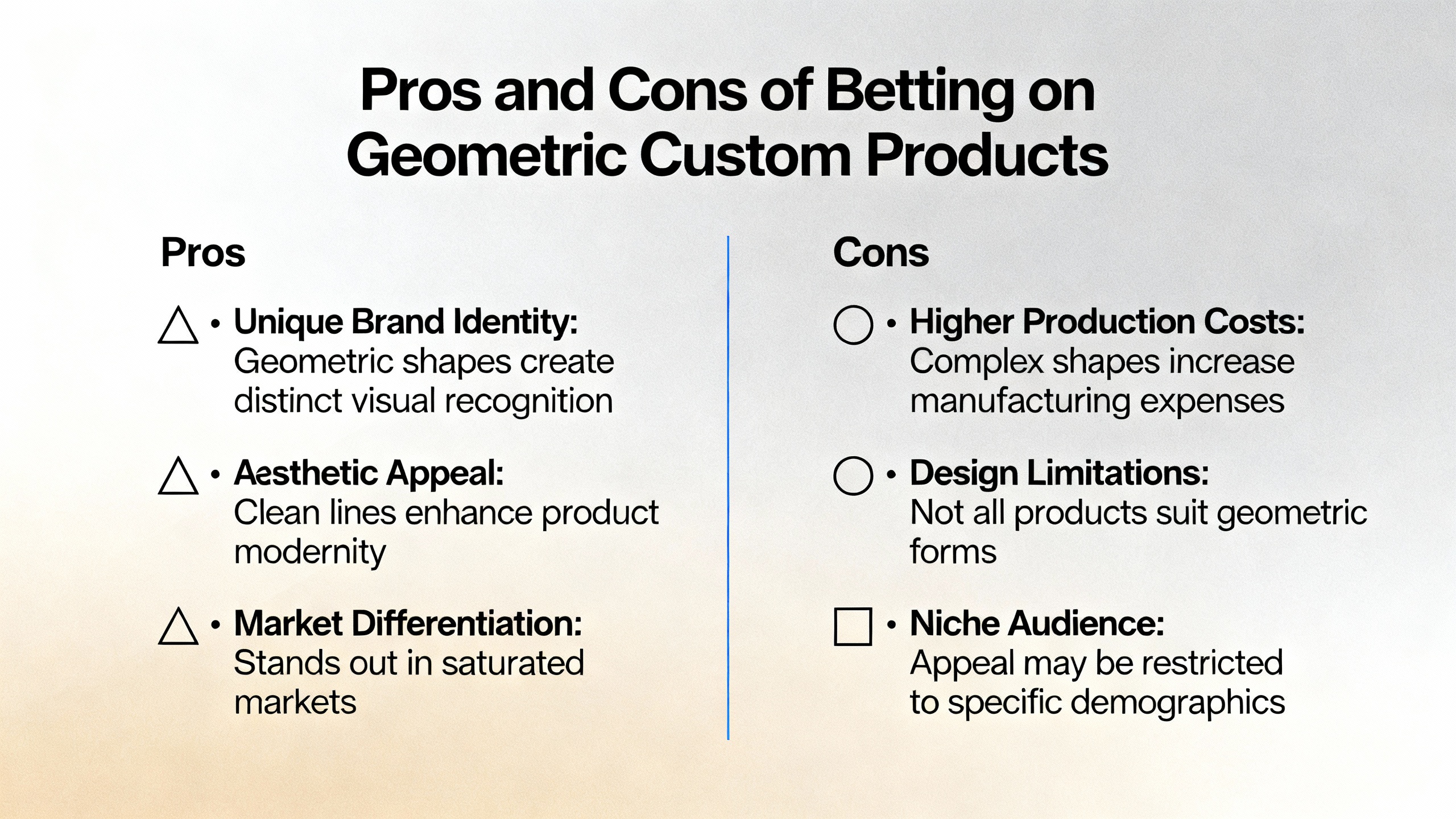
Pros And Cons Of Betting On Geometric Custom Products
No product strategy is perfect. Here is a balanced look at what you gain and what you need to watch for when you build around geometric patterns and personalization.
Aspect | Advantages for your store | Risks and trade‑offs |
|---|---|---|
Trend durability | Geometry has deep historical roots in art, architecture, and interiors, from traditional decorative arts to modern minimalist design, so it tends to age more gracefully than topical memes. | If you follow short‑lived micro‑styles too closely, designs can still date quickly even if the underlying shapes are timeless. |
Cross‑category scalability | Vector‑based geometric art adapts easily across apparel, decor, stationery, and drinkware, letting you build broad catalogs from a compact design library. | Overextending a single pattern to every product without variation can make your store feel repetitive and reduce perceived uniqueness. |
Personalization compatibility | Clean shapes leave clear spaces for names, dates, and messages, and ARTFULANE shows that structured personalization flows well with bold, soft, and mosaic styles. | If you allow uncontrolled personalization (long text, too many colors), you can easily break the balance that makes geometric designs feel premium. |
Emotional precision | Shape psychology research from Cieden, Spacejoy, and Digital Silk helps you tune designs to specific emotions, room types, and recipient personalities. | Misjudging shape meanings or cultural context can produce designs that feel “off” or inappropriate for certain audiences. |
Production practicality | Repeating patterns and limited palettes print reliably and often hide small production variances better than photographic art. | Highly intricate patterns require tight alignment; low‑quality printing or misregistration can be more noticeable in precise geometric layouts. |
In my work with founders, the stores that win with geometry usually do two things well. They treat geometric design as a long‑term visual system, not a one‑season trend, and they combine that system with a disciplined personalization layer rather than offering anything and everything.
Implementation Roadmap For Your Store
If you already operate a print‑on‑demand or dropshipping business and want to add or refine geometric custom products, approach it as a phased project rather than a single design sprint.
Start by researching your audience and existing catalog. Look at your current bestsellers and map them onto shape psychology. If you sell a lot of minimalist monochrome apparel, a soft geometric line built around circles and waves in limited palettes is more likely to resonate than neon hexagon grids. Use marketplaces like Etsy’s geometric gift and home decor search pages to understand what kinds of items, colorways, and price bands are common in your niche.
Next, define your geometric concept. Decide whether you want bold symmetry, soft organic shapes built from circles and curves, or intricate mosaic‑style patterns. ARTFULANE’s division into bold geometric, soft geometric, and Islamic geometric designs is a helpful starting framework. Sketch a few repeatable motifs and test how they look across mockups of at least three product types, such as apparel, wall art, and drinkware.
Then, build personalization templates. For each hero pattern, decide where text can live, which colors can be swapped, and what layout options keep the design balanced. Tools that support vectors and grids, like the design apps discussed by Linearity and Dochipo, make it easier to enforce consistent spacing, alignment, and repetition. Treat each template as a mini design system, not a single flat image.
After that, launch a focused collection instead of peppering a pattern across your entire catalog. For example, introduce a coordinated set of wall art, cushions, and a throw blanket using the same motif, or a line of matching phone cases, notebooks, and mugs. Watch which products people gravitate toward and where personalization fields are most used.
Finally, refine based on behavior. SingleGrain emphasizes measuring engagement and conversion when applying geometric design principles. On your side, that means tracking which shapes and colorways convert, which SKUs bundle well together, and where returns or complaints cluster. Use those signals to adjust complexity, color intensity, or personalization options. Over time, your geometric line will become more aligned with real buyer behavior, not just your own design preferences.

FAQ
Are geometric custom products just a passing trend?
Historical and contemporary research suggests otherwise. Geometric design has appeared in sacred architecture, traditional decorative arts, mid‑century interiors, and modern minimalist branding. Kirei and DwellBeautiful both document its current role in interiors, while Shutterstock and Simplified describe its ongoing importance in contemporary graphic design. The specific executions may evolve, but geometry itself is a long‑running visual language rather than a short‑lived fad.
How do I choose between bold and soft geometric styles for my catalog?
Use purpose and audience as your filter. Bold geometric styles built from sharp triangles, high contrast colors, and strong lines are well suited to statement apparel, feature walls, and expressive tech accessories. Soft geometric styles built from circles, waves, and muted palettes tend to perform better in calming spaces such as bedrooms, nurseries, and work‑from‑home setups, as Spacejoy’s and Kirei’s interior guidance suggests. Offering both, grouped into clearly labeled collections, lets different customer segments self‑select without confusion.
What is the simplest way to start selling geometric personalized gifts if my brand is new?
Begin with one tightly defined collection rather than a broad assortment. For example, design a single geometric motif inspired by shapes that match your brand values, then apply it to a small family of products such as a mug, notebook, and print, all with a consistent personalization field. This approach keeps your design workload manageable, makes your store look curated, and gives you a clean test bed to see whether your audience responds to the style before you scale to dozens of SKUs.
In a crowded print‑on‑demand landscape, generic products are a race to the bottom. Thoughtfully designed geometric custom products give you another path: a coherent visual language, emotionally aligned gifts, and a catalog that can grow with you instead of aging out in a single season.
References
- https://www.academia.edu/Documents/in/Geometrical_Design
- https://harn.ufl.edu/resources/tot-time-super-shapes/
- https://www.domestika.org/en/blog/12897-where-to-find-inspiration-to-design-with-geometric-shapes
- https://www.artfulane.com/collections/designer-custom-geometric-art?srsltid=AfmBOorHUJ61YSO98YV-Wxn6_tBqJ9hQTAeL3pG1Pq_CdAe6Fab9FEZL
- https://smart.dhgate.com/creative-ideas-for-gifting-modern-geometric-jewelry-that-delight-every-style/
- https://www.dochipo.com/geometric-shapes-in-design/
- https://www.dwellbeautiful.com/style-trend-geometric-decor/
- https://www.etsy.com/market/geometric_gift_idea
- https://interestingengineering.com/how-to/7-ways-to-use-your-geometry-skills-to-wrap-presents-this-holiday-season
- https://www.jamesandcolors.com/collections/geometric-patterns?srsltid=AfmBOopTFF7e_m7_ZsPo5hDxzgwdTpDb1w4SXwxpcuX8ugOoC37niDPD