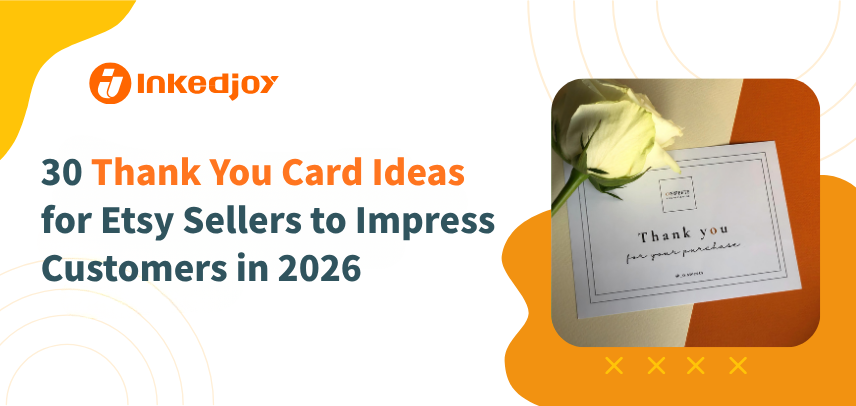
30 Thank You Card Ideas for Etsy Sellers to Impress Customers in 2026
Want to increase repeat purchases without making your packaging feel like another advertisement? Product quality matters, but a thoughtful thank you card can turn an ordinary delivery into a memorable unboxing moment. This guide gives Etsy sellers 30 practical design and opening-line ideas, plus beginner-friendly steps for creating, printing, and using cards to encourage genuine customer engagement.
Key Takeaways
- A thank you card works best when it feels like appreciation first and marketing second.
- Consistent colors, typography, logo use, and tone help a small Etsy shop look more established.
- A QR code can create a direct path to a repeat purchase, honest review, social profile, or exclusive offer.
- Short opening lines are easier to read during unboxing and leave room for a handwritten note.
- Print on demand and small-batch printing let sellers test card designs without committing to excessive inventory.
How Thank You Cards Boost Repeat Orders
A small card creates an emotional bridge between the person who made or designed the product and the customer who receives it. That connection is especially valuable for personalized products because the buyer has already invested in something that reflects a name, memory, hobby, relationship, or personal style. A sincere note confirms that the order was handled by a real business that noticed the customer, not by an anonymous warehouse.
The unboxing moment is also a marketing opportunity. Customers are already focused on the purchase, so a clearly designed card can introduce the shop's story, explain how to care for the item, or offer a simple next step. A discount code creates an immediate route to another purchase, while an expiration date gives the offer a practical reason to be used sooner. Keep the deadline reasonable and state the terms clearly so urgency does not feel manipulative.
Retention compounds because a returning customer does not need to be acquired from zero. According to research summarized by Harvard Business Review, acquiring a new customer can cost five to 25 times more than retaining an existing one, and a 5% increase in retention can increase profits by 25% to 95%. These are broad cross-industry benchmarks, not a guaranteed result for Etsy shops.
Important measurement note: There is no reliable universal percentage of Etsy customers who make a second purchase specifically because they received a personalized thank you card. Track your own result with a card-only discount code or QR link, then compare repeat orders, scans, and redemptions before and after the card is introduced.
30 Creative Thank You Card Design & Opening Line Ideas
Think of these ideas as inspiration, not strict templates. Choose the designs, messages, and style that feel right for your brand, product price point, and the customers you want to attract.
20 Design Ideas for Branded Thank You Cards
- Logo and tagline anchor. Center the logo and place one memorable brand promise underneath it.
- Brand color blocking. Use one strong color panel with a short, minimalist thank you message.
- Signature brand pattern. Repeat flowers, stars, geometric shapes, or another motif associated with your shop.
- Product-shaped die cut. Create a silhouette related to what you sell, such as a mug, candle, flower, or pet tag.
- Kraft paper and stamped logo. Pair natural paper texture with a simple mark for a rustic artisan look.
- Foil-stamped logo. Add a metallic finish to premium cardstock for jewelry, wedding, or luxury gift orders.
- Monogram or wax-seal detail. Use a brand initial or seal graphic as a refined finishing touch.
- Illustrated border. Frame an open center area so you can add a handwritten message.
- Vintage postcard style. Combine aged typography, dividing lines, and a retro stamp effect.
- Product photo front. Feature a lifestyle image on the front and place the thank you message on the back.
- Typography-only statement. Let a distinctive brand font carry the design without extra illustration.
- Blind-debossed logo. Press the logo into thick cardstock for subtle tactile quality.
- Watercolor brand story. Use hand-drawn or painted elements connected to your product or origin story.
- Bold geometric layout. Combine brand colors with clean shapes for a modern studio aesthetic.
- Letterpress-inspired design. Use restrained colors and textured typography for a crafted feel.
- Window-cut surprise. Reveal one word, icon, or small message through a cutout.
- Folded hidden-message card. Put the main appreciation note or a customer photo prompt inside.
- Double-sided card. Keep the front visually branded and reserve the back for the message, QR code, and offer terms.
- Recycled-paper design. Use recycled stock and explain the material choice in one short line.
- Distinctive edge treatment. Try scalloped, rounded, arched, or intentionally irregular edges to create a recognizable silhouette.
10 Opening Line Ideas for Thank You Cards
The strongest opening line is short enough to understand at a glance and warm enough to feel personal. It can be story-driven, question-led, lighthearted, action-oriented, industry-specific, or built around the honest message that a small business truly notices every order.
- “Welcome to our little community. We’re so happy to have you here.”
- “We hope you love this as much as we loved making it.”
- “You didn’t just place an order; you supported the passion behind the product.”
- “Thank you for trusting our small shop. We hope your new favorite item has arrived!”
- “A little note to say a big thank you for choosing my shop.”
- “Made with love, packed with care, and sent with a huge thank you.”
- “Your idea, your style, your story. Thank you for letting us be part of it.”
- “Thank you for being here and supporting what I love to create.”
- “A little piece of creativity is on its way to you. Thank you for giving it a home.”
- “We’re so grateful to be a small part of your day. Thank you for supporting our journey.”
How to Make Thank You Cards
An effective card does not require professional design experience. Start with a simple layout, include only information that helps the customer, and decide what one action you want the card to support. That action might be enjoying the product, scanning a care guide, returning to the shop, leaving honest feedback, or joining your social community.
Most Etsy thank you cards need five elements: your shop name or logo, a genuine appreciation message, a useful product or care note when relevant, one optional engagement prompt, and a clear URL or QR code. Keep the hierarchy obvious so the thank you message remains the first thing customers notice.
Design on Canva: Step by Step
Canva is an accessible starting point for Etsy sellers because it offers editable card templates, brand colors, font controls, image tools, and print-ready downloads in one interface.
Step 1: Choose the Right Card Size and Template
Choose a size that fits your packaging without bending. Common choices include business-card size, 4 × 6 inches, or A6; confirm the printer's bleed and safe-zone requirements before designing.
Step 2: Add Your Brand Elements
Upload your logo, select one or two brand fonts, and limit the palette to your core colors. Consistency matters more than adding decorative elements.
Step 3: Write a Customer-Focused Message
Lead with appreciation and use “you” more often than “we.” Leave white space for a name, signature, or one handwritten sentence when order volume allows.
Step 4: Add Visual Elements
Use one photo, illustration, border, or pattern that supports the message. Avoid crowded collages, tiny icons, and low-contrast type that becomes difficult to read after printing.
Step 5: Download and Prepare for Printing
Download a print-ready PDF using the printer's preferred color settings, bleed, and crop marks. Review spelling, QR-code destination, expiration dates, and discount terms before sending the file.
Add a QR Code for Easy Conversion
A QR code turns a printed card into a measurable path from delivery to the customer's next action. Give the code one clear purpose, label what happens after scanning, and test it on both iPhone and Android before printing.
- Drive repeat purchases: Link to a curated collection or returning-customer offer. Example: “Scan to see matching gifts and save 10% before August 31.”
- Encourage honest reviews: Link to instructions for sharing genuine feedback, without conditioning a reward on a positive rating. The FTC advises marketers not to manipulate reviews or mislead consumers.
- Build a social community: Send customers to one active social profile and invite them to tag the shop in an unboxing photo.
- Offer an exclusive discount: Use a unique code and a dedicated landing page so redemptions can be measured separately from other promotions.
Choose a Professional Printing Service
Printing quality shapes how customers interpret the product itself. Soft, muddy images and thin cardstock can make a premium or personalized item feel less considered, while sharp type, clean trimming, and appropriate paper weight reinforce the care shown in the order.
Order Quantity and Cost
Balance the unit price against storage space and realistic order volume. Beginners should start with a small batch or print on demand option so they can test wording, QR destinations, and customer response. A growing shop can move to a larger run after the design remains stable and monthly order volume makes the lower unit cost worthwhile.
Consider Print-on-Demand Packaging Solutions
A print on demand workflow can reduce the risk of ordering too many cards before you know which version customers respond to. It also fits sellers who are already using POD for products and want branding elements to scale alongside order volume. Confirm the supplier's available insert, branding, or packaging options inside its dashboard because support varies by product and destination.
Common Mistakes to Avoid When Making Thank You Cards
Making the Card Too Promotional
A card covered with discount messages feels like an advertisement. Lead with gratitude, then offer one optional next step.
Adding Too Much Information
Do not squeeze your full brand story, care guide, social links, policies, and multiple offers onto one small card. Use a QR code to move supporting details online.
Using Low-Quality Images
Low-resolution logos and compressed product photos may look acceptable on screen but print blurry. Use vector logos when possible and follow the printer's resolution requirements.
Forgetting Brand Consistency
A thank you card should feel like part of the same shop as the listing images, product, and packaging. Keep your colors, typography, tone, and logo treatment consistent.
Ignoring the Unboxing Experience
Think about where the customer encounters the card. Place it above the product or in an envelope that is easy to notice, not underneath packing material where it may be discarded.
A good thank you card makes customers feel appreciated while naturally encouraging future engagement. If the card still feels useful and sincere after the discount is removed, the balance is probably right.
Frequently Asked Questions
What do you write in a thank you card for a business?
Thank the customer by name when possible, mention the product or order, and close with one sincere sentence about what their support means to the business. Add a care note, QR code, or returning-customer offer only if it is genuinely useful.
What makes a good opening line for a thank you card?
A good opening line is brief, specific, and aligned with the brand voice. It should sound natural when read aloud and make the customer feel appreciated before asking them to do anything.
How do you make thank you cards for a small business?
Choose a practical size, create a simple Canva layout, add your logo and brand colors, write a customer-focused message, include one optional next action, and export a print-ready PDF. Test a small batch before committing to a large quantity.
Can I use an AI tool to create a thank you card design?
Yes. AI can help generate layout ideas, illustration concepts, and wording drafts, but review every result for originality, brand consistency, spelling, image quality, and licensing. The final message should still sound like your business rather than a generic template.
What should I put on my thank you cards?
Include your shop name or logo, a clear thank you message, an optional handwritten note, relevant product-care information, and one simple way to reconnect. Avoid multiple competing calls to action.
Written by
Gina
A skilled marketing specialist with expertise in e-commerce marketing, and print-on-demand product research. She has extensive experience in keyword research, market analysis, and content strategy, helping brands find uncover profitable opportunities, improve search visibility, and drive sustainable growth through data-driven marketing.
Read more